
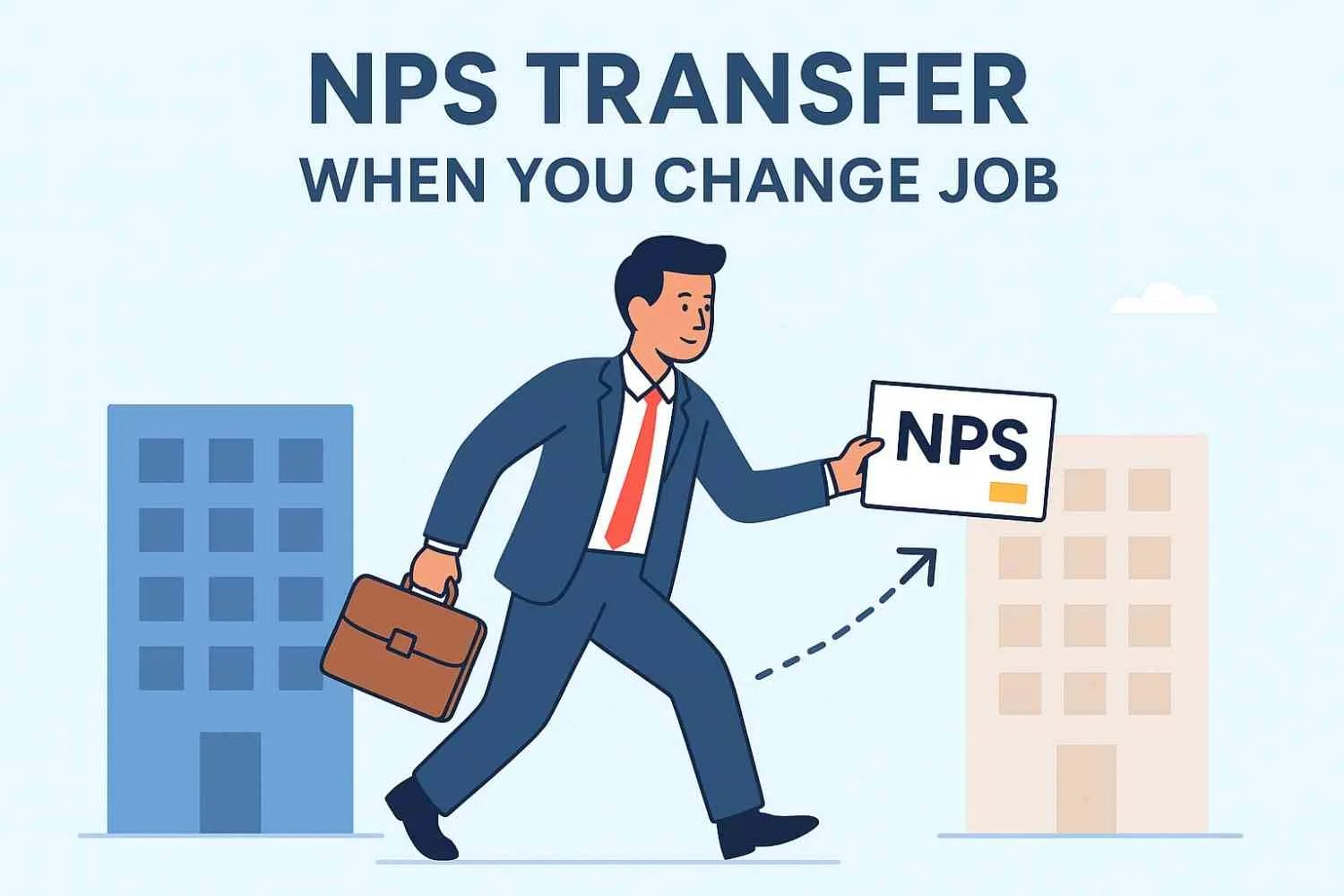
NPS transfer when you change job explained in simple words—process, rules, mistakes to avoid, NPS portability, and NPS management for job switchers and movers abroad. #NPS transfer when you change job, #NPS job change process, #PRAN portability during job switch, #How to transfer NPS when changing jobs, #NPS rules for job change, #NPS update after job switch, #NPS account transfer procedure, #NPS KYC update for job switch, #NPS account portability India, #NPS for employees moving abroad, #NPS rules for NRIs after job change, #NPS account continuity during job change.
Introduction
Modern career advancement also includes changing employment, whether you’re doing so to take advantage of worldwide prospects, a better compensation, or a healthier workplace culture. However, many paid workers are concerned about one recurrent question: “What happens to my NPS account when I switch jobs?”
The good news is that NPS transfer when you change job is easier, smoother, and fully digital today. However, a lot of people forget about their NPS account, open duplicate PRANs without realising it, or change records incorrectly, which might result in prohibited contributions or compliance problems.
This detailed guide explains everything about NPS transfer when you change job, how the procedure operates, what should be updated, what should not be updated, and how NRIs or those relocating overseas can continue to have their NPS accounts.
Why “NPS Transfer When You Change Job” Matters in 2025
NPS continuity becomes critical as job mobility increases, with 40–50% of workers changing roles every two to three years. Your EPF is transferred via UAN when you change jobs, however your NPS functions differently.
You don’t move money between employers. Rather, only your employment changes; your PRAN stays constant throughout your life. That’s why NPS transfer when you change job is more about updating records than shifting balances.
Also Read: Game-Changing Ways How NPS Changes Affect Investments Starting October 1, 2025
What Exactly Happens to Your NPS When You Switch Jobs?
When you work for a new company:
- Your current PRAN persists.
- The same PRAN is funded by the new employer.
- Employment, KYC, and bank information must be updated.
- There should be no new NPS account opened.
This makes NPS transfer when you change job a critical compliance step.
Also Read: Why NPS Is Good for Retirement: 7 Powerful Reasons to Secure Your Future
How the NPS Transfer Works When You Change Job (Step-by-Step Guide)
Step 1: Inform Your New Employer About Your Existing PRAN
Your PRAN is lifelong. Therefore, the first step in NPS transfer when you change job is to provide:
- Your PRAN
- PRAN card (not required)
- CRA information (KFintech or Protean)
This prevents the new employer from establishing a second PRAN, which is prohibited per PFRDA regulations.
Step 2: Update Employment Details in CRA Portal
You can access the Employment Details → Update Profile → Protean or KFintech site by logging in.
This keeps your records tidy and guarantees smooth contributions after NPS transfer when you change job.
Step 3: Verify KYC Details & Bank Details
Many people who change jobs overlook this step. However, for seamless contributions and withdrawals:
- PAN
- Aadhaar
- Mobile
- A bank account
must be updated.
his directly impacts NPS transfer when you change job because out-of-date information can impede future.
Step 4: New Employer Uploads Contribution File
Your NPS contribution file (ECS/NEFT) is uploaded by the HR/Payroll department of your new company.
Your PRAN will immediately reflect this.
Step 5: You Can Continue Voluntary Contributions Anytime
Even after NPS transfer when you change job, you can:
- Include voluntary Tier I contributions
- Include contributions from Tier II
- Automate payments similar to SIP
During the transition, your account is still fully operational.
Also Read: Is UPS Better Than NPS? 5 Critical Factors for Government Employees to Decide
What Not to Do During NPS Transfer When You Change Job
These are the most common errors made by workers:
Mistake 1: Opening a new NPS account with the new employer
One PRAN is equal to one person for a lifetime.
It is against PFRDA regulations to open a second PRAN.
When you alter the employment process, this error makes the entire NPS transfer more difficult.
Mistake 2: Not updating contact details
Outdated phone number or email = no OTP access = no online contributions.
Mistake 3: Not informing the employer before payroll processing
Your contributions could be missed for months if you put it off.
Mistake 4: Letting your PRAN remain dormant
Grievance filing and partial withdrawals become difficult if donations cease for an extended period of time.
When you shift jobs, this has an impact on the NPS transfer’s financial stability.
How “NPS Transfer When You Change Job” Works If You Move Abroad
When relocating overseas, many Indians are concerned about their NPS continuity.
Regulations expressly state:
- NPS can be continued by NRIs.
- Contributions from NRE/NRO accounts are accepted.
- PRAN doesn’t change.
- The only status that has to be updated is residential.
Therefore, NPS transfer is still applicable even if you move abroad; all you need to do is alter your KYC status to NRI.
Documents Required for NPS Transfer When You Change Job
- PRAN
- Aadhaar
- PAN
- Latest address proof
- Bank passbook/statement
- Old employer relieving docs (optional)
Having these handy ensures seamless NPS transfer when you change job.
Also Read: National Pension System 2025: Key Timing for Investment to Maximize Returns & Tax Benefits
Is There Any Fee for NPS Transfer When You Change Job?
There is absolutely no cost.
According to CRA regulations, all procedures (KYC, employer mapping, and PRAN updating) are free.
After a job change, how long does it take for the NPS to transfer?
- Instantaneous profile updating
- Employer mapping takes one to five business days.
- New employer contributions → Next payroll cycle
When you move jobs, NPS transfers often take less than seven days to complete.
Is NPS Transfer Mandatory When You Change Job?
Indeed. Due to:
- It is forbidden to use duplicate PRANs.
- Contributions won’t be accepted without an employer update.
- It’s possible that your NPS will stop working.
NPS transfer is therefore not only advantageous but also necessary when you shift jobs.
Also Read: Job Switch or Move Abroad? Your NPS account rides with you
Conclusion
NPS transfer when you shift jobs has become crucial for financial continuity as job mobility rises and more Indians move between companies—and even overseas.
The procedure is straightforward, entirely digital, and governed by CRA and PFRDA regulations. Your NPS will stay fully operational and compliant as long as you keep your PRAN information up to date, notify your employer in advance, and steer clear of duplicate accounts.
No matter where your job takes you, taking these actions guarantees that your retirement wealth will continue to grow.
FAQs
Q1: Do I need to open a new NPS account after I switch jobs?
No, your PRAN is permanent. You only need to update your employer details when you change jobs during an NPS transfer.
Q2: What happens if a new PRAN is inadvertently created by my new employer?
Close the duplicate, file a dispute with CRA, and ask to keep one PRAN. When you change jobs during an NPS transfer, this is a typical problem.
Q3: Can NRIs maintain their NPS after relocating overseas?
Sure. Simply change the type of bank account and your status. When you move jobs, the NPS transfer regulations still apply.
Q4: How can I find out if my PRAN has been mapped by my employer?
Go to CRA → Profile → Employment data after logging in. When you move jobs, this confirms the NPS transfer.
Q5: Is it possible for me to participate before employer mapping is finished?
Yes! Personal contributions are permitted at any time, even during the NPS transfer process for a job move.
Disclaimer
This essay is just intended for educational purposes. PFRDA laws may affect NPS regulations. Prior to making financial decisions, always confirm information from the official CRA or NPS Trust portals.