
Discover the most important key ratios for choosing insurance policy and avoid hidden traps. Learn how these ratios ensure affordability, strong coverage, and long-term financial protection. #key ratios for choosing insurance policy, #insurance ratios before buying policy, #important insurance ratios, #financial ratios to check in insurance, #insurance buying checklist, #insurance premium affordability ratio, #insurance claim settlement ratio.
Introduction
Besides shielding loved ones, getting coverage shapes how steady your future feels money-wise. Many weigh costs against perks – or just pick familiar brand names, but very few evaluate the key ratios for choosing insurance policy, which show the insurer’s actual performance, dependability, and sustainability.
These ratios act as a financial health report card for an insurance provider. They give you a way to check if the company’s reliable, see if the price fits your budget, or find out if your family gets paid when it matters.
In this detailed walkthrough – supported by real-world numbers, also insights from trusted money experts, we explore seven proven key ratios for choosing insurance policy that each buyer should review before spending cash. Experts like advisors, number crunchers, or watchdogs use these figures to judge how solid a company is. Knowing this stuff helps you choose better – smarter moves, less risk, bigger gains.
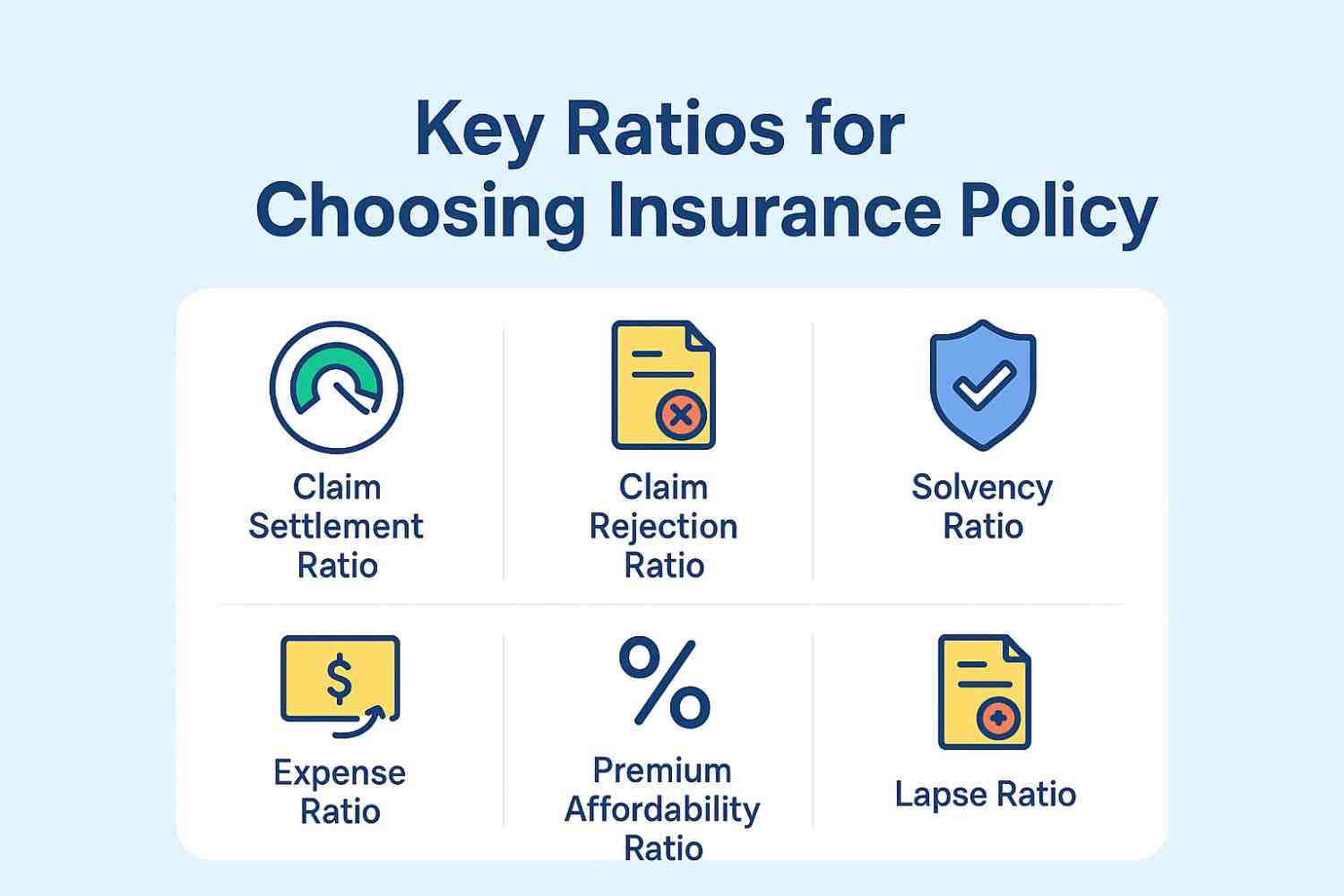
Claim Settlement Ratio (CSR): The Trust Indicator
The Claim Settlement Ratio (CSR) is the most important among all key ratios for choosing insurance policy because it tells you how trustworthy the company stays when your family faces hard times. this figure reveals how many claims they paid out compared to how many they got over 12 months.
A high CSR (above 95%) means:
- The insurance company handles payouts quickly – so you get your money without delays.
- Your family probably won’t run into arguments or holdups.
- The business handles claims pretty well – its setup works smoothly when dealing with requests.
A steady CSR across several years suggests more trust than one sudden jump.
Claim Rejection Ratio: The Hidden Warning Signal
The claim rejection ratio indicates the risk element when CSR is positive. This is an additional crucial ratio under key ratios for choosing insurance policy since it shows the number of claims that got turned down completely.
A low rejection rate means:
- Fewer disputes
- Transparent policy terms
- Better underwriting practices
If lots of claims get turned down, it might mean messages aren’t clear, rules are confusing, or filters are too strict.
Solvency Ratio: Will the Company Survive Long-Term?
The solvency ratio shows how well an insurance company can cover its long-term debts while staying financially steady. Authorities demand firms keep this number at least at 1.5 or above.
Among the key ratios for choosing insurance policy, this one is crucial because:
- This shows solid money standing when times get shaky.
- A more solid financial position lets the insurance company manage big waves of claims.
- It protects those insured if the firm goes under – keeping them safe when things fall apart.
A solid solvency ratio shows careful money handling.
Expense Ratio: Are You Overpaying for the Policy?
In relation to the premiums collected, the expense ratio indicates how much the insurance firm spends on operations (marketing, salaries, administrative costs).
Why it matters among key ratios for choosing insurance policy:
- A high expense ratio could lead to steeper costs for policyholders – so fees might go up because of it.
- Firms that run well keep costs down, so customers gain more value.
- It shows how well costs are handled along with solid day-to-day performance.
Check companies where costs drop gradually – over years, that is – because lower spending often means better value for you.
Also Read: Vital Key Numbers to Know Before Buying Insurance to Avoid Costly Pitfalls
Premium Affordability Ratio: Can YOU Sustain the Policy?
This is one of the most useful key ratios for choosing insurance policy; it is not a corporate ratio, but rather your own evaluation ratio. It determines how much of your salary you can afford to pay for insurance.
Formula:
Premium Affordability Ratio = Annual Premium ÷ Annual Income × 100
Best case? Your yearly insurance cost stays under one-tenth of what you earn each year.
This ensures:
- Long-term continuity
- No risk of coverage dropping – just solid protection staying active
- Better money planning – also a steadier wallet
A solid plan fails if it doesn’t last over time.
Sum Assured-to-Income Ratio: Are You Adequately Covered?
This figure shows if your plan really safeguards the people who rely on you. One of several essential numbers when picking a policy so loved ones get solid help with money.
Experts recommend:
- Coverage ranging from ten to twenty times what you earn each year
- More protection when you’ve got debts, family relying on you, or run a business
A small coverage compared to income means poor protection, which might end up worse than skipping insurance completely.
Lapse Ratio: How Many Customers Stop Paying Premiums?
The number of policyholders who quit or don’t pay their premiums is shown by the lapse ratio. Though sometimes disregarded, this is among the most insightful key ratios for choosing insurance policy.
An elevated lapse ratio signifies:
- Consumers are not happy
- Policies might be too expensive.
- Renewal processes could be challenging.
Better customer satisfaction and product compatibility are indicated by a reduced lapse ratio.
Also Read: 7 Costly Mistakes Investors Make with Insurance You Must Avoid
Why These Key Ratios for Choosing Insurance Policy Matter
Understanding these ratios helps you:
- Steer clear of shaky insurance providers
- Pick rules that actually keep you safe
- Stop arguments when handling claims
- Ensure long-term affordability
- Get coverage by thinking about your money situation – skip the flashy ads
These key ratios for choosing insurance policy collectively, they provide a solid basis for safe and knowledgeable decision-making.
How to Use Key Ratios for Choosing Insurance Policy Effectively
To gain the most advantage:
- Check insurance companies by looking at 5 or so years of numbers instead
- Use official reports like IRDAI Annual Reports
- Check the numbers for each type of plan – like term, health, or ULIP – one at a time
- Use financial ratios alongside policy details like riders or exceptions, also consider waiting times
When used correctly, these key ratios for choosing insurance policy eliminate guesswork and highlight the most reliable insurers.
Also Read: Six simple ratios to check before buying any insurance policy
Conclusion
Insurance means a lasting money deal, yet picking the best plan isn’t just about rates or sales talk. Instead of only looking at price tags, check real numbers – like how often claims get paid, whether the company stays strong financially, if payments fit your budget, and how many people quit their plans. These figures give clear clues on reliability, safety, and what truly fits your needs.
With these numbers, your family’s money tomorrow stays safe thanks to solid coverage that actually fits. Once feelings, ads, and mix-ups clear out, only these key ratios for choosing insurance policy remain the most reliable tools for smart decision-making.
FAQs
Q1: What are key ratios for choosing insurance policy?
These numbers – such as CSR, solvency level, or how often policies drop – are clues to how well an insurer runs. When picking a plan, focusing on these figures means you’re more likely to land a solid yet budget-friendly option.
Q2: What makes the claim settlement ratio significant?
since it displays the number of claims that an insurance resolves. A high CSR lowers the possibility of disagreements and guarantees that your family gets the benefit promptly.
Q3: What is an insurer’s ideal solvency ratio?
Financial safety is defined as having a solvency ratio of 1.5 or higher. It guarantees that the business can fulfil long-term commitments and high claim volumes.
Q4: How do I know if a policy is affordable for me?
Make use of the premium affordability ratio. To guarantee long-term continuation, your overall insurance premiums should not exceed 10% of your yearly income.
Q5: What is the optimal level of insurance coverage?
It is advised to have coverage equal to 10–20 times your yearly income. This guarantees your dependents complete financial security.
Disclaimer
This piece aims to inform. Yet insurance numbers or rules can differ between companies and plans. So check latest details through IRDAI or provider papers prior to buying anything.