
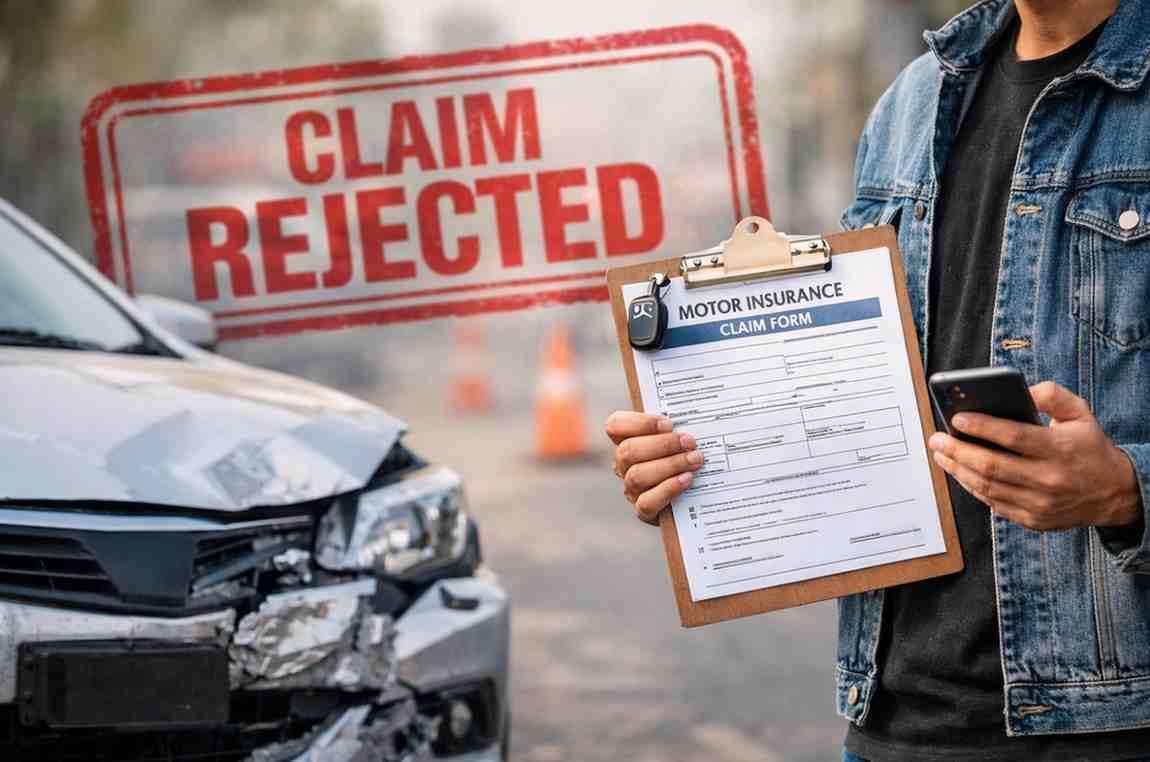
Motor insurance claim rejection in India often happens because of avoidable mistakes. Discover 7 costly errors that can void your vehicle insurance claim and learn how to avoid them. motor insurance claim rejection in India, vehicle insurance claim rejection, car insurance claim rejection reasons, motor insurance mistakes India, insurance claim denial India, vehicle insurance rules India, car insurance claim rejection mistakes.
Introduction
Owning a car in India makes motor insurance a key shield against money troubles. Crashes, stolen vehicles, floods, or harm caused to others might lead to big costs – that is what coverage helps reduce. Still, getting a policy does not mean every request later gets accepted without question. Decisions come down to how well the agreement’s rules were followed at the time. Rules broken by mistake? That still opens space for denial. Approval rests firmly on facts laid out in documents plus legal demands. Surprise outcomes often stem from small oversights long before any accident.
A late report after a crash often kicks off trouble with motor claims in India. Wrong details on the form? That counts too. Breaking rules written in the policy might shut the door fast. Driving for work when coverage only allows personal trips causes issues just the same. Most rejections come from slips people could prevent, not courtroom fights. Insurance awareness platforms frequently explain situations where insurers may reject claims, and understanding the motor insurance claim rejection rules explained by insurance regulators can help policyholders understand the responsibilities attached to their policies. Drivers can prevent expensive errors and make sure that their insurance coverage functions when it is actually needed by being aware of the typical reasons why claims are denied.
Awareness of insurance is also closely linked to more comprehensive financial security. Just as individuals protect their banking access by understanding issues such as debit freeze vs credit freeze in bank accounts, understanding insurance claim procedures can help prevent unexpected financial setbacks after accidents.
Understanding Motor Insurance Claims in India
A single person might find it useful to know that Indian motor insurance splits mainly into two kinds. One kind focuses only on covering harm done to someone else. This type becomes required by law through the Motor Vehicles Act. Protection appears limited but necessary. Another option opens up wider coverage, including what happens if your own car gets hurt. Accidents count, plus things like fire or storm damage. Theft slips in too. Vandalism matters just as much. The second plan holds together both outside liabilities and personal vehicle repair needs.
Right after a crash happens, the person with the policy needs to contact their insurance provider without delay while starting the claims steps. Following this, the insurance firm often assigns someone to check how bad the car is damaged and confirm what actually occurred. Once at hand, the inspector’s findings travel alongside paperwork like the filled claim sheet, proof of driving ability, vehicle ownership record, plus predicted fix costs for internal review. Only when checks show the event fits under agreed terms and every requirement was met does approval follow.
Still, spotting a broken rule might lead an insurance company to turn down payment – despite real damage from the crash. Knowing how claims work and what the contract blocks matters deeply for anyone driving.
Mistake 1: Driving Without a Valid Driving License
Driving without a proper license often leads to rejected motor insurance claims across India. When an incident happens, the driver must have official permission matching the type of vehicle they were operating – policies demand it. A claim may fail if the document isn’t current or legal on record.
Failing to carry a valid license might lead to trouble when filing a claim. When coverage ends – or doesn’t match the vehicle being driven – approval could be blocked. Fault in the crash makes no difference here. Breaking basic traffic rules puts the insured at risk. Companies often reject payouts under these conditions.
This rule is here since insurers expect drivers to follow laws and act with care. When someone takes a vehicle without permission, danger goes up – so coverage gets voided on those grounds.
Mistake 2: Delayed Reporting of the Accident
Right after a crash happens, letting your insurer know counts more than people think. Many providers expect updates within one or two days – no exceptions. Showing up late can make them question whether the story holds up.
Late reports of accidents often lead insurers to question whether the damage happened differently than described. Because time passes, checking facts becomes harder for them. Details might have changed after the event, raising doubts. Without quick access to evidence, their review loses clarity.
Right away talking to the insurance company means the inspector shows up sooner, so they see exactly what went wrong with the car. Getting details across fast keeps things moving without delay, letting them pin down how the harm happened.
Mistake 3: Driving Under the Influence of Alcohol or Drugs
Fueled by booze or substances behind the wheel breaks laws – it also wipes out any claim on insurance. When drivers are high or drunk, their crash won’t be covered, plain stated in most auto policies.
Finding a driver impaired at the time of a crash often leads insurers to deny payment, even if the harm seems minor or shared. When claims come in, companies might look through breath tests, hospital files, or officer notes – checking if alcohol played a role in the event.
Staying in control behind the wheel matters because it keeps everyone safe – on top of that, insurers expect it. Without careful habits, a policy might not hold up when needed most.
Mistake 4: Providing False Information in the Claim
When insurance firms check claims, they look closely at each detail. Should mistakes appear in paperwork, cost projections, or incident summaries, the provider might refuse payment. A mismatch anywhere – documents, numbers, timelines – can lead to denial. Experts frequently warn that fraudulent claims or intentional damages can result in immediate claim rejection.
Claim denial and possible legal action may result from providing inflated repair prices, concealing pertinent accident facts, or submitting falsified documentation. Therefore, while submitting an insurance claim, truthful and correct documentation is essential.
Mistake 5: Using a Personal Vehicle for Commercial Purposes
Most motor insurance plans lay out exactly what counts as acceptable use. If a car is covered only for private trips, driving for pay breaks the rules. Unless the paperwork says otherwise, gig jobs behind the wheel aren’t protected. Ride-hailing, food drops, or cab runs on a personal plan? That’s a risk. Coverage vanishes when usage shifts without permission.
When a crash happens during business use, claims might get denied since the driver broke the agreed-upon terms. Risk goes up on work-related trips, so standard policies often do not apply. Instead, special coverage fits these situations better than regular plans.
Anyone planning to drive for business needs special coverage made for work vehicles. That kind of driving isn’t protected by regular personal auto policies. A different type of plan handles the extra risks involved. Without it, claims might get denied when needed most. Getting the right protection means matching the policy to how the car is actually used.
Mistake 6: Allowing the Insurance Policy to Expire
Lingering coverage ends the moment the policy lapses. When a crash happens past that point, payment falls outside the company’s duty.
Not checking expiry dates means some drivers miss renewing their policy – especially if the car sits parked for weeks. A gap as brief as a week might be enough to void any future claims.
Lapse avoidance means flipping the switch on renewal ahead of deadline day – so gaps never start.
Mistake 7: Unauthorized Vehicle Modifications
Surprisingly, changing a car’s engine might void the insurance if left unreported. When alterations like strengthened frames get added, companies often refuse claims. Usually, insurers need every detail – skip it, risk losing protection entirely.
Fresh off the factory line, a car’s initial details set its insurance cost. When changes boost either worth or danger tied to the machine, telling the provider becomes necessary – adjustments follow naturally.
When changes aren’t shared, claims might get turned down. That happens because the company didn’t know about new risks. Not telling them shifts the balance. Hidden updates break the understanding. What seemed safe now looks different. Silence alters trust. The decision rests on incomplete details. Missing info changes outcomes. Truth matters when things go wrong. Unreported tweaks reshape results.
What to Do If Your Insurance Claim Is Rejected
A refusal isn’t automatically a full stop. Look closely at the denial notice – what the company wrote matters. Sometimes, sending more paperwork or clearing up confusion brings another look. The answer might change when they see what was missing.
Should the policyholder feel the denial wasn’t right, a complaint may go to the insurer’s internal team handling disputes. When nothing gets settled there, off it goes to the Insurance Ombudsman for review.
Knowing about money lets people handle tough moments better. A clear head around finances means smoother decisions when pressure hits. For example, understanding financial rights and risks such as nominee vs legal heir in India or learning about wrongful bank account freeze compensation in India can help individuals navigate financial disputes more confidently.
How to Avoid Motor Insurance Claim Rejection
Skipping claim denials means knowing your policy inside out, plus using your car wisely. When things go wrong, tell your insurer straight away – no delays. Hold onto a current license, make sure coverage never lapses. Clear records help, so does speaking plainly. Renewals matter just as much as truthfulness.
Facing money problems begins with seeing them clearly. How you handle risk shapes your daily choices around cash. Just as individuals protect themselves by learning about digital payment frauds in India investors must know, understanding insurance rules helps prevent financial losses when unexpected accidents occur.
Real-Life Examples of Motor Insurance Claim Rejection
Example 1: Claim Rejected Due to Expired Driving License
A driver in Pune crashed his car on the way back from work one evening. His vehicle took heavy damage, so he contacted his insurer right away hoping repairs would be paid. Even though the crash was real and his coverage still valid, things went wrong later. Turns out, during checks, they spotted something off about his license – it had run out weeks before. Because rules clearly say you must hold a current license, the provider said no to paying. What seemed like a straightforward case fell apart over paperwork timing. Out of nowhere, the person holding the insurance found himself covering every dollar of the fix alone. Turns out, something minor – like a license past its date – can still kill a claim on arrival.
Example 2: Claim Denied Because Accident Was Reported Late
Backward motion in a Delhi lot led to a light bump against another car. Days passed without a word sent to the insurer – damage seemed too slight to act fast. Only after waiting did it occur to file a report, but silence had already caused doubt. Questions arrived instead of help, focused on why notification came so late. Rules clearly state timing matters; missing it blocks approval, no matter how small the harm. Regret followed once understanding clicked: speed in reporting protects every claim.
Example 3: Claim Rejection Due to Drunk Driving
One night in Mumbai, a man who’d been at a party got into a crash while behind the wheel. Police showed up shortly after, asked him to blow into a device – results showed too much alcohol in his system. Since he later sent paperwork asking the insurer to fix his car, they checked official records and saw the drink-related offense. Because standard auto coverage does not protect those driving under the influence, funds were denied. He ended up dealing with fines from authorities along with out-of-pocket costs for damage, left covering both on his own.
Example 4: Claim Rejected Due to False Information
A man from Bengaluru tried to make small crash damage seem worse than it was. Though the incident had caused little harm, his insurance request asked for repairs beyond what happened. When checking things out, the inspector saw gaps between the written report and how the car really looked. Because of odd details showing up during review, the company decided facts had been twisted on purpose. Even the real damage went unpaid since mixing truth with lies turned the whole thing into a fraud case. Getting nothing back became the outcome once trust in the claim broke down completely.
Example 5: Claim Rejected Because of Unauthorized Vehicle Modifications
Out of nowhere, a teenager from Chennai tweaked his car’s engine and swapped out parts to make it handle better. Since he skipped telling the insurer about those adjustments, things got complicated. Months passed without issue until a crash left the vehicle mangled and immobile. When assessors finally looked under the hood, hidden upgrades stood out clearly. That moment revealed everything – none of it had been listed when the coverage started. A change in how the car performed made the insurance company say no to paying out. Because of that shift, they walked away from the claim. Telling your provider about changes matters – this case shows exactly why.
Conclusion
Motor insurance claim rejection in India usually occurs because policyholders unknowingly violate policy conditions. Skipping the paperwork before hitting the road, waiting too long to report damage, giving shaky details when filing, or taking the car into jobs it was never covered for – these missteps often lead insurers to say no. Knowing exactly what the policy allows, then moving step by step through each stage of a claim, helps drivers stay clear of refusals. Protection only works if the rules are followed. When things go smoothly on paper, they’re more likely to go smoothly after an incident.
FAQs
Q1: Why do motor insurance claims get rejected in India?
When consumers break the conditions of their insurance plans, motor insurance claims are usually denied. Driving without a legal license, reporting accidents late, driving while inebriated, or giving false claim information are common causes.
Q2: Can a legitimate accident claim be denied by an insurance company?
Yes, even if the accident was real, insurers have the right to reject claims. Regardless of the specifics of the accident, the insurer may refuse payment if the policyholder broke the terms of the policy or the law.
Q3: How quickly should an accident be reported to the insurance company?
Accidents must be reported to the majority of insurers within 24 to 48 hours. Insurance companies can look into the situation and handle the claim quickly when it is reported promptly.
Q4: Can changes made to a car have an impact on insurance claims?
Yes, the insurance may become void if changes are made without telling the insurer. Unreported modifications may result in the denial of a claim since insurance companies base their premium calculations on the original vehicle specs.
Q5: What happens if an accident occurs before my insurance coverage expires?
The insurer is not required to pay damages if the coverage has expired prior to the accident. To keep coverage, policyholders must renew their insurance prior to the expiration date.
Q6: Is it possible to contest a denied insurance claim?
By contacting the insurer’s grievance redressal department or, if required, elevating the issue to the Insurance Ombudsman, policyholders can contest the denial of their claims.
Disclaimer
The sole aims of this article are informational and educational. Insurance policies might differ based on the terms of the policy and the insurer. Before making financial decisions, readers should examine their policy documentation and speak with insurance experts.