
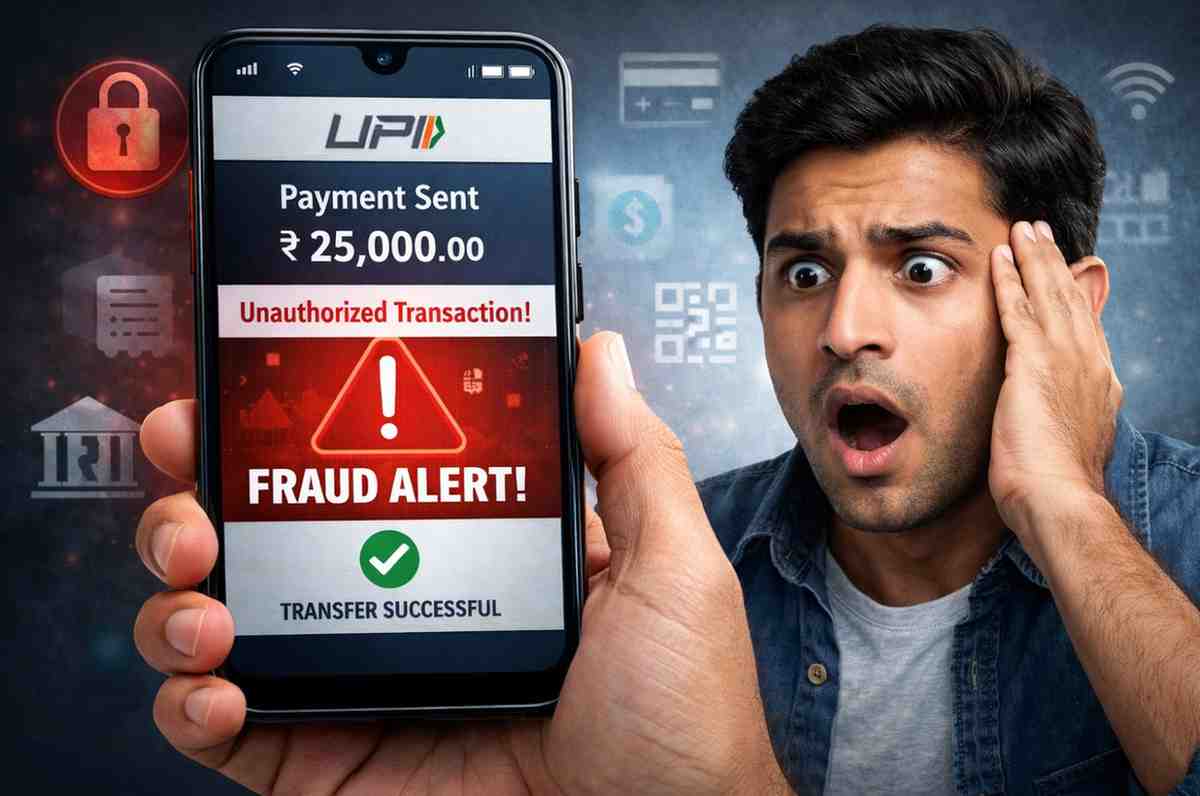
UPI fraud in India is rising rapidly. Learn 11 urgent steps to report unauthorized UPI transactions, recover lost money, and understand RBI fraud liability rules. UPI fraud in India, unauthorized UPI transaction, how to report UPI fraud, recover money from UPI scam, cyber crime helpline 1930, report online fraud India, RBI unauthorized transaction rules, digital payment fraud recovery.
Introduction
Nowhere else on Earth sees cash vanish quite like it does in India. Instant bank-to-bank movement through phone numbers – backed by QR scans or digital tags – keeps things humming. Even roadside tea sellers tap phones instead of taking notes, while online giants rely on the very same rails. What began as an experiment now pulses beneath nearly every transaction made from Himalayan foothills to southern coastlines.
Still, UPI’s ease of use pulls in more than just regular users. Criminals watch closely where people misstep online. Weak habits around safety open doors they rush to enter. Mistakes happen fast when attention slips. As digital adoption grows, UPI fraud in India has emerged as a serious financial risk affecting thousands of users every year.
Only when they see a strange charge or look at their bank records do some victims notice something is wrong. Shock sets in fast, along with doubt – knowing what steps to take isn’t always clear. When it comes to online scams, speed changes everything. Reports made quickly give officials a real chance to block the thief’s account before money slips away into another wallet.
Fraud reports often move faster when filed through recognized channels used by public authorities, lenders, or money transfer platforms. Knowing the right path helps get stolen funds back more effectively.
This guide explains what UPI fraud is, why it is increasing, the urgent steps victims must take, RBI rules governing unauthorized transactions, complaint escalation mechanisms, and preventive practices that can reduce the risk of digital payment fraud.
What Is UPI Fraud in India?
Fraud using UPI happens when someone makes payments through a mobile app without the real owner agreeing. Often, tricksters get people to confirm money transfers by misleading them. Access slips out when users give away private bank details under false pretenses. Scams unfold fast if trust is misplaced during a transaction. The system stays intact – people fall for clever lies instead.
Not like regular hacking, UPI fraud usually plays mind games instead. People get tricked into sending money because scammers build false trust first. A sudden message might show a made-up success screen for a transfer. Someone could call pretending to be support staff from a known service. Fake alerts pop up looking just like real ones – close enough to fool quick glances. The scam works when users act without pausing to check.
A frequent scam trick uses what looks like a payment pickup notice. Some people think saying yes means cash comes their way. Actually agreeing pulls funds out instead. The move opens the door to losing money fast.
Scammers hide traps inside QR codes, phony help lines, apps that let them control your screen, yet also sneak in through fake login pages. Spotting their moves matters since most people get caught not because systems fail but simply because they do not see it coming.
A closer look at common digital payment scam patterns affecting Indian users can be found in real examples of dangerous online payment scams targeting Indian consumers.
Learning about these fraud techniques helps users identify suspicious payment requests before approving them.
Why UPI Fraud Is Increasing Rapidly
Fueled by rising smartphone access, UPI payments now move fast across India’s economy. Yet behind the speed lies a target – hackers watch closely, ready to slip through weak spots.
It’s growing fast – scams jump when people new to tech start paying online. These folks just got into mobile banking, often missing the basics of confirming transactions. Crooks go after them on purpose since odd messages might actually get approved.
Misreading payment alerts plays a part in more scams appearing. A message asking for approval might seem like a way to collect funds. Crooks take advantage – slipping fake refund prompts into those alerts. People hit approve, thinking cash is coming their way.
Someone pretending to be someone else might knock on your door – or call. Not really a banker, yet acting like one. A delivery person showing up who never should. Or maybe an online shopper ready to buy, except they are not real. These roles help them get close. Urgency shows up next – sudden problems needing quick answers. Help that feels too kind to question. Then comes the push: share passwords, confirm codes, move money now. Real trust twisted into something sharp. Information slips out before thinking twice. Approval given under pressure, later regretted.
Fake apps and scam sites now pop up everywhere. Criminals use them to steal private details – bank logins, UPI PIN numbers, one-time passcodes. Sometimes it happens fast, just a click away.
Because of these factors, UPI fraud in India continues to increase, making user awareness and rapid reporting essential.
11 Urgent Steps to Take Immediately After UPI Fraud
Fast moves after shady charges appear often mean getting money back. Right away reports might let banks lock fake accounts down. Quick phone calls could stop thieves in their tracks.
Call the Cyber Fraud Helpline Immediately
When someone falls victim to money-related online scams, help comes through a special phone line run by India’s government. Right after a call lands, officials start working alongside banks and digital payment platforms without delay.
Right away, victims need to dial 1930 – the nationwide hotline for cyber fraud. Since this line connects directly to responders, steps like halting a transfer can begin when money hasn’t left the target account yet.
Fraud reported via the hotline gets logged properly, then sent along to investigators who handle these cases. Official records start there, moving forward only when details are passed on.
Financial cybercrime complaints can also be submitted through the National Cyber Crime Reporting Portal operated by the Government of India.
Report the Incident on the Cyber Crime Portal
Once you reach out to the help line, filing a report on the web-based crime platform follows naturally. A paper trail forms this way, marking every detail of the scam. The system then issues a tracking ID, useful later when checking progress. That number becomes your anchor through the process.
Name, bank info, a transaction ID – these pieces feed into the system alongside what happened. Screenshots of payments show up fast when paired with messages sent by banks. Details stack neatly once someone adds proof from their phone. What follows often moves quicker if the record includes these bits. A clear picture forms when each part connects without gaps.
Right away filing makes it easier for investigators to follow where the money went before it vanishes. Timing matters because delays let transactions fade into tangled paths.
Start right at the National Cyber Crime Reporting Portal of India – digital payment fraud gets reported online there. A single visit handles everything, straight from your device. No middle steps needed. The system runs live, ready whenever you are. Jump in anytime, day or night. Reports go through without detours. Everything built into one place. No extra tools required. Just connect and submit what happened.
Inform Your Bank Immediately
Right away, someone needs to tell the victim’s bank. Since banks watch for fraud, they might step in fast – halting odd transfers or reaching out to the other bank involved.
When someone reports a scam, giving clear facts helps. The UPI transaction ID must be shared so the bank can track it. Alongside that, mention exactly how much money was sent. Include when the transfer happened – down to the hour if possible. Tell what tricked you into sending the payment. With full info, banks start checking faster.
Should the need arise, banks might reach out to payment services or peer institutions – working together to pause activity in the receiving account.
Block Your UPI Access Temporarily
When fraud might stem from stolen passwords or unauthorized device use, cutting off UPI access for a short time helps block further damage.
Banks might pause UPI access if someone asks during an active probe. Starting fresh with a new UPI PIN helps lock things down tighter. Internet banking codes? Better swap those out too – keeps risk lower when changes stack up.
Fraud stops here – once these actions are taken, stolen login details won’t open doors again. Access stays blocked even when data lands in the wrong hands later on. Each move cuts off paths forward for anyone trying to misuse what they’ve got. Protection holds firm beyond the first breach. Steps like these shut down repeat attempts before they start. Safety continues long after the initial alert.
Secure Your Mobile Device
Out of nowhere, fake apps sneak into phones, opening doors for thieves. A scammer talks someone into downloading a sharing tool – suddenly, they can run the phone from far away.
A fresh look at what’s on your phone might reveal apps you do not recognize – those could be trouble. When odd charges show up, take time to delete anything unfamiliar right away. Outdated systems often carry weak spots, so installing the latest updates matters just as much. Scanning regularly with trusted tools works quietly behind the scenes to catch hidden risks before they grow.
A glitchy gadget might mean it’s been hacked. When that happens, wiping it clean could help. First, save your files somewhere safe. Then start fresh – resetting wipes out sneaky bugs hiding inside. It’s like starting over with a blank page.
Document Every Detail of the Fraud
Finding every piece of proof matters most once money troubles start. Hold on to anything tied to what happened – alerts from your account, notes from the bank, images saved from screens, talks with others involved – keep it all close.
Later on, officials can trace when things went wrong because of these papers. Should questions arise, what was filed first often settles doubts about legitimacy. When matters move beyond initial talks, having everything lined up makes a difference. Steps taken early shape how agencies respond once involved.
Track the Complaint Status
After sending the report online and notifying the bank, check how things are moving. Sometimes investigators will ask for more details or need something confirmed. Progress might slow down if they’re waiting on a response. Stay aware without pushing too hard. Each step forward could depend on timely replies.
When you keep an eye on how a complaint is moving, it stays alive. That way, if officials need more info, those affected can jump in fast.
File a Written Complaint with the Bank
A complaint in writing goes straight to the bank’s problem-solving team if talking first doesn’t fix things. That paper trail forces someone to look into it properly.
A customer’s report must contain proof of payment, records tied to the incident, also a copy of the cybercrime case ID. When claims arrive, financial institutions follow official rules that cover unapproved digital transfers during review.
Customer liability rules for unauthorized digital transactions have been issued by the Reserve Bank of India under official banking regulations.
Escalate the Complaint to the Bank’s Nodal Officer
When the bank does not reply well enough, take the issue to its designated senior officer. Every bank names someone high up to deal with complaints that haven’t been settled.
Banks usually require a written complaint plus copies of past messages when moving an issue up the chain. Higher-ups step in once they get all the paperwork, including proof of transactions. A supervisor looks things over after receiving everything together. Getting someone senior involved often follows submission of these documents. Details matter most when passing it along inside the system.
Approach the Banking Ombudsman
Should a resolution fail to arrive after thirty days, the customer may turn to the Banking Ombudsman through the RBI’s combined scheme. Disputes between banks and users can then undergo an impartial reassessment.
A decision comes after looking at what went wrong, then checking how the bank replied – sometimes steps follow to fix things when needed.
Got a complaint as a bank customer? Details on how it gets sorted sit inside the RBI’s one-stop Ombudsman setup. This system pulls together all the steps needed to resolve issues you might face. Found where complaints are handled, fair and square. Each query lands in a process built to answer back clearly. The structure stands ready, no confusion, just clear paths forward.
Monitor Your Account Closely
Victims should keep a close eye on their bank accounts and digital payment apps even after they have filed complaints. If fraudsters still have access to compromised credentials, they may try further transactions.
Further money loss can be avoided by routinely verifying associated devices, changing security settings, and reviewing account activity.
RBI Rules on Unauthorized Digital Transactions
A twist in the rules came from India’s central bank, setting clear lines on who pays what during unapproved digital money moves. When online scams hit, these steps show exactly where each side stands – banks and people alike.
If the bank fails to keep things secure, rules set by the RBI say customers might owe nothing when fraud happens. Once the claim is checked out, money taken wrongly has to be returned by the financial institution.
If someone doesn’t act carefully and fraud happens, they might still be protected – provided they speak up quickly. How much they owe often ties back to what kind of account it is along with how fast the issue gets flagged.
When reports come too late, banks often place full blame on users. That’s exactly what makes speed matter once fraud hits through UPI in India.
Can Victims Recover Money Lost in UPI Fraud?
Money lost to online scams might come back, but only if you report it fast – speed changes everything. Tracing where the cash went plays a big role too, though not every path leads anywhere.
Right away filing a report helps when cash stays in the scammer’s account – freezing it could happen, then getting funds back might follow. Yet moves between many accounts by scammers usually come fast, making tracking nearly impossible after that.
Not everyone gets their money back, even when systems work together. Banks team up with payment helpers plus police, yet speed matters once theft happens. Some people win their cash through effort, while fast thieves slip away before stops occur.
Documents Required for UPI Fraud Complaints
Banks and authorities typically ask victims for certain papers when looking into fraud situations. These records aid in tracking the flow of money and confirming the transaction.
The UPI transaction ID, bank account statement displaying the unauthorized transaction, screenshots of payment notifications, identification verification, and complaint reference numbers created via the cybercrime portal are all crucial documentation.
Accurate documentation guarantees that the complaint can be appropriately assessed by investigators.
How Banking Restrictions Sometimes Complicate Fraud Cases
Funds might get locked up if a bank steps in during legal trouble. When court cases, government rules, or unpaid loans touch an account, movement slows down. Access fades under pressure from these forces. Money sits still until things clear up.
What lies behind these limits might clarify why banks respond the way they do when handling customer disputes. Situations where banks restrict access to funds due to financial obligations are illustrated through common situations where banks place restrictions on account balances due to outstanding liabilities.
Legal Ownership Issues After Financial Disputes
Legal ownership concerns and financial disputes can occasionally collide, particularly when several people have competing claims to bank accounts or other financial assets. Understanding the legal distinction between nominees and heirs becomes crucial in such circumstances.
When financial assets are transferred or claimed following unanticipated events, ownership rights clarity can help avoid disputes. Legal interpretations affecting access to financial assets in India can be understood through legal rules that determine whether nominees or heirs ultimately control financial assets after the account holder’s death.
Practical Tips to Prevent UPI Fraud
Watch out for scams by sticking to smart money habits every day. When a payment alert shows up, take time to check it closely – especially if someone new asks you to send funds. Only move money after confirming exactly who is on the other side.
Money vanishes once you accept a collection notice from someone unfamiliar. That transfer happens every time, no matter how real the request looks.
Moving past trust too quickly can backfire – scanning codes from strangers risks unseen outcomes. Apps not checked through official channels might carry hidden flaws beneath their interface. Sharing details like UPI PINs or one-time passwords opens doors best kept shut.
Start by checking company sites yourself – this blocks fake help lines. Skip shady links; they often lead to traps online.
Conclusion
Although UPI has made digital payments quick and easy, there is now a greater chance of cybercrime. In order to reduce financial loss when UPI fraud happens in India, prompt action is essential. The likelihood of preventing additional harm can be greatly increased by promptly reporting the event via the cybercrime helpline, alerting the bank, and protecting your account. Victims can respond more successfully if they are aware of RBI regulations and the formal complaint procedure. Most significantly, many fraud attempts can be stopped before they occur by remaining vigilant and confirming each payment request.
FAQs
Q1: What should I do immediately after UPI fraud?
Victims should file a complaint on the cybercrime portal and contact the cyber fraud helpline at 1930 right away. The likelihood that authorities will be able to block the fraudster’s account before the funds are taken out increases with prompt reporting.
Q2: Can money lost due to UPI fraud be reimbursed by banks?
Depending on the situation and RBI responsibility regulations, banks may reimburse the money. The bank may reimburse the victim following an investigation if the fraud happens without the customer’s fault and is promptly disclosed.
Q3: How much time does it take to look at complaints of UPI fraud?
Depending on how complicated the case is and how well banks and authorities coordinate, investigations could take several weeks. The complaint may be forwarded to the Banking Ombudsman if the bank fails to address the problem within thirty days.
Q4: Is getting money equivalent to granting a UPI request?
No. A payment from your account is authorized when a UPI request is approved. Many fraud victims agree these requests by mistake, thinking they are getting paid.
Q5: What details must be provided in order to report UPI fraud?
The transaction ID, bank account information, screenshots of payment warnings, and a description of the fraud incidence are usually needed by authorities. Accurate information enables investigators to swiftly track down the transaction.
Q6: Can the fraudster’s account be frozen by the authorities?
In fact, authorities may work with banks to freeze the destination account before money is taken out if the fraud is promptly detected. For this reason, prompt reporting is crucial.
Disclaimer
This article aims to inform and educate only. When rules shift – banks update policies, crime reporting changes, liability details evolve – details might differ from what appears here. Check current steps through your bank, the Reserve Bank of India, or the National Cyber Crime Reporting Portal prior to making choices about money or legal moves. Information shared does not count as financial or legal counsel. Outcomes tied to using this content rest solely with the reader; blame cannot be placed on the writer.