
Discover 11 powerful strategies to maximize PPF returns using smart timing, compounding techniques, and disciplined investing to avoid costly mistakes. Maximize PPF Returns, PPF strategy India, PPF interest calculation, PPF tax benefits India, long term investment India, compounding strategy, tax saving investments India, safe investment options India, PPF maturity planning.
Update Note: In April 2026, this article underwent a thorough update that included improved PPF optimization tools, deeper compounding insights, a better grasp of behavioural finance, and structured long-term planning procedures that were in line with the state of the economy.
Introduction: Maximize PPF Returns
Holding back real growth? That’s what happens when folks stick to PPF thinking just showing up matters. Year after year, cash goes in – yet returns stay flat because there’s no plan behind it. Effort feels good; better outcomes need more than routine. The difference between someone who earns decent returns and someone who truly maximizes PPF returns lies in small but powerful decisions like timing, discipline, and long-term planning. Fifteen to twenty five years down the line, small choices blow up differences in total savings – even if money put in stays identical. Most people miss how rising prices eat into profits slowly, turning paper growth into less than it seems; aiming at true value matters more than big numbers. What shifts results isn’t just putting funds aside but building a method – timing deposits smartly, using interest cycles fully, organizing goals clearly. Real outcome lifts come from treating PPF like a steady process shaped by patience, repetition, and clear design.
The Hidden Truth About PPF Returns
On the outside, PPF seems straightforward. Yet success ties closely to grasping how it works behind the scenes. Because of this, getting results isn’t just about regular deposits – it’s about knowing when those deposits happen. Miss that detail, and steady contributions might still fall short. At first, growth crawls forward with little notice. Over years, though, momentum builds in surprising ways. That delay trips up plenty who expect quicker progress. Patience fades when gains stay invisible too long. But given decades without breaks, small inputs grow stronger than most imagine possible. This becomes clearer when you align your understanding with Power of Compounding where time and consistency multiply results exponentially. What often gets missed? PPF shines brightest when woven into a full money plan instead of standing alone. Those who pair patience with clear goals tend to do better than people jumping in without direction. Seeing things clearly moves you from just saving to actively growing what you have. For clarity on official rules and calculations, reviewing Public Provident Fund Scheme details helps avoid strategy mistakes.
Strategy 1: Invest Before the 5th Every Year
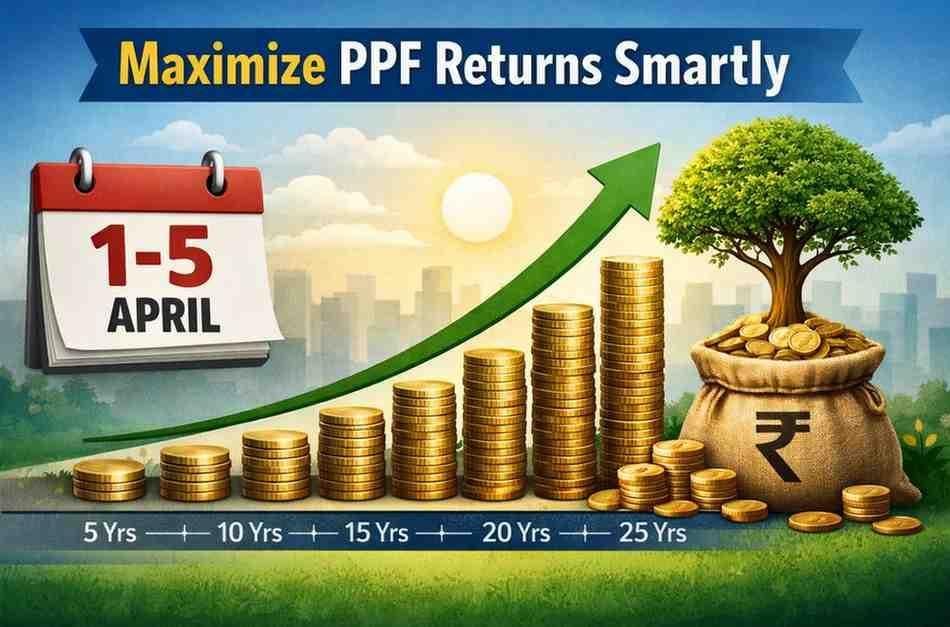
Hitting the 5th of each month matters more than anything else when it comes to PPF growth, simply due to how interest gets figured – based on whichever balance is lower between that date and month-end. Miss by just three or four days? That entire month’s gain slips away. Over years, those missing chunks pile up quietly but heavily. Some people drop money in whenever they can, never noticing the slow drain on total outcome. Take ₹1.5 lakh put in on April 10 rather than April 2; one missed cycle repeats annually, widening the gap sharply after two decades. Those who stay ahead lock in early, treating April’s opening stretch like a fixed appointment. Money moves happen there, no exceptions. This habit aligns naturally with structured systems like 50 30 20 Budget Rule for Beginners where timing and discipline are key drivers of success. Early investing is a fundamental strategy that immediately increases long-term returns, in addition to being a good practice.
Strategy 2: Maximize the Annual Contribution Limit
Putting in the full ₹1.5 lakh each year matters most since growth builds faster when starting with more. Some people add less – cash runs tight or plans fall short – and that slows down how much they gather over time. Early money works harder, thanks to extra years multiplying gains compared to late entries. Missing big deposits at first leaves holes future sums can’t fix completely. Those who keep topping up fully create deeper momentum, letting earnings rise sharply once time takes hold. This approach becomes even more effective when aligned with tax-saving strategies like How to Save Tax with Fixed Deposits to optimize Section 80C benefits completely. What matters most isn’t only cutting taxes – it’s laying down money habits that gain strength year after year. Staying steady while putting in the highest possible amount builds real momentum across decades.
Strategy 3: Understand and Respect Compounding Phases
At first, PPF growth feels almost invisible, since tiny starting sums mean even steady gains look minor. Only after time passes does the pace pick up a bit, though impatience can still make it seem too slow. It takes patience – early exits cut off what could grow later. Midway through, numbers start shifting noticeably, yet not fast enough for some. What seems like little change at the beginning turns into real momentum once the balance builds. Sticking around matters most when the weight of past growth begins pushing future increases higher. Leaving early means stepping away just before things begin moving faster. Long-term presence lets quiet progress become powerful without sudden effort. The biggest leaps come only after years sit undisturbed. Consistency quietly shapes outcomes that short bursts never reach. This concept becomes clearer when you understand principles from 8-4-3 Compounding Rule which emphasize the importance of time. To fully utilize compounding, you must be persistent and patient. The secret to optimizing long-term gains is to remain invested.
Strategy 4: Extend Your PPF Beyond Maturity
When your PPF hits 15 years, staying put can boost gains far more than starting fresh elsewhere. Many pull their money out just then, stopping growth right when momentum peaks. Instead, keeping it open means earnings build on top of already bigger savings. That base keeps expanding, even if you add nothing new. Over time, those uninterrupted gains pile up quietly – still sheltered from taxes, still working hard. The longer it runs, the wider the gap between extended accounts and closed ones. Still putting money in during the extended period boosts outcomes more. Staying in it longer fits how steady investing tends to grow value across years. With extra time, PPF shifts from just saving to building lasting worth. Few take advantage, even though doing so makes a real difference.
Strategy 5: Combine PPF with a Diversified Portfolio
Starting off, PPF keeps money secure yet grows slowly, so mixing in other options helps boost total gains. Depending only on PPF holds back progress since faster market-linked choices are missed entirely. Different types of assets fit into a smart mix – each playing a role in balance, expansion, and access to cash when needed. Safety comes first through PPF, shielding savings while bolder picks push forward movement elsewhere across the plan. This approach becomes more effective when aligned with Simple 3-Bucket Portfolio in India where investments are divided based on purpose and risk level. When you skip spreading investments, chances to grow money shrink. Yet picking varied options brings stability along with gains. How things fit together decides if PPF strengthens your full strategy. Success over years leans on mixing assets right.
Strategy 6: Follow a Structured Investment System
Sticking to a set plan means money goes in steadily, on schedule, matches what you aim to reach. Jumping in without order usually brings overlooked chances, late deposits, uneven progress. When people move step by step – dates fixed, amounts decided ahead – they see stronger finishes. This approach becomes more effective when aligned with life-stage strategies like Smart Rules to Choose the Right Investment Plan by Age which ensure that your investments evolve with your needs. When things get shaky financially, having a plan keeps actions steady. Not just random moves – investing becomes purposeful with clear structure behind it. Long-term success grows more from regular effort plus thoughtful preparation. At its core, strong investing stands on repeated self-control over time.
Strategy 7: Avoid Common Behavioural Mistakes
Slipping up emotionally is a major reason people get less from their PPF savings – tiny missteps pile up over time. Putting money in late, missing entire years, or pulling cash out early breaks the growth cycle, shrinking final gains. Usually it’s impatience or weak follow-through causing trouble, not ignorance. Outside noise plus endless choices pulls attention everywhere, making choices erratic instead of steady. This becomes evident when you understand patterns highlighted in Too Many Investment Options Hurt Wealth in India where excessive choices create confusion. Sticking to the plan matters most when big gains tempt you off track. When routines stay steady, results follow without drama. How you handle impulses shapes success far more than clever moves ever could.
Strategy 8: Stay Aware of Interest Rate Trends
Not locked in forever, PPF interest shifts now and then depending on how the economy moves. Realistic planning comes easier when you see how often those numbers get updated. Shaped by wider market currents and government choices, its stability has limits despite appearances. Future gains might look bigger than they will be if updates go unnoticed. Wrong guesses about income can steer money choices off track. Noticing shifts in interest rates lets reason guide moves instead of feelings. Because changes happen, seeing where PPF fits becomes clearer among everything else held. When updates are followed, choices tend to land on steadier ground. Facts cut through guesswork, making how money is handled more solid. Watching closely beats scrambling after the fact. Interest rate direction is influenced by broader monetary policy tracked by Reserve Bank of India which indirectly impacts long-term PPF expectations.
Strategy 9: Use Withdrawals Carefully
Sometimes you can take out part of your PPF money after some time. Yet pulling funds too often breaks the rhythm of steady growth. Each pullback shrinks the starting balance, tipping what could grow later. Only urgent demands justify taking cash out – keeping big picture aims intact matters more. Those who dip into accounts again and again weaken how well savings work over years. A cushion set aside just for surprises keeps long-term plans untouched when life shifts suddenly. That space between need and action lets PPF grow undisturbed, feeding its full potential slowly. When cash flow moves carefully, interest building over time stays strong. Pulling out funds in check means tomorrow’s stability isn’t spent today. Staying steady while taking money out matters just as much as staying steady putting it in.
Strategy 10: Optimize Tax Efficiency Smartly
A break from just using PPF opens doors to smarter tax planning, even though its EEE status gives solid perks. Yet sticking solely to this route might hold back broader gains across your finances. Mixing it with different tools brings more room to move while lifting potential earnings. Those who map out moves ahead of time often gain more, all while staying aligned with bigger targets. Staying on track financially means keeping things in harmony, not just cutting costs. When you look ahead instead of chasing quick wins, money grows smarter over time. Using several methods together – like pieces of a puzzle – brings better results than relying on one alone. Better choices today ripple through every part of your future. Pulling strategies into one clear path beats working in scattered directions.
Strategy 11: Maintain Long-Term Discipline
Long-term discipline is the most important factor in maximizing PPF returns because it ensures consistency across all strategies. Sticking to a plan works best when emotions stay out of it. Because timing matters, regular deposits grow steadily if left alone. When someone pulls money too often, progress slows down. Instead, letting returns build without interruption widens the gap between steady savers and impulsive ones. Patience wins not by doing more but by changing course less. Tiny shifts in behavior today multiply into big results far later. Consistency beats speed every quiet year that passes. Mistakes fade when effort stays steady over time. Progress grows where action beats waiting. Doing matters more than flawless plans ever do.
Real-Life Example
Example 1: Although both Amit and Raj invest ₹1.5 lakh in PPF each year, their strategies are very different. Raj makes haphazard investments, postpones payments, and takes money out after 15 years, but Amit makes investments before April 5 every year, never misses a deposit, and keeps his account open past maturity. Over time, Raj loses interest because of bad timing and stops compounding early, while Amit gains from full interest and continuous compounding. Amit invested the same amount, but after 25 years, his corpus is much larger. Rather than income level, discipline, timing, and long-term thinking are what make the difference. This illustration makes it very evident that strategy is more important than investment size. Wealth is produced via consistency and optimization.
Example 2: Priya begins saving into PPF around the same time as Neha, yet only puts in small sums – her spending habits leave little room for steady deposits. Meanwhile, Neha drops the entire ₹1.5 lakh each year without fail, treating it like clockwork. While one sticks to a clear method, never touching the balance once locked in, the other dips into funds now and then when sudden costs pop up. Because money grows on top of past gains, those untouched years stack up heavily for Neha. Even though both stayed invested equally long, gaps in Priya’s flow weaken how much accumulates over decades. Bigger inputs plus consistency turn out to matter far more than just starting early. Differences in habits create big gaps in outcomes. Sticking to a plan beats random efforts every time.
Advanced Insight: Behavioural Advantage
How people act shapes their investing results more than almost anything else. It decides if plans actually get followed, day after day. Many understand the right moves yet still stall, drift off track, or react on impulse. Sticking to a method without constant tweaks helps patient ones pull ahead slowly. Doing the same smart things repeatedly grows value quietly over years. Tiny upgrades in self-control can snowball into large outcomes given enough time. Mistakes fade when clarity takes hold, guiding those who invest with steady eyes. Wealth grows not in bursts, but through quiet repetition over time.
Quick Summary (Action Steps)
- Every year, invest before the fifth.
- Make the most of the ₹1.5 lakh donation
- Maintain long-term investment
- PPF should be extended beyond 15 years.
- Increase portfolio diversity
- Adhere to organized planning
- Steer clear of behavioral errors
Conclusion
When utilized properly, PPF is a potent long-term wealth-building strategy in addition to a tax-saving tool. Most investors fail to maximize PPF returns because they focus on participation rather than optimization. Start now, that timing shapes results more than planning ever could. Push past hesitation when adding funds regularly because consistency beats intensity every single time. Stick with it even when progress feels invisible since patience builds what effort alone cannot. Stretch the timeline out further so compound growth has room to breathe and multiply. See PPF not as paperwork but as a living structure shaped by habits repeated without fanfare. Watch how quiet dedication turns small actions into lasting strength.
FAQs
Q1: How can I efficiently optimize PPF returns?
Invest before the fifth of each month, contribute the entire annual cap, and maintain consistency over time to optimize PPF returns. When combined, discipline and timing have the largest effect on returns.
Q2: Is an annual PPF investment preferable than a monthly one?
Because the entire sum generates interest for the entire year, annual investments made before April 5 are typically better. Investing on a monthly basis is only effective if deposits are regularly made before the fifth.
Q3: Should I extend my PPF account after maturity?
Yes, you can continue to compound your accumulated corpus by extending your PPF account. When compared to withdrawing at age, this greatly boosts long-term returns.
Q4: Can I take money out of PPF at any time?
After a certain amount of time, partial withdrawals are permitted, but frequent withdrawals lessen the benefits of compounding. For long-term objectives, PPF is preferable.
Q5: Is PPF sufficient for saving for retirement?
Due of its low growth potential, PPF is insufficient on its own for retirement planning. For a balanced portfolio, it should be paired with other investments.
Disclaimer
This post does not offer financial advice; it is solely intended for educational purposes. Individual goals and risk tolerance should be taken into consideration while making investment selections. Before making financial decisions, always check the most recent recommendations because PPF rules, interest rates, and tax laws are subject to change.