
Cheap health insurance may look affordable but can cost you lakhs during emergencies. Discover 9 dangerous cheap health insurance risks and avoid costly financial mistakes. cheap health insurance risks, low premium health insurance problems, health insurance mistakes India, insurance claim rejection reasons, health insurance coverage India, hidden risks of health insurance.
Introduction
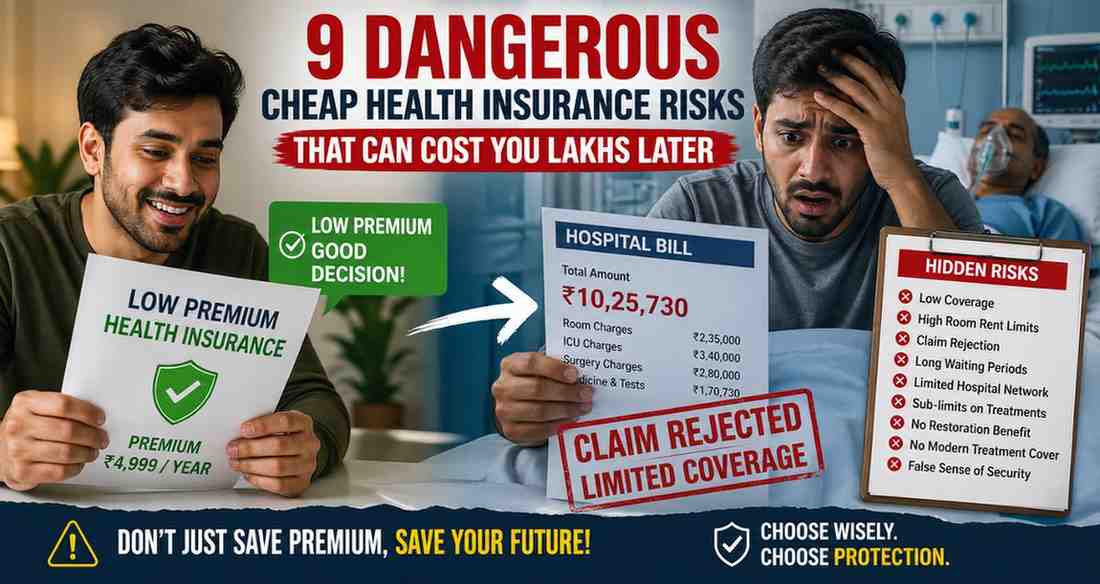
Picking a health plan just because the price looks small might seem wise if money is tight each month. Some think simply owning a policy covers their needs, believing most options function alike. Yet trouble strikes later, once an emergency hits and bills pile up. What seems fine at first turns out lacking when help is actually needed. Fine print sneaks in limits, skimpy pay outs show up, rules block access – suddenly protection fades. Real cost hides until the moment it matters most. Understanding cheap health insurance risks is essential because one wrong decision can wipe out years of savings. Financial mistakes often appear small in the beginning but create long-term damage, just like patterns seen in silent financial mistakes to fix now where minor decisions lead to major consequences over time. When things go wrong, having health coverage means you’re ready. It isn’t about cutting expenses – it’s what keeps your finances steady during surprises. Without it, tough times get harder just when help matters most.
1. Low Coverage That Fails in Real Emergencies
Imagine this. A tiny safety net might leave you stranded when illness hits hard. Many bargain plans promise just 2 to 3 lakh rupees – sounds okay until trouble shows up. Today’s hospitals charge far more than they did even a few years back. Think about it. Basic stays in private centres often run past 5 to 7 lakhs now. Need intensive care or scans? Maybe an operation? Bills zoom beyond 10 lakhs before you know it. When this happens, insurance often runs out fast, so you must cover what is left by yourself. Facing these costs means pulling money from savings, borrowing it, or cashing in assets – plans built over years suddenly fall apart. Many individuals underestimate future expenses in the same way they ignore how inflation impacts your wealth over time and reduces purchasing power gradually. Policies that cost little give comfort where there shouldn’t be any – what seems like enough cover often fails when needed most. Not going deep on protection doesn’t save money; instead, it opens the door to serious cash trouble later. When planning insurance, thinking ahead about climbing health care prices makes real difference in staying shielded. Skip that step, and something small might spiral fast into overwhelming debt.
2. Room Rent Limits That Reduce Entire Claim Amount
Priced ceilings on rooms often fly under the radar when picking budget health plans, though they shape how much you get paid back. Some affordable covers set a fixed threshold – say, ₹3,000 or ₹5,000 – for each night spent in a bed. Pick a ward above that line, needed or not, and the company scales down every part of your invoice. Suddenly, it’s not just lodging; surgeons’ bills, treatment tabs, even medicine tallies shrink by the same slice. Most people don’t expect it – their wallet takes a big hit covering hospital costs themselves. That shock hits hard when they realize limits on room fees aren’t the only thing shaping what insurance pays. Such hidden conditions behave like financial traps where small overlooked details lead to large losses, similar to patterns seen in hidden charges in insurance policies India that quietly increase expenses. Most insurance plans weaken when room charges are capped too low. When limits kick in, coverage might vanish just when you need it most. Better policies skip the ceiling entirely or set boundaries close to actual ward pricing today. Trouble shows up later if this detail gets overlooked. Knowing how each plan handles stays inside hospitals shapes smarter picks ahead of time.
3. High Claim Rejection Due to Fine Print Conditions
Getting turned down for coverage hits hard – especially when you picked an affordable plan hoping it would help. Hidden terms buried deep in the contract often trigger these denials, waiting silently until trouble strikes. Many plans leave out common treatments, demand perfect records, and hinge on rules never properly shared during sign-up. Folks skip reading every line, trusting what the agent said instead of what’s written. When illness hits, there’s an automatic belief costs will be handled without issue. Reality shifts fast if past health details weren’t mentioned, forms miss a signature, or the care needed isn’t listed as covered. The shock piles up right when strength is lowest, draining both wallet and spirit alike. Many people face similar stress when dealing with claim issues like health insurance claim delayed situations where lack of clarity turns into financial pressure. Most budget-friendly plans tend to come with tighter rules, making it more likely claims get turned down. Watch the fine print closely – missing one detail might cost you later. Paying just a bit extra could mean clearer terms plus stronger backing when filing a claim. What matters most? Knowing your coverage won’t vanish when needed. Feeling sure beats guessing every time.
4. Long Waiting Periods That Limit Actual Benefits
Most folks overlook how much waiting times can hurt when it comes to budget-friendly health coverage. Though prices seem appealing at first glance, hidden delays on claims quietly take away value. A gap of two to even four years commonly applies before getting help for existing issues or certain procedures. Without warning, medical bills pile up fast – costs fall straight onto your shoulders until that clock runs out. Protection feels instant once paperwork goes through, though real benefits arrive slowly, piece by piece. Trusting too soon may leave pockets empty right when life hits hardest. This kind of false security mindset is similar to mistakes people make in common retirement errors where they believe they are prepared but overlook critical gaps. Most people expect coverage right away, yet delays often block access just when it matters. A plan with faster benefits start times plus upfront details might prevent trouble later. Help arriving too late misses the point of having backup at all. Costs piling up happen easier if timing rules are overlooked.
5. Limited Hospital Network Creates Access Problems
Most budget health plans come with a smaller list of partner hospitals, making it harder to get care fast when trouble hits. Fewer facilities mean fewer choices, particularly if your go-to clinic isn’t on their list. Without access to cashless service, out-of-pocket costs land right away – no delays, no exceptions. Pulling together big payments in a hurry? That pressure piles up quick, just when calm matters most. Reimbursement might happen weeks later, yet the stress of front-loading expenses doesn’t vanish. What seems like savings early can turn into strain overnight. When getting help feels like climbing a mountain, what’s the point of paying every month? Getting care without hassle matters just as much as the fine print – useless protection isn’t really protecting anything. Financial preparedness is not just about having insurance but also about maintaining liquidity, which is why building an emergency fund in India becomes equally important. Most times, hospitals far from home won’t accept your plan unless the insurer works with them. Without that link, visits turn into messes – paperwork piles up, care slows down. When clinics nearby are part of the deal, getting help feels lighter, costs stay predictable.
6. Sub-Limits on Treatments Reduce Claim Benefits
Hidden caps quietly shrink what you actually get from low-cost health plans. A small print rule might only cover part of a procedure despite high overall numbers. Say the plan says five hundred thousand rupees, yet an operation gets just fifty thousand. You end up covering extra costs out of pocket without expecting it. These fine-print boundaries stay buried until you need them most. Sales talks rarely mention these narrow limits upfront. What looks like full support turns thin when treatment goes beyond set amounts. Details hide where few think to check before signing. Coverage gaps appear suddenly during claims. The real value shows only after the bill arrives. When what you get falls short of promises, money troubles often follow during medical stays. Because coverage caps chip away at protection, trust in the policy fades when it matters most. These limitations behave similarly to financial products where understanding real outcomes becomes important, and regulatory clarity from Insurance Regulatory and Development Authority of India ensures that such conditions are disclosed, though often overlooked by buyers. Most surprise costs come from overlooked caps buried in fine print. When limits slice coverage into tiny pieces, wallets pay more later. Picture peace vanishing because some detail slipped through cracks. Every gap found early becomes safety built ahead. Protection grows stronger when boundaries stay wide open instead of hidden behind rules.
7. No Coverage for Modern Medical Treatments
These days, medicine moves fast – fancy care pops up everywhere, though it usually costs a lot. Basic insurance plans skip those options just to save on price tags. Think robot-led operations, cutting-edge tumour fixes, or brand-new gear in clinics. When illness hits and one of these methods is needed, paying falls straight onto you. That weight might crush a budget without warning. Most low-cost plans shut doors to advanced medical care, pushing people toward less effective choices. Down the road, skipping ahead in coverage might backfire badly when health changes strike. Looking forward matters, much like money plans shift as life unfolds – reports from the National Health Authority show expenses climbing, methods transforming. Protection worth having adapts, folding in new therapies before they’re needed. Sticking to bare-bones policies often spills into heavy out-of-pocket tabs later. Looking ahead matters more than just counting today’s costs when it comes to health care. When this piece gets overlooked, sudden medical crises can turn into much bigger problems.
8. No Restoration or Bonus Benefits
Most low-cost plans skip key perks like refillable coverage and rewards for not filing claims – both vital when managing future costs. When a plan includes restoration, your limit resets even after using it, so protection lasts all year. Staying claim-free can boost your total coverage gradually, adding safety while keeping payments nearly the same. Missing those elements leaves gaps, particularly if several hospital stays happen close together. When just one treatment uses up all your insurance money, nothing remains for later needs that year. Facing big bills becomes harder once coverage runs out early. Spreading risk wisely helps keep finances steady, much like mixing different assets in investing. Protection makes more sense when built in levels instead of relying on a single layer. Recent patterns tracked by the Insurance Information Bureau of India reveal claims happen more often now, highlighting why structured safeguards matter greatly today. Most people overlook these details, yet they shape how far your coverage goes over time. A smarter pick – like one that includes rebuilding help along with extra perks – brings stronger support when it matters.
9. Cheap Premium Creates False Financial Confidence
Surprisingly, low-cost health plans can mess with your mind more than your wallet. Some folks think just owning insurance means safety, never checking what it actually includes. Because of this mindset, few ever look closely at improving their plan. When trouble hits, gaps in coverage show up fast – yet many stay blind to the risks until too late. This way of thinking pushes people toward weak money choices, while also leaving them exposed when surprises hit. A sudden event shows fast how thin their coverage really is. Comfort-driven picks tend to ignore facts, building trouble down the road. Real safety matters more than feeling safe for now. Picking plans by price alone opens doors to steep costs later. Most people feel clearer once they know what their plan really covers. When surprises happen, it helps to have seen them coming. Seeing both sides clearly means fewer problems later on. Knowing limits matters just as much as knowing perks. Feeling safe often comes from simply understanding the details.
Real-Life Examples
Example 1: An office worker bought a three lakh rupee health plan hoping to lower yearly costs, thinking it’d cover big emergencies. Hospital bills climbed close to nine lakhs after an unexpected illness brought surgery and intensive care. Coverage ran out fast – treatment caps plus limited overall protection left gaps early in the stay. Money for what remained came from borrowed funds and cash set aside for urgent needs. Strain grew heavier, affecting healing as worry took its toll alongside physical recovery. A choice that felt wise at the time slowly became a heavy cost over years. When shortcuts in coverage backfire, lives feel the weight – not just budgets.
Example 2: Picking a cheaper health plan, the family didn’t look closely at room rent caps buried in the paperwork. When treatment began, needing a higher-grade room felt unavoidable – comfort wasn’t the reason, care was. That single choice triggered cuts throughout the total cost, even on fees for procedures and specialists. The payout shrank sharply, leaving most of the invoice for them to cover alone. Money meant for future goals now had to go toward hospital bills instead. Later on, they saw how a modest upgrade in rules might’ve prevented the whole thing. Overlooking little details – room rental caps, for example – ended up backfiring hard.
Example 3: A fresh start in the working world led one person to pick a low-cost health plan, drawn by smaller monthly payments but tied to lengthy delays before coverage kicks in. Soon after – just twenty-four months passed – a serious health issue showed up needing fast care. Sending in paperwork for help, the company said no thanks, pointing straight at fine print about those early days being off-limits. All bills landed on his desk alone, draining money set aside and shaking what came next. That moment revealed something sharp: when things got worst, the safety net vanished like smoke. Surprise bills piled up when cheap premiums took priority over real protection. Because gaps in understanding delayed benefits, the safety net frayed just when it was needed most.
Conclusion
Low-cost health plans might seem smart at first, yet they frequently carry dangers that show up when help is needed most. Tiny payouts, secret caps, rejected claims, alongside missing features can transform minor savings into major stress later. Protection matters more than price tag when picking coverage. Paying a bit extra monthly opens doors to stronger shields when illness strikes. Reading fine print carefully, weighing what each plan covers, preparing for possible medical events – these shape smarter choices ahead. A steady future isn’t built only by putting cash aside – bouncing back from surprises matters too. Picking a fitting insurance plan keeps things balanced when life turns unpredictable, shielding what you’ve worked toward over time.
FAQs
Q1: Is low-cost health insurance a wise choice?
Spending less on a health plan might sound good – yet narrow benefits could leave you exposed when trouble hits. Fewer protections mean gaps appear just when help is needed most. Premiums that run a bit above average often bring stronger coverage along with greater stability down the road. A bump in cost today can mean fewer worries years later.
Q2: In India, how much health insurance coverage is sufficient?
Most people find that starting at ₹5–10 lakh helps cover growing healthcare bills. Those living in cities or supporting families often look beyond that range. Though costs climb, some stick close to the baseline – others stretch further without saying much. When you have enough coverage, big medical bills won’t hit your wallet hard if you’re admitted.
Q3: Why are claims for health insurance rejected?
Claims are frequently denied because of exclusions, non-disclosure, or noncompliance with policy requirements. When buying insurance, many people forget these details. Reducing the likelihood of rejection can be achieved by properly reading the policy statement and comprehending its terminology.
Q4: What is the most common error made when purchasing insurance?
Most people pick insurance just because it costs less each month. Yet skipping the fine print means surprises when trouble hits. Protection too weak shows up fast in crises. Thinking ahead matters more than saving now. What lasts often beats what’s cheap at first glance.
Q5: Should I upgrade my existing health insurance policy?
Should your plan cover too little or limit what’s included, moving up makes sense. Protection gets stronger when changes happen. Less worry about costs shows up if updates occur. From time to time, checking the policy helps keep pace with rising healthcare costs. It stays useful when life changes happen around you.
Disclaimer
Just so you know, this piece shares info but gives no money advice. Since everyone’s situation differs, what works for one might not fit another. Take time to go through insurance papers – details matter there. Getting help from someone trained in finance could make things clearer. Outcomes depend on choices made, not on these words alone.