
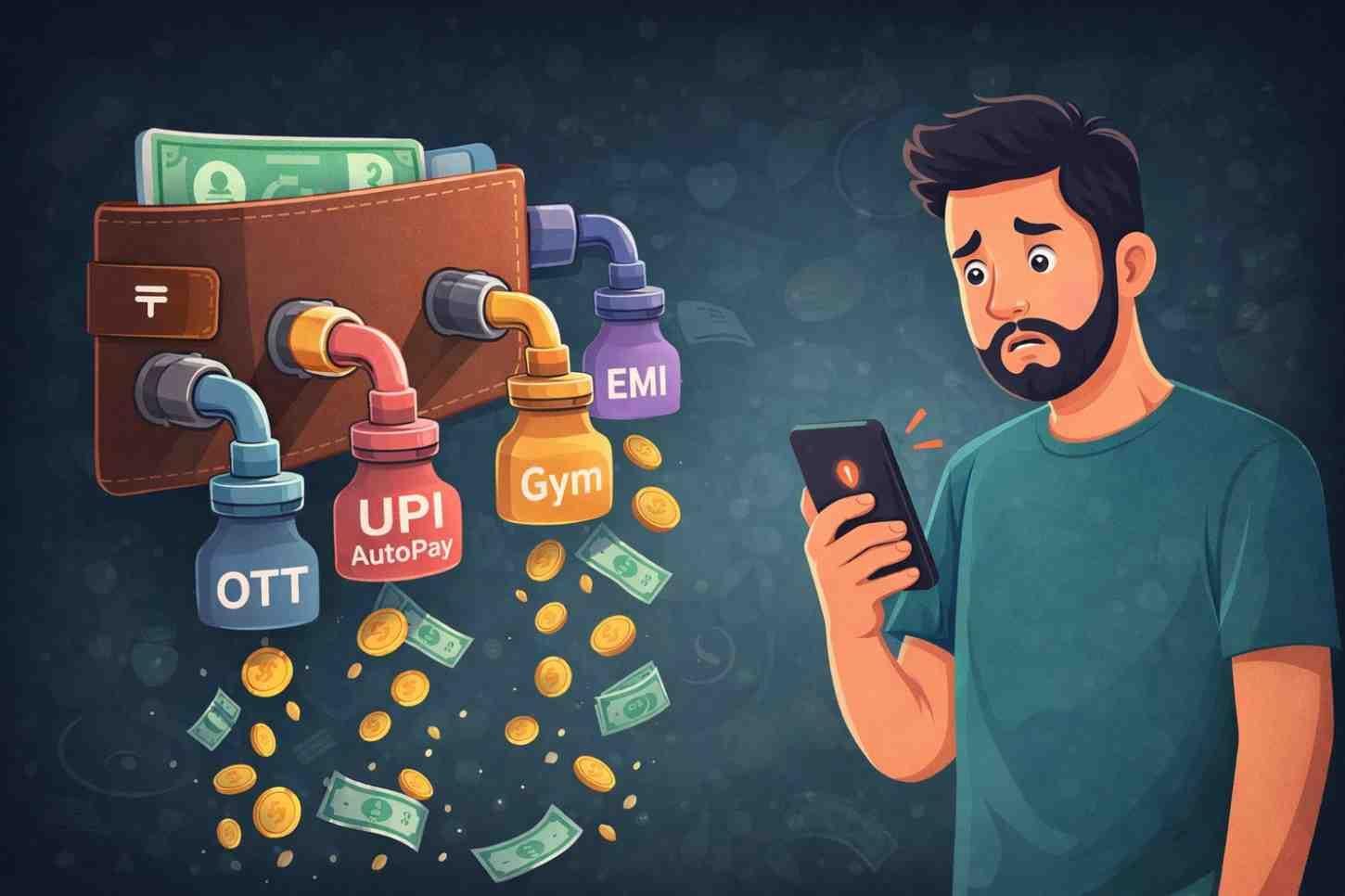
Your money may be disappearing every month without you noticing. Discover 9 auto debit traps in India that silently drain your savings and learn how to stop them before it’s too late. auto debit traps in India, recurring payment mistakes, subscription traps India, hidden bank deductions India, UPI autopay risks, auto debit charges India.
Introduction: The Silent Money Leak You Don’t Notice
Month after month, cash slips away. It feels like bills grow, prices climb, daily life gets pricier. Yet maybe something else drains funds while you’re looking elsewhere. Small exits, steady leaks – payments that whisper rather than shout. No major buys take the hit. No bold moves shift the numbers. Just quiet repeats, automatic tugs beneath routine vision. Payments now happen without effort across India thanks to automatic withdrawals. Missing deadlines slips your mind, penalties fade away, life seems smoother as a result. Yet ease hides a downside – less awareness creeps in unnoticed. Small sums leave accounts monthly while few pay attention, slowly building pressure on budgets when left unchecked. This becomes more evident when people start analysing their finances through a practical system to save money from salary in India and suddenly realize how much money was slipping away unnoticed.
What Exactly Is Auto-Debit and Why It’s Dangerous
Money leaves your account, card, or UPI handle on its own when set up through auto-debit – no click needed each time. Firms use this for monthly charges like streaming plans, loan parts, protection fees, power invoices, online tools. At first glance, it feels smooth – saves you from tracking deadlines, avoids late penalties by accident. Yet trouble sneaks in quietly once payments run themselves. When cash flows without thought, choices fade into background noise. Something shifts after a while. The need fades from view, forgotten under routine. Instead of checking worth, you just pay. Little by little, cash slips out automatically. Silence replaces choice. Awareness blurs into background noise. Decisions vanish. What once mattered now runs on default. Even though regulations like the RBI e-mandate rules for recurring payments require notifications before deductions, most users ignore these alerts or treat them as routine messages. Out of sight, those quiet drains on cash grow unchecked. What slips by isn’t broken tech – it’s the slow fade of attention, where tiny hits stack without alarm. A drip here, a fee there – soon routine. Control thins when noticing stops. Normal settles around loss, shaped by silence.
1. Forgotten Free Trials That Turn Paid
One reason free trials exist? They make saying yes feel effortless. Signing up seems harmless – no money changes hands, no promises made, nothing locked in. Yet once payment info goes in, a silent charge setup kicks off behind the scenes. People plan to opt out ahead of time, sure. Life gets noisy, attention drifts, timing slips. One minute you’re trying a service, the next – money leaves your account without much noise. Small fees slip through because they do not feel urgent, barely noticed at first. Left unchecked, these quiet drains multiply across apps, memberships, tools. Each one alone is tiny, together they form a steady leak. Companies build this silence into design, counting on distraction and mental clutter. People often spot them only after tracing where funds go each month. A pattern emerges when pay checks stay flat but bank balances shrink. Money vanishing each month? Blame slips through the cracks when choices go on autopilot. Without a clear yes from you, spending boundaries start to blur. Quiet leaks shape habits faster than big splurges ever could.
2. Multiple OTT Subscriptions You Barely Use
These days, lots of people pay for entertainment every month. Streaming shows, listening to songs online, or getting special articles – each promises something different. Yet many folks keep several at once, even if they rarely use them. At first, it seems worth it, maybe due to one show or a new hobby catching attention. Over time, people stop using services yet keep paying. When each subscription renews at its own pace, adding up monthly costs gets tricky. One by one, the fees look small – yet together, they take a real bite from your wallet. Slowly, spending creeps upward even though nothing truly better comes from it. Many individuals realize this only when they examine how everyday spending patterns are affecting their long-term savings, especially when analysing the impact of lifestyle expenses on savings. Here’s how it sneaks in. When all your friends stream the same apps, paying feels normal, almost automatic. Yet staying aware means checking what slips out each month, making sure cost matches real need. What matters is whether you actually use it, not just that others do.
3. Auto-Debit Insurance Premiums You Don’t Review
Luckily, money stays safer when insurance covers the risks – but too many buy it just once then ignore what comes next. Payments slide through automatically, keeping policies alive without missed dates. Still, convenience kills checkups; nobody looks back at fine print anymore. Some keep funding outdated deals that barely pay out or overlap with newer shields already active. Slowly, extra layers pile up while old contracts stay open, quietly draining cash. Frozen payments keep rolling without checking if they’re worth it anymore. Without that nudge to rethink, people pretend their choices make sense – yet cash stays stuck in plans doing little good. The situation becomes more concerning when hidden costs and charges are involved, similar to patterns observed in hidden charges in insurance policies in India. The absence of regular evaluation is the main problem, not insurance per se. Auto-debit frequently makes it difficult to reevaluate financial goods in light of your goals, income, and stage of life.
4. EMI Deductions That Continue Even After Closure
Paying off a loan does not always stop automatic withdrawals right away. Sometimes, money keeps coming out of your account because the system lags behind real-life updates. Other times, paperwork ends late or someone forgets to turn off the payment order. People often believe everything halts by itself after clearing their debt. The truth? That belief leads straight into extra charges without warning. Even when you finish paying, old setups might still run like clocks missing an alarm. Only sometimes do we remember to cancel recurring payments. Most times, those continue running unless someone stops them directly. A tiny deduction might slip under the radar for many weeks. Later on comes the shock – money gone, time lost. Spotting these slips means actually reading the bank summary every now and then. Confirming that something ended really did end matters more than assumed. Trusting the process completely? That habit causes most of the trouble. Watching your money means staying involved, never guessing. When payments are scheduled regularly, someone still needs to check in now then so mistakes do not slip through unnoticed.
5. Subscription Apps That Renew Automatically
Signing up for digital tools is fast, thanks to online access. Productivity apps or learning sites get used for brief periods, yet people forget them quickly. These subscriptions turn on automatic billing by default. Without stepping in to stop it, the charges go on forever. A small setup leads to long-term payments if ignored. Here’s the problem: those sign-ups usually link to short-term aims or passing needs. When the reason fades, the service sticks around without serving any real function, yet billing marches on. Slowly, people gather several unused memberships that silently pull cash each cycle. It works like unseen fees buried in banking tools – quiet neglect causes steady leakage. What hurts most isn’t the price tag, it’s how easily the outflow escapes notice. Money slips away without you noticing since the cut comes straight off the top. When paying isn’t tied to choosing, awareness fades. Slowly, that gap wears down how well you can stay on track with your budget.
6. Credit Card Auto-Pay Without Monitoring
Paying your credit card automatically often helps dodge late penalties while supporting solid credit standing. Still, trouble starts if nobody looks at the monthly statement anymore. Spotting odd charges gets harder when every purchase isn’t scanned – fraud slips through, double billing hides, unused memberships linger. It feels safer letting payments run on their own, yet that ease sometimes breeds carelessness. Later on, budgeting often slips when consequences aren’t seen right away. Bills creep up month by month, while saved amounts slowly shrink. Many users fall into this trap due to misconceptions around credit usage, especially when influenced by common credit card myths that affect financial decisions. Disconnecting spending from awareness is the true risk. Credit cards need to be actively monitored, and auto-pay should reinforce discipline rather than take its place.
7. UPI AutoPay Mandates You Forgot
Quick taps now handle repeat bills across India, thanks to UPI AutoPay. Still, swift approvals sometimes stick around too long. Many sign up without reading how long they’re locked in. Months pass, services fade away – yet the permissions stay alive underneath. Because UPI payments tend to be tiny and happen all the time, they slip under the radar. So little hits your account here, another bit there – soon it adds up without you noticing. Hardly anyone knows exactly how many automatic approvals they’ve given across apps. Left unchecked, those quiet charges just keep pulling money month after month. Even though instant transfers make life easier, staying informed matters just as much. Each approval ought to have a real reason behind it, nothing more.
8. Bank Charges Linked to Auto-Debit Failures
When automatic payments fail, extra costs often follow – costs people rarely expect. A lack of funds might stop a withdrawal, which opens the door to penalties, failed transaction fees, or delays marked as late. One missed charge can snowball fast, particularly if several recurring bills pull from the same low balance. Trouble grows deeper once you factor in hidden rules like required minimum balances or caps on withdrawals few remember checking. This is similar to the hidden costs people encounter in everyday banking, particularly when dealing with ATM withdrawal charges and banking rules. Here lies a problem most miss. Success grabs attention, yet failure hides in shadow. Paying close attention means seeing wins, also stumbling points. Money clarity comes not just from smooth outcomes, rather those moments where systems crack. What unfolds during errors matters as much as perfect runs. Real insight lives in that balance.
9. Gym Memberships & Annual Plans You Don’t Use
Early excitement usually drives people to sign up for fitness centers. Some facilities provide lower yearly rates, nudging members toward one-time charges or automatic recurring billing. Still, regular visits drop off after a few weeks. Even when workouts stop, money keeps moving out of accounts. Something slips through – the plan versus what actually happens, leaving cash gone but nothing gained. Here’s how it plays out: hope gets in the way, people thinking next month will be different, so they let subscriptions ride. Months pass, usage drops off, yet bills keep arriving like old habits refusing to quit. At first the amounts barely register, tiny leaks in the background noise of budgets. But look closer – it’s not about one charge, it’s the rhythm of forgetting to check. Spotting that loop changes everything, turning invisible drains into choices made on purpose.
Why These Traps Work So Well (Psychology Behind It)
What makes these traps work lies in how people naturally act. Small costs often get overlooked since folks believe they’re insignificant. When payments happen automatically, the sting of spending fades away. Little withdrawals repeat so often that eventually they seem normal. Questions about them slowly disappear. Too much on your mind plays a big role too. Handling many money tasks makes ease more appealing than staying in charge. Because of this, automatic withdrawals move choices from something you do to something that just happens. Since nothing bad shows up right away, there is little reason to act fast. Losing ₹199 seems small at first, yet when repeated across time, those drops fill a large bucket. Hidden charges, tiny feelings of loss, plus effortless setup form a quiet machine – slowly pulling funds while avoiding notice.
How to Identify Your Active Auto-Debits
Spotting ongoing automatic withdrawals takes attention since they quietly repeat each month. Your bank records hold clues – go through them carefully to catch repeated charges. Notice when payments appear on similar days or match exact sums, a sign of scheduled pulls. Head into your online banking menu to find preset orders tied to your account. Start by opening your UPI app – look around for a tab labeled something like automatic payments. Spotting those credit card bills? Go through them slowly, line by line, since repeat charges often hide there. Messages or emails might hold hints too, particularly when you scan for words tied to billing cycles or sign-ups. Build one full record of every ongoing deduction; only then does it become clear what stays and what goes.
How to Stop These Money Leaks Immediately
Fixing these leaks starts with noticing what slips through. One way is dropping subscriptions you ignore now. Where it fits, turn off automatic renewals while pulling stored payments from seldom-used services. Talk to your bank about killing unused permissions so shut accounts stay clear of ongoing debits. Check your money records often enough to spot surprise charges before they grow. Before your subscriptions renew, try setting alerts. That way, choices about keeping or dropping them feel clear. Doing this fixes today’s money drips while slowly teaching you to stay ahead. Staying on top now shapes how you handle things later.
Smart Prevention Strategy (Simple but Powerful)
Most times fixing things after they go wrong takes more effort than stopping them ahead of time – especially with automatic payments. Track every subscription you have, note how much each one costs and when it renews. Try putting all those charges into one dedicated bank account so your everyday money stays safer. Your pay check should land somewhere else, not tied straight to payment authorizations. Move a set sum monthly to cover the bills instead. When you set clear boundaries, it keeps overspending in check while shielding your main funds from surprise withdrawals. Checking each subscription now and then means what you pay still matches what matters to you right now.
The Bigger Realization Most People Miss
Out here, auto-debit pitfalls do more than drain cash – they expose a quiet disconnect from personal finance. Money vanishing on its own? That’s often a sign someone’s stopped steering the ship. Without noticing, that hands-off habit might creep into choices around saving, investing, or future goals. Getting ahead isn’t only tied to income – what matters just as much is how well current resources get handled. Spotting those tiny, steady losses opens a door – to tighter habits, clearer decisions, real ownership over money.
Soft CTA (Curiosity Gap)
Money moves differently when you stop just saving and start setting up routines behind it. Few notice this, yet most stay stuck watching balances shrink. Spotting patterns in spending opens doors that seemed locked before. Because of these small realizations, handling cash gets less messy over time. What looks like luck at first turns out to be noticing details others skip. This quiet change reshapes everything about how numbers feel each month.
Conclusion
Just because payments happen automatically does not mean they are harmful – yet trouble starts if you’re unaware. What feels like a minor weekly cost might add up more than expected after months go by. Spotting quiet drains on your balance means checking what you’re signed up for, one by one. Control returns once you see where your cash goes each month. Watching every outflow closely makes room for better choices later. Clarity comes before change, and watching is how clarity arrives. Starting to notice how you spend changes everything. Little by little, awareness builds a sturdier base for money matters. Fixing tiny drains opens doors – quietly – to lasting balance and room to grow.
FAQ related to Auto Debit Traps in India
Q1: What is auto-debit in India?
Bills vanish from accounts without warning when auto-debit kicks in. Sometimes convenience hides small leaks – money slips out unless someone checks often. Payments happen through cards, apps, or banks on their own. Skipping close attention might mean surprise shortages later.
Q2: How can I verify if my auto-debit mandates are active?
You can view the list of active mandates and subscriptions on credit card dashboards, UPI apps, or net banking. Finding recurrent deductions is another benefit of reviewing bank statements.
Q3: Is it safe to utilize auto-debit payments?
They handle transactions securely, but if you don’t keep a close eye on them, they could be dangerous. Unnecessary or undetected deductions may result from a lack of oversight.
Q4: Is it possible to stop auto-debit at any time?
Yes, you may quickly cancel mandates through the platforms of the majority of banks and apps. However, the procedure could change based on the mode of payment.
Q5: Why do small auto-debits eventually become a major issue?
Even while little amounts don’t seem like much on their own, they add up to a big monthly price. This slow effect frequently goes unnoticed until it has a major influence on savings.
Disclaimer
Just because something works for one person does not mean it fits another when it comes to money matters. What you see here serves learning goals, nothing more – never treat it as guidance for your finances. Each situation stands apart, shaped by unique choices, timelines, and conditions that differ widely. Before doing anything, check every fact through your bank or someone trained in finance rules. Stories used to explain ideas are rough sketches, not guarantees everyone will experience the same thing. Someone wrote this. Someone published it. Neither takes blame if money choices go wrong after reading. Care should always come first. Thinking twice matters just as much when handling personal funds.