
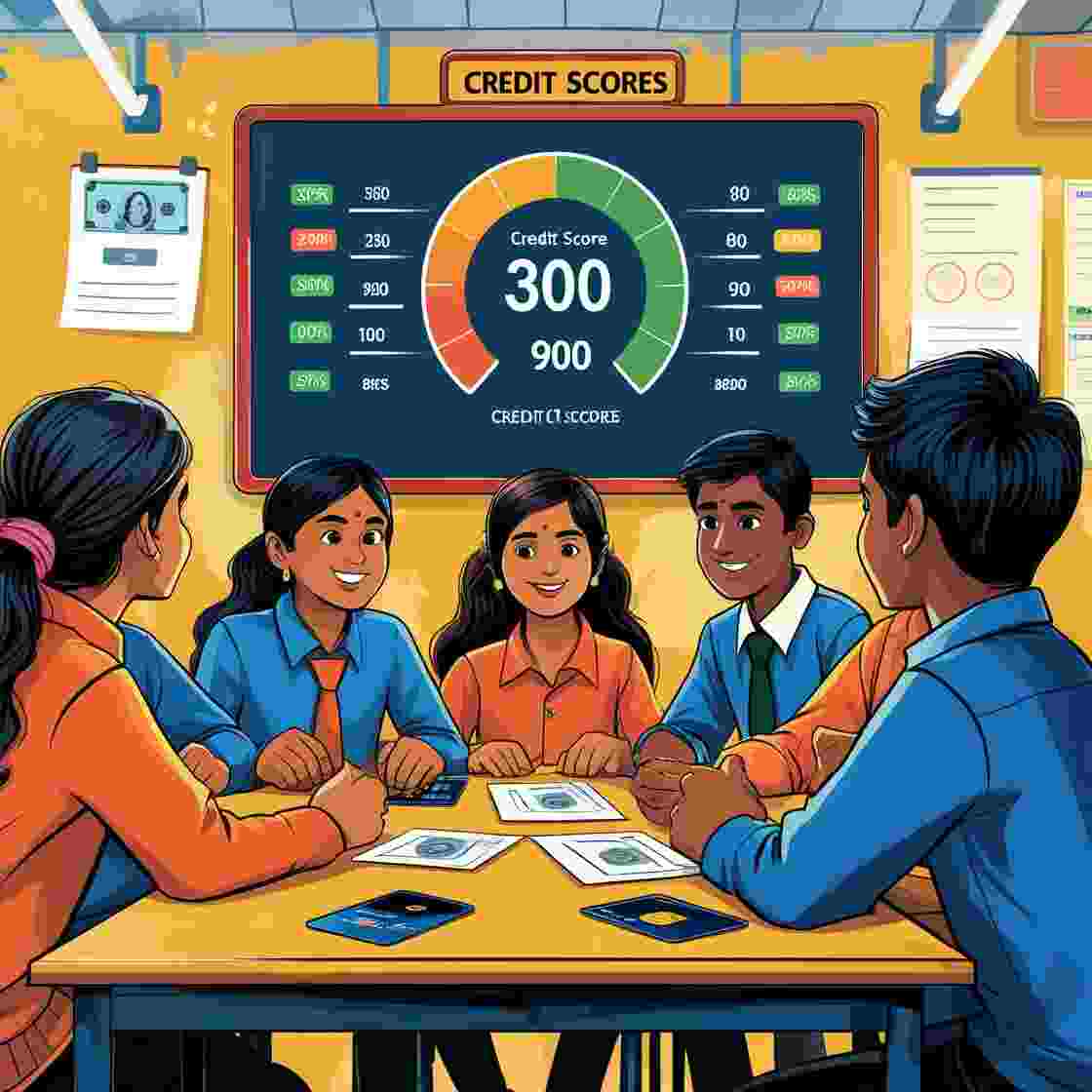
Discover why credit score education in Indian schools is vital for empowering students with financial wisdom. Learn how early education can prevent debt disasters, foster smart borrowing, and secure a prosperous future for India’s youth. #credit score education in Indian schools, #financial literacy in India, #teaching credit scores to students India, #credit score awareness for youth, #benefits of credit education India, #financial discipline in schools, #credit management education India
Introduction
Imagine a young Indian student who has just graduated from school requesting for their first student loan and having it rejected because of an enigmatic figure known as their credit score. Unbeknownst to them, this figure determines their financial prospects, yet it is hardly ever discussed in Indian schools. Credit score education in Indian schools could change this, equipping students with the tools to navigate the modern financial landscape confidently. Understanding credit ratings is now essential to avoiding crippling debt and securing a stable future in a country where loans for homes, education, and even cellphones are widespread.
Based on variables like credit utilisation and repayment history, credit scores—which are determined by bureaus such as CIBIL or Equifax—show your level of financial stability. Millions of young adults in India enter adulthood without understanding how a single late payment can ruin their goals since credit score education is not taught in schools. This blog explores five compelling reasons why integrating credit score education in Indian schools is essential. In line with India’s goal of economic expansion, we may avoid disastrous financial errors and raise a generation of financially astute individuals by promoting early knowledge.Let’s dive into why credit score education in Indian schools is a game-changer.
1. Demystifying Credit Scores: Building a Strong Financial Foundation
Credit score education in Indian schools begins with the basics: what is a credit score, and why does it matter? Your timely loan repayments, credit card use, and credit enquiries all have an impact on your credit score, which normally ranges from 300 to 900. For instance, keeping your credit utilisation ratio below 30% will raise your score, but making late payments can drastically lower it.
By introducing credit score education in Indian schools, students can learn these mechanics through engaging methods like quizzes or mock credit scenarios. They would be aware that while a score below 600 can result in rejections or extremely expensive interest rates, a score above 750 opens up better credit arrangements. Young individuals in India run the risk of making poor decisions, such as excessive credit card use, that can follow them for years if credit score education is not taught in schools.
Positive feelings of empowerment and control are fostered by this fundamental knowledge. In order to prepare kids for success in a credit-driven economy, credit score education in Indian schools makes sure that credit is viewed as a tool for opportunity rather than a trap.
2. Preventing Financial Disasters: Escaping the Debt Trap
The negative emotions tied to debt—stress, shame, and helplessness—can be avoided with credit score education in Indian schools. Many Indians, particularly young borrowers, take out loans without fully comprehending the conditions or repercussions, which leads them into debt traps. A single late payment can damage a person’s credit score, making it more difficult or impossible to borrow money in the future and creating a vicious cycle of debt.
Credit score education in Indian schools would teach students to evaluate loan offers critically, recognizing hidden fees or high-interest traps. Activities in the classroom, such as examining an example loan agreement, could demonstrate how skipping a ₹5,000 EMI on a device purchase affects a student’s credit score for seven years. By turning unfavourable situations into teaching moments, this pragmatic strategy lowers the probability of defaults.
By giving credit score education top priority in Indian schools, we enable kids to make wise decisions and promote favourable results like financial independence. For this reason alone, teaching credit scores in Indian schools is essential to ending the country’s debt cycles.
3. Empowering Smart Borrowing: Unlocking Better Loan Opportunities
A strong credit score is a gateway to affordable loans, and credit score education in Indian schools prepares students for this reality. A high score (over 750) ensures cheaper interest rates, saving thousands over the course of a loan in India, where goals for property or further education frequently depend on loans. For example, a 1% rate differential on a home loan of ₹20 lakh might result in interest savings of ₹2–3 lakh.
Without credit score education in Indian schools, students may not grasp how actions like settling a loan (paying less than owed) harm their scores, delaying major life goals. Habits that guarantee long-term advantages can be ingrained through lessons on keeping a variety of credit kinds or reviewing yearly credit reports.
This is where the positive attitude of confidence comes through—credit score instruction in Indian schools enables pupils to approach borrowing strategically, preventing the downward spiral of expensive debt and opening the door to money milestones.
4. Cultivating Lifelong Habits: Fostering Financial Discipline
Financial discipline is a skill, not a trait, and credit score education in Indian schools is the ideal platform to nurture it. Schools can create lifelong habits by teaching students things like paying bills on time or maintaining low credit card balances. Through simulations, for instance, students could see how paying only the minimal amount owed on a credit card can put them in a vicious loop of exorbitant interest.
Credit score education in Indian schools would use power words like “master” and “control” to inspire action. Consider students assuming the role of financial consultants and talking about how a 10% credit utilisation ratio improves scores more than an 80% one. By decreasing negative outcomes like loan denials or rental rejections owing to bad credit, these lessons are applied to real-world behaviours.
A generation that sees credit as a tool for progress rather than a burden is produced by integrating credit score teaching into Indian schools, encouraging optimism and resilience in financial decision-making.
5. Bridging the Literacy Gap: Addressing India’s Financial Knowledge Deficit
Many Indians are ignorant of the significance of credit ratings in day-to-day living, and the country’s financial literacy percentage falls short of its economic aspirations. Credit score education in Indian schools tackles this gap head-on, ensuring students across urban and rural areas understand credit’s impact. Current curriculum put more emphasis on academics than on real-world skills, making graduates more susceptible to false information or fraudulent lending.
Through credit score education in Indian schools, students could access workshops or digital modules explaining how to read a CIBIL report or dispute errors. This creates an even playing field, particularly for marginalised communities that depend on unofficial lenders. The benefits are obvious: young people who are well-informed are less likely to experience unfavourable outcomes like being taken advantage of by loan sharks.
By enabling pupils to confidently enter the formal sector and minimising gaps in financial literacy, credit score teaching in Indian schools supports the country’s efforts to promote financial inclusion.
Conclusion
The five reasons above highlight why credit score education in Indian schools is a transformative step for India’s youth. This education has the power to transform financial futures by demystifying credit scores, avoiding debt traps, facilitating wise borrowing, encouraging discipline, and closing literacy gaps. Incorporating credit score education into Indian schools guarantees that children are not only intellectually strong but also financially independent as India advances towards global economic leadership. Let’s push for this change by getting in touch with educators, educating them, and starting a movement to implement credit score instruction in Indian schools.
FAQs
Q1: What does credit score education in Indian schools involve?
As part of financial literacy, it teaches students about credit scores, their components (such as payback history), and how to properly manage them.
Q2: Why is credit score education in Indian schools necessary?
It encourages prudent borrowing, avoids costly financial errors, and creates habits that result in favourable financial outcomes.
Q3: How may credit score instruction be implemented in Indian schools?
through engaging classes, presentations by financial professionals, and incorporation into other courses like economics or life skills.
Q4: What are the advantages of teaching credit scores in Indian schools?
It equips students with the knowledge they need to avoid debt traps, get better loans, and establish a solid financial foundation.
Q5: Does implementing credit score instruction in Indian schools provide any difficulties?
Indeed, there are obstacles like curriculum limitations and a shortage of qualified teachers, but these may be addressed with collaborations and digital tools.
Disclaimer
This essay is not financial advice; rather, it is meant to be informative. Individual circumstances influence financial decisions and credit scores. For individualised advice, speak with a credit bureau or professional financial expert. Any actions based on this content are not the responsibility of the publisher or author.
Also Read:
- Credit Card Myths to Avoid in 2025
- How to Check Credit Score in India for Free in 2025
- 10 Devastating CIBIL Score Guarantor Risks You Must Know Before Signing Up
- Why credit scores should be part of India’s financial literacy curriculum
- National Centre for Financial Education (NCFE)
- Reserve Bank of India – Financial Education