
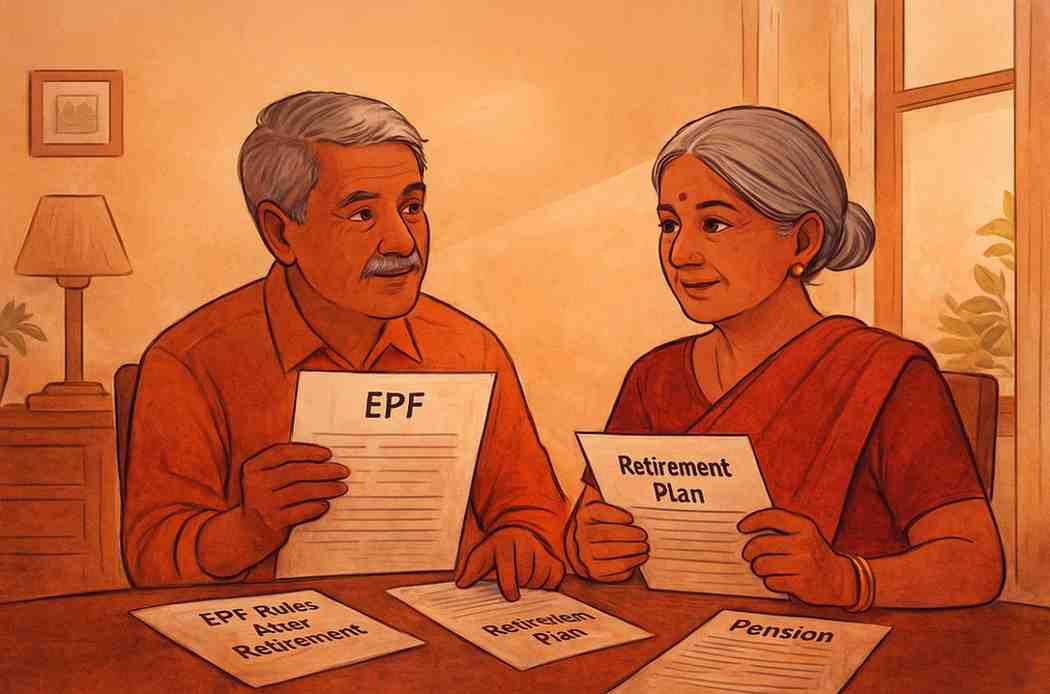
A complete guide to EPF Rules After Retirement. Learn how interest works, withdrawal rules, tax impact, pension start rules, and smart strategies for retirees in India. #EPF Rules After Retirement, #EPF withdrawal after 58, #PF interest after retirement, #pension after 58 years India, #EPFO rules for retirees, #EPF tax after retirement
Introduction: Why Understanding EPF Rules After Retirement Is Crucial
Retirement changes everything. Years of jobs, setting cash aside, piling up funds in your EPF – now it’s time to live off that stash. Yet right here, things get messy. Folks who’ve just retired often ask themselves:
- So what really happens to your EPF once you retire?
- Could putting cash into EPF be risky? Let’s check how secure that really is.
- Does interest continue?
- What if I don’t withdraw immediately?
- Could taxes shift? Rules might flip – so what’s next?
- When will your pension begin?
These are critical questions because EPF Rules After Retirement hit your interest income, tax bills, retirement perks, or future finances hard. One slip – or waiting too long – might drain cash or trigger messy problems.
This clear walkthrough covers all parts of EPF rules after retirement – how interest works, taxes apply, contributions behave, pensions kick in, when and how to take money out, who to name as nominee, plus dangers if you ignore the account. Once you finish reading, it’ll be obvious what steps to take with your EPF savings – and how smart choices keep your finances safe.
11 Detailed EPF Rules After Retirement (2025 Updated Guide)
Below are the most important EPF Rules After Retirement, explained in straightforward, evocative language so you may confidently make wise financial decisions.
EPF Contributions Stop Automatically After Retirement
After you stop working at 58 or older, no more money goes into your EPF account.
This means:
- You can’t add more
- Your boss won’t be able to put any money in
- The account stops making contributions yet stays open
This is one of the core EPF Rules After Retirement because a lot of people think they have to take money out right now. In actuality, your EPF account is still secure, operational, and interest-eligible (for a specific amount of time).
Also Read: How to Check EPF Balance Online 2025: Step-by-Step Guide with Latest Update
Your EPF Keeps Earning Interest for 36 Months After Retirement
One of the most beneficial EPF Rules After Retirement is that even after you quit your job, interest is still being earned on your account. For a maximum of three full years following retirement, the EPFO credits the same annual interest rate (currently 8.25%).
Why this matters:
- EPF offers a top fixed-return rate across India – yet stands out among options
- Get your money back – no worries. It’s safe, no doubt about it
- Your retirement savings grow on their own, no work needed – just time doing its thing
- You don’t have to put money back in right away – just wait a bit instead
Most money advisors tell retirees to leave their EPF alone at first, so it keeps growing over time.
After 3 Years, Interest Stops Completely
According to EPF Rules After Retirement, Your account stops working if you don’t contribute for 3 years. When it’s inactive:
- Earns zero interest
- Remains safe under EPFO
- Available at any moment you want
Your cash stays safe, yet you miss out on earnings. That’s when pulling it early really matters.
Putting off pulling out past three years won’t put you in danger, yet it doesn’t help your wallet either.
Also Read: EPFO 3.0 Changes Explained: Unlock 75% PF Now – 5 Rules for 30 Crore Members
Interest Earned After Retirement May Become Taxable
This is one of the most confusing EPF Rules After Retirement for many people.
If you keep using your EPF account after retirement, earnings past 58 could get taxed – since rules change once you hit that age
- Tax-free EPF interest works just for active worker accounts
- Once you retire, you’re not working there anymore
- This means the earnings count as taxable under “Income from Other Sources.”
This rule hits retirees hard when they keep their cash in EPF year after year without taking it out.
The bottom line: Holding onto your EPF for a year or so might make sense. But if you hang on forever, taxes could get messy.
Once you turn 58, you can withdraw 100% of your EPF
A big advantage of EPF Rules After Retirement is complete flexibility.
You can take out:
- Your contribution
- Employer’s contribution
- Full accumulated interest
No fines, no wait times – also nothing holding you back. If your EPF account’s been active for 5 full years, then the pay out won’t be taxed. This is exactly why EPF still stands out as a top choice for retirement savings.
You’re Not Compelled to Withdraw Right Away
A common myth floats around about seniors pulling cash right away. That is incorrect.
EPFO lets you withdraw anytime – no time limits apply.
You can hold off on pulling out when:
- You’re looking for EPF returns across three years
- You’re looking at pulling funds bit by bit
- You’re looking for smarter ways to handle taxes
- You’re looking to take a pause before figuring out your next move
You have control thanks to this flexibility, which is a big advantage of EPF Rules After Retirement.
Also Read: The EPF Withdrawal Impact on Retirement: Avoid 70% Wealth Loss and Secure Your Golden Years
EPS Pension Is Not Automatic; It Only Begins After You Apply
Your EPS pension follows different rules:
- Pension starts once you send in Form 10D
- At least a decade on the job needed
- Pension lasts a lifetime – keeps going no matter what
- Your partner receives pension benefits when you pass away
- Pension size relies on how many years you worked along with your typical pay
Most older folks think their pension kicks in by itself.
However, you have to apply for it in accordance with EPF Rules After Retirement.
TDS Regulations Are Still Relevant in Some Situations
Once you stop working, tax could still come out if:
- Your profile isn’t older than five years
- PAN hasn’t been fixed yet
- KYC is incomplete
- You pull out quite a lot – big numbers leave your account quickly
Yet many older workers don’t face TDS – service time goes past half a decade. While experience builds up, tax deductions often fade away. Since careers stretch on, this rule kicks in naturally. Though rules exist, they usually help those who stayed put awhile.
Leaving EPF Unclaimed for Too Long Can Be Problematic
If you let your EPF sit idle – say, for five years, maybe ten, or even fifteen – you could end up dealing with unexpected issues
- No charge once three years pass
- Tax issues
- KYC mismatch problems
- Difficulty accessing the EPFO portal
- Nomination disputes
- Need to hand in several papers sometime after
Thousands of retirees face these problems yearly – each one dealing with the fallout in their own way.
Therefore, withdrawing or reinvesting within a reasonable timeframe is one of the best EPF rules after retirement.
Nomination Updates Are Required Even After Retirement
Nomination matters a lot since it opens doors that’d otherwise stay shut
- Many retirees nominate old or deceased family members
- Some folks overlook listing their partner or kids
- Old nominations lead to court fights
- Problems start piling up when family members are involved
EPFO lets you update nominations digitally through their website.
Keep an eye on your pick – tweak it now and then even after you’ve retired.
No matter how long you keep it, your EPF account is always completely secure.
A reassuring rule under EPF Rules After Retirement is that:
- Your cash doesn’t fade over time
- It remains protected under EPFO
- You might still get it – years later, maybe even thirty or forty down the line
- No one’s able to take it away or grab it
- Nominees might still get it, even when you don’t pull it out
The main downside? Interest ends after three years – yet your money stays completely safe.
Also Read: Retiring soon? Here’s what happens if you keep your EPF account active after retirement
Conclusion: Mastering EPF Rules After Retirement for a Stress-Free Financial Life
Understanding EPF Rules After Retirement makes sure your saved cash goes further. Your EPF isn’t only for retirement – it’s your money shield through life. Figuring out when interest ends, how taxes hit, when pension kicks in, or when to pull funds helps guard each rupee. While one detail slips, gains shrink – so stay sharp on rules.
The smartest approach is:
- Hold onto your EPF for around three years – maybe a little more, maybe less
- Cash out quick – before rates drop
- Get your pension sorted sooner rather than later
- Keep KYC and nomination updated
- Put your money back to work in ways that match how risky you’re okay with
By making smart choices, your EPF can back your retirement plans without hiccups – keeping things stable along the way.
FAQs
Q1: Can I continue to use my EPF account once I retire?
Yep, it’s possible to leave your EPF account running post-retirement, yet interest gets added only up to 36 months once you retire. Following the guidelines on EPF rules after retirement, the balance stops earning returns past three years without deposits, so gains might drop over time.
Q2: After retirement, does EPFO still pay interest?
EPFO gives you interest for no more than three years once you retire, according to “EPF Rules After Retirement”. Once that time ends, your balance won’t grow any further – still, your main deposit stays untouched till you take it out
Q3: If I take money out of my EPF after I retire, would TDS be applied?
Once you retire, taxes usually won’t apply when taking money out – provided your work stretch crossed five full years. Pull funds earlier than that, though, and a cut gets taken off automatically. So hitting that half-decade mark changes how much comes through. No extra charges sneak in after meeting the term.
Q4: Should I keep a portion of my EPF invested or remove the entire amount?
Most times, specialists suggest pulling out your money within three years so you don’t miss out on earned interest. While “EPF Rules After Retirement” let you leave funds untouched forever, hanging onto them longer isn’t helpful – interest halts after year three.
Q5: Is my EPF money secure in the event that the account is closed?
Most times, specialists suggest pulling out your money within three years so you don’t miss out on earned interest. While “EPF Rules After Retirement” let you leave funds untouched forever, hanging onto them longer isn’t helpful – interest halts after year three.
Q6: Is it possible to continue receiving an EPS after retirement?
EPS payouts last as long as you do, starting the moment they kick in. Instead of blending with EPF guidelines post-retirement, this benefit follows its own set of regulations. These specific terms guarantee steady income for life, provided you meet the criteria.
Q7: After retirement, is it still possible for me to suggest someone?
Yep, it’s possible to change or name someone new as beneficiary post-retirement using the EPFO portal. Even after retiring, rules let you set a nominee till you’ve pulled out all funds – so your money goes to the right person if something unexpected happens.
Q8: What happens if I don’t take out my EPF for more than ten years?
Your money remains secure, yet no interest comes in once 36 months pass post-retirement. Following EPF rules after retiring, extended waits won’t lower your total – but they sure cut down on gains over time.
Q9: After retirement, is it possible to submit an offline PF withdrawal claim?
Right. Hand in Form 19 along with Form 10C or 10D either via your company or drop it yourself at the EPFO branch. When you retire, these rules let you pull funds online or in person – no hassle. That way, things move smooth without delays piling up.
Q10: Is updating KYC required prior to withdrawal?
Right. You need a verified UAN with KYC done to withdraw without issues. Following EPF rules after retirement, current KYC helps speed up checks, avoids denial of claims, also keeps your account safe from outsiders. Got it
Q11: If I start a new job after retirement, may I still make contributions to EPF?
Right, once you retire but later start working for a new qualified company, payments can begin again. Even post-retirement, the EPF guidelines don’t block re-entry; your UAN stays unchanged while enrollment carries on without breaks.
Q12: What would happen if my employer failed to modify my retirement date?
You might experience slow processing on withdrawals if your retirement date isn’t fixed yet. Even though company bosses must report when someone leaves or retires under EPF rules, workers can ask for fixes online using the main portal or by visiting an EPFO branch nearby.
Disclaimer
This piece aims to inform. Yet, keep in mind – EPF guidelines might shift when the EPFO announces updates. Tax rules can also evolve after new government decisions. So check actual EPFO notices before acting. Or better yet, talk to a certified money expert for guidance that fits your case.