
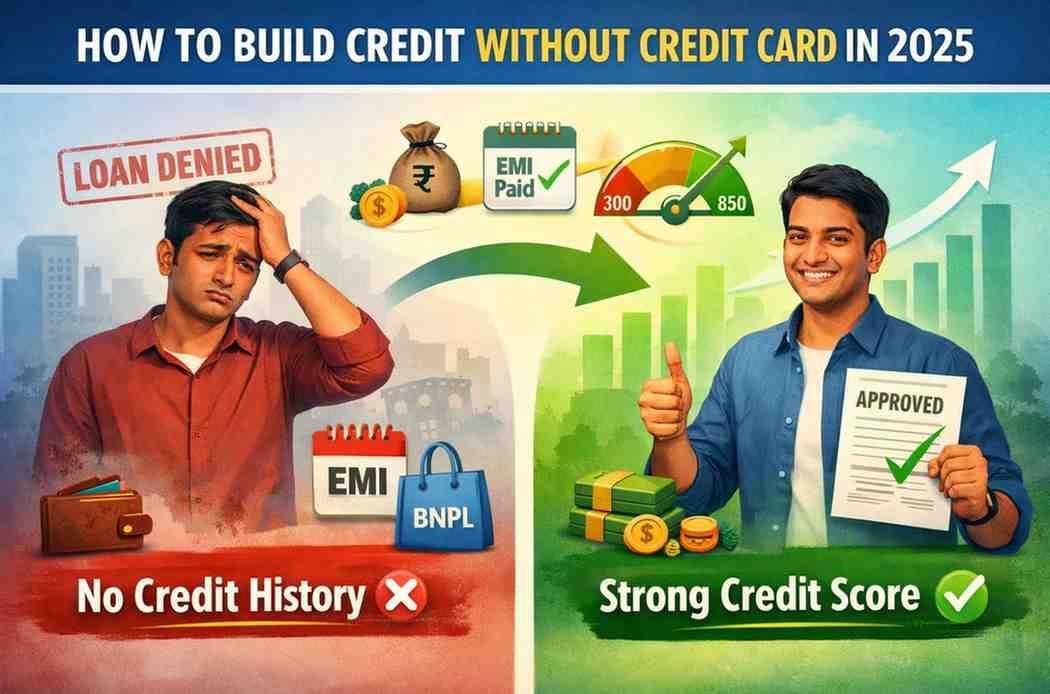
Learn how to build credit without credit card in 2025 using proven strategies in India. Improve your CIBIL score and avoid costly financial mistakes. How to Build Credit Without Credit Card in 2025, build credit without credit card India, improve CIBIL score without card, no credit history India, credit building tips India, how to increase CIBIL score without credit card, beginner credit guide India, personal loan credit building
Update (March 2026): This article has been updated with the latest credit-building strategies, practical methods for India, and improved tips to build credit without using a credit card.
Introduction: How to Build Credit Without Credit Card in 2025
A solid credit rating now matters more than ever when managing money in India. Getting a personal loan, landing lower interest fees, or unlocking high-end banking tools often depends on how strong your borrowing history looks. Yet plenty avoid working on it early, thinking you must have a credit card to begin.
Later on, trouble tends to show up from this mistaken idea. People who are new to earning money, like students, might struggle to borrow cash – or face steep costs – just due to missing past borrowing records. Not having plastic in hand isn’t what trips them up; it’s the lack of knowing how lending systems really function.
Truth is, lenders watch what you do with money more than anything else. How loans get paid back matters just as much as whether they’re taken at all. Staying steady over time shows reliability better than any shortcut could. Some skip plastic cards entirely yet still grow trust steadily with banks. This year brings new options that work even if you avoid credit cards completely. Methods listed here actually move the needle when it counts.
What is Credit Score and Why it Matters
A credit score is a three-digit number that represents your financial reliability. In India, it is calculated by TransUnion CIBIL and usually ranges from 300 to 900. A number like this helps lenders guess if you’ll pay back what you owe, also shaping their choice on accepting your request.
A strong credit rating means lenders are more likely to say yes – also expect smaller charges when you borrow. When numbers sit too low or there is none at all, banks often hesitate, sometimes walking away or demanding heavy repayment terms.
Start by visiting TransUnion CIBIL to view your official credit report. This snapshot shows how you’ve handled money over time, revealing patterns in borrowing and repayment. One place holds all records tied to your name and finances. Details unfold clearly once access is granted.
Can You Build Credit without Credit card
Finding your way into the credit world does not demand a plastic card in hand. Repayment patterns shape scores more than account types ever do. Some think skipping cards blocks progress – yet that idea crumbles under real data. What counts is showing up on time, again and again, no matter the loan flavour. A single late payment might linger longer than expected in your file when companies share data with reporting agencies. Each repayment made right on schedule chips away at risk in the eyes of those who lend money.
Many people also explore personal loan top-up options as a quick way to access funds, but without a proper credit history, even these options can become difficult. This is why starting early and building your credit profile through alternative methods is extremely important.
7 Proven Ways to Build Credit Without Credit Without Credit Card in 2025
1. Start with a Small Personal Loan
A tiny personal loan might be just what you need to kickstart your credit history, since it leaves a clear trail lenders pay attention to. A sum like ₹10,000 to ₹25,000 works fine, so long as payments are made without delay. What matters more than size is showing up regularly with proof you handle money with care.
Paying EMIs by their due date tells credit agencies you’re reliable – that kind of consistency lifts your credit rating bit by bit. Lenders start seeing you as someone they can count on, making bigger loan approvals more likely down the road.
Before taking a loan, it is important to understand how interest rates impact your EMI and total repayment amount over time, because poor planning can lead to financial stress and missed payments. Before taking a loan, it is important to understand how to reduce personal loan interest rate and manage EMI efficiently, because poor planning can lead to financial stress and missed payments.
2. Use Buy Now Pay Later (BNPL) Services Responsibly
Splitting payments over time is catching on across India since it skips the need for a credit card. Because of this, buying now and settling later fits how people manage money today. When handled well, spreading out costs might strengthen financial trust over months. One thing stands clear – delayed repayment shapes habits when done right.
When used without caution, buy now pay later might pull you into debt. Some see it like bonus cash, buying things they do not truly need, piling up bills across weeks. That stack of dues grows heavy, weighing down monthly budgets. Late payments start slipping through, dragging credit ratings lower over time.
Using BNPL well means seeing it as borrowed money, reserving it for things you truly need. Paying back by the due date matters most – make sure funds are available before agreeing. Relying on more than one of these plans at once often leads to trouble. A single service, handled carefully, might help shape your credit history over time.
3. Opt for Secured Loans to Build Initial Trust
Lending gets safer when something valuable stands behind the money owed – think savings parked in banks, jewelry made of gold, or paperwork tied to life coverage. Since lenders see less danger, saying yes becomes more likely, especially for those who never borrowed before.
After approval, what you do with payments shows up at credit agencies – slowly shaping how lenders see you. It works well since starting out feels safer when risks stay small. Late payments avoided, month after month? That builds trust with lenders, slowly lifting your credit rating. A steadier history opens doors – banks start seeing you as less of a risk. Over time, deals once out of reach edge closer into view. It is also important to understand which is better gold loan or overdraft for short-term borrowing needs, as choosing the right option can impact both your cost and credit behaviour.
4. Maintain Perfect Repayment Discipline
Paying on time matters more than anything else when shaping how lenders see you. One late check could drag down your standing, staying visible far longer than you might expect.
Lenders start to believe you when bills like EMIs or buy-now-pay-later plans get paid without delay. On-time payments month after month shape how credit firms see your reliability. According to guidelines shared by the Reserve Bank of India, maintaining a good repayment history plays a crucial role in improving your credit profile. Making on-time payments on a regular basis helps you establish a solid credit rating and guarantees long-term financial stability.
5. Become an Authorized User
Sometimes joining a relative’s credit line speeds up building your own record. When the main person pays on time, that good habit might show up under your name too. Their long history of handling money well could quietly boost how lenders see you.
Starting fresh does not mean going it alone. A shared account can build history while keeping risk low – provided the main user pays on time and stays within limits. Late payments show up just like yours would. Watching someone else handle money becomes part of your report too. Their habits matter more than you might think.
6. Avoid Over-Borrowing and Maintain Financial Balance
Too much borrowing often trips people up when they’re working on their credit. Juggling several loans can strain your budget, making it easier to skip a payment now and then.
Lives change when payments land on time, every time. Instead of chasing bigger loans, staying steady with what you’ve got shapes trust. Money coming in needs room to breathe alongside bills and debts. Comfort grows where spending meets limits without strain.
Sticking to limits when taking on debt keeps your credit standing strong while also supporting steady money management over time. What matters most shows up later – how choices today shape freedom tomorrow.
7. Monitor Your Credit Report and Fix Errors
Finding mistakes on your credit report matters more than most realize. Without warning, wrong information might drag down your score. Think of outdated addresses, repeated account listings, or payment delays marked inaccurately. A single oversight could shift how lenders see you.
Visit TransUnion CIBIL to see your official credit report – this source holds exact details on how you handle credit. It’s where real data lives, showing lenders what they need when reviewing financial trust. Spotting problems fast means fixing them sooner – so your standing with lenders stays strong. What shows up today could shape tomorrow’s trust.
REAL-LIFE EXAMPLES
Rahul’s Credit Journey
Off to a slow start, Rahul had never owned a credit card and got turned down for a loan – his file too thin to qualify. Rather than walk away, he signed up for a modest personal loan, making certain each monthly payment landed right on schedule. Unplanned spending? Set aside. Attention stayed fixed on steady habits instead. A full twelve months passed, then his score climbed high enough to unlock loans with easier terms and less cost over time. Doing the same thing, again and again, made the difference – not luck, not shortcuts.
Priya’s Mistake and Recovery
Priya leaned heavily on buy now pay later options while shopping, never quite grasping what paying back truly meant. One purchase piled onto another, then delays followed – her credit rating dipped as a result. A moment of clarity hit; she wiped out every outstanding balance, began checking her credit history often. Spending slowed down where it didn’t need to happen, attention shifted toward getting payments right each month. Slowly, numbers climbed higher again – proof that staying alert and consistent fixes even missteps with money.
Common Mistakes to Avoid
Some folks mess up their credit score without even knowing it – things like chasing too many loans at once, skipping due dates on bills, or never checking what’s inside their credit report. Getting into debt without thinking ahead often spirals into money troubles down the road. Picture this: tiny shifts in interest rates slowly reshape how much you pay each month and overall years later – that kind of insight changes choices. Staying clear of these traps? It grows out of paying attention, sticking to habits, and seeing finances as something that unfolds over months, maybe decades.
How Long Does it Take to Build Credit
Most folks see their first credit number show up within three to six months of opening any kind of account. A few responsible moves each month – like paying bills on time – help shape what comes next. After half a year or so, patterns begin forming, giving lenders something real to look at. Staying steady matters more than speed; slow progress often sticks better. Stronger ratings arrive when routine payments stack up without gaps. Years matter most, not quick fixes or shortcuts. What counts is doing small things right again and again.
Conclusion
Start somewhere offbeat – credit scores grow just fine without plastic. Think of steady habits like returning borrowed cash on time, every single time. Loans that barely raise an eyebrow? They count too. Buy now pay later deals fit into the mix if handled cool-headed. Tuck a secured account under your belt and let it sit there building proof. Missteps happen but dodging them sharpens progress. Peek at reports often enough to catch hiccups early. Long waits beat quick tricks when shaping trust. Solid worth in money matters unfolds quiet-like, step after step.
FAQs
Q1: In India, is it possible to raise my credit score without a credit card?
Building credit? Loans work just fine. Paying bills on time helps too. Buy now, pay later plans count – when they’re tracked by reporting agencies. Cards aren’t required. Staying steady with payments matters more than the tool you use.
Q2: How much time does it take to raise one’s credit score?
Building a stable credit score typically requires six to twelve months of consistent repayment activity. Maintaining and further improving it requires long-term discipline.
Q3: Is BNPL safe for credit building?
If BNPL is used sensibly and paid back on schedule, it can raise your credit score. However, your credit profile may suffer as a result of misuse or late payments.
Q4: In India, what constitutes a good credit score?
Your chances of getting a loan are increased if your credit score is higher than 750, which is regarded as good. You can also obtain better interest rates with higher grades.
Q5: Does monitoring my credit score lower it?
Since it is regarded as a soft inquiry, monitoring your own credit score has no effect on it. Lender checks alone might make a small difference.
Disclaimer
Just because something appears here does not mean it applies to your money choices. Talking to someone who knows about finance makes sense when plans are forming. One bank might allow what another refuses – rules shift depending on where you go. Double-checking facts straight from the source keeps surprises away when signing up for loans or cards.