
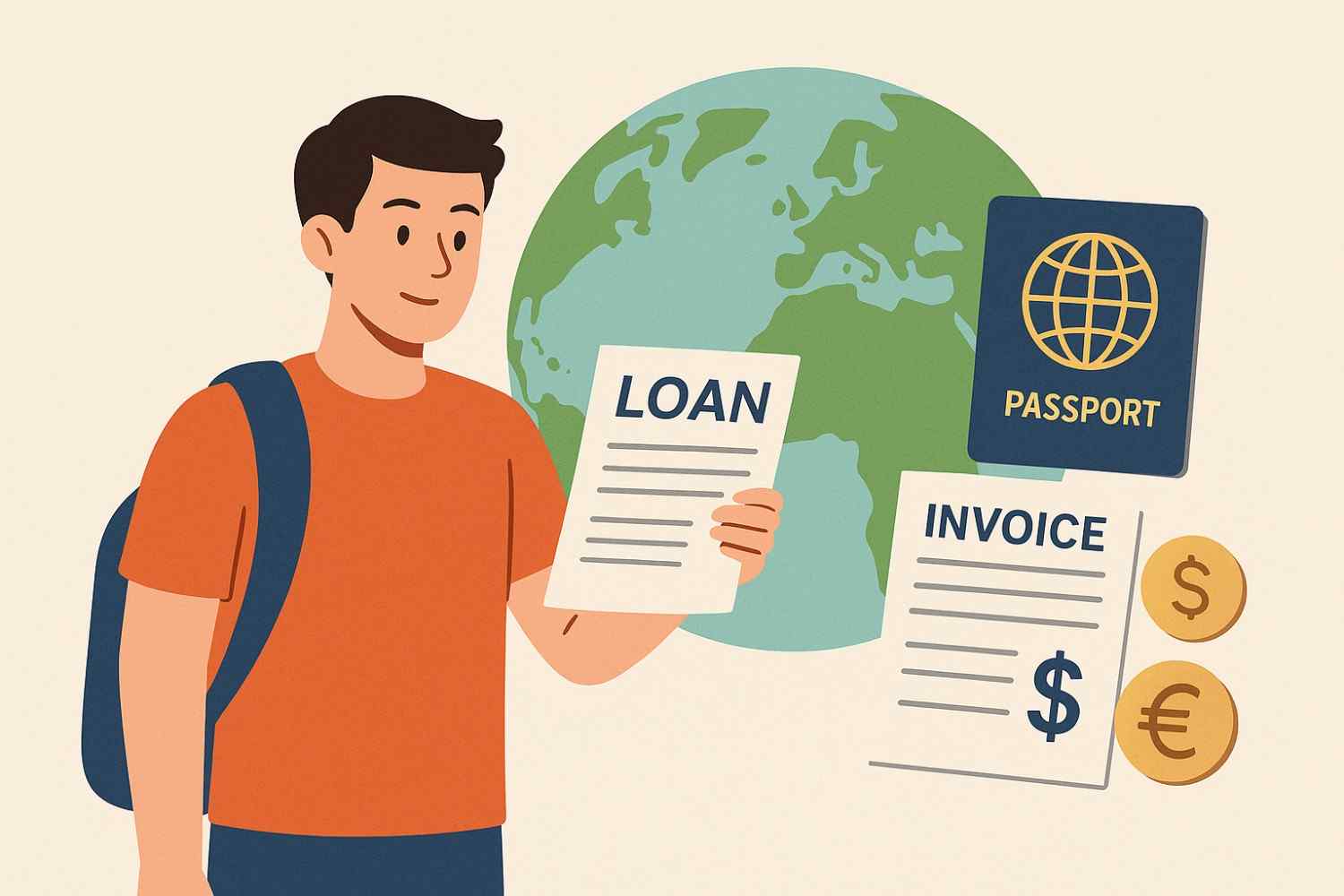
Unlock the loan process for studying overseas step by step with this in-depth 2025 guide covering eligibility, documentation, margin money, forex management, disbursement timelines, and expert mistakes to avoid. #loan process for studying overseas step by step, #education loan for abroad studies, #study abroad loan eligibility, #how to apply for student loan abroad, #overseas education loan requirements, #documents required for foreign education loan, #sanction vs disbursement in education loan, #forex management for students.
Introduction
The idea of going overseas to study feels more exciting now – but with school fees, daily spending, and flight prices climbing worldwide – getting a solid loan matters more than before. Most families and students don’t realise how specific the loan process for studying overseas step by step actually is. Picking a suitable loan provider comes first, then you figure out if you qualify. After that, collect the necessary paperwork while getting accepted into your school. Next up, check what assets can back the loan, deal with any co-signer rules. Swap money when rates are favorable, finally make sure funds arrive on time for overseas tuition deadlines.
In 2025, banks started asking for more paperwork while speeding up online steps through better tools. Meanwhile, schools overseas began stressing exact payment deadlines, clearer fund proofs, or tougher money rules for visas. That’s why understanding the loan process for studying overseas step by step is more important today than ever. Students may lose out on admission or visa opportunities due to a single document submission delay, a forex handling error, or a discrepancy in the dates of disbursement.
This guide breaks down the loan process for studying overseas step by step in a descriptive, smooth layout without being too rigid or hard to track. Mixes professional tips, rules from the RBI, basic money knowledge, along with typical lender steps. You’ll come across everyday factors such as how down payments play out, what makes banks check your study plans, also the impact of picking a steady rate versus one that changes when looking at costs over time.
Start here, step into a new way of seeing things the loan process for studying overseas step by step in a way that helps you avoid costly pitfalls and make informed decisions with clarity.
Also Read: First Time Education Loan Tips India: 10 Powerful Strategies to Avoid Mistakes and Achieve Success
Step 1: Gain a Complete Understanding of Your Funding Needs
Knowing what expenditures are officially eligible is the first step in the loan process for studying overseas step by step before you approach any bank or lender. Tuition takes up the most cash, though it’s just one piece. On top of that, you’ve got daily living costs – like rent and food – alongside textbooks and school gear. Medical coverage is a must, plus airfare if you’re flying in. Paperwork stuff like visas eats into your budget too. Gadgets for class? That’s another bill. Put down money on housing deposits, don’t forget those test fees either – think GRE or language exams such as IELTS and TOEFL.
This step means sketching out your money plan – what’s fixed, what shifts by nation, also what might change. Take Canada or the UK – their daily expenses could be way off compared to Germany or Ireland. Banks usually OK loans using average cost estimates per location. By calculating these expenses, you can be sure that the loan process for studying overseas step by step is based on precise estimates rather than haphazard guesses.
The loan size, margin money, interest rate, collateral required, and repayment schedule are all determined by this fundamental phase.
Step 2: Verifying Eligibility Prior to Submission
Not every lender checks the same things, yet most look at grades, whether you’re accepted – or almost in – how well you did on entry exams, having someone with solid income to back you up, also putting up an asset if it’s a secured loan. During this stage of the loan process for studying overseas step by step, lenders make an effort to determine whether the student is a legitimate academic contender and whether the family will be able to repay the loan after the course is finished.
Banks check if grades make sense from 10th grade through college and test scores. Some private lenders care less about that but look closer at how well-known the school is. When a student took time off or failed courses, they might need to explain why. The reason schools dig into this? It keeps borrowers from getting denied down the road and ensures the loan process for studying overseas step by step moves smoothly.
In order to determine whether a secured or unsecured loan is appropriate for you, lenders also consider co-applicant income, credit score, and financial stability.
Step 3: Prepare Every Document Ahead of Time
Documentation is one of the most time-consuming parts of the loan process for studying overseas step by step. IDs, school records, acceptance notes, exam results, address verification, sponsor’s earnings proof, house docs (if backed by assets), banking history, tax filings, tuition details – each piece needs to fit just right.
A name difference on paperwork, blank sections in house records, or fuzzy photos might push approval back by weeks. Even though banks take scanned files, they check things in person when looking at assets. Getting your papers sorted ahead of time helps the study-abroad loan move forward smoothly – no extra trips or delays.
Step 4: Securing University Admission
Without at least a conditional or confirmed admittance letter, no lender will grant a final sanction. The foundation of the admission letter is the loan process for studying overseas step by step since you’ll see how long the course takes, what it costs, plus whether the school is trustworthy.
Some loan providers give nicer deals if you’re going to a high-rated school. Because schools charge by semesters, years, or modules, your acceptance letter shapes when funds get released.
Step 5: Using Comparison to Select the Best Lender
After admission, selecting the right lender becomes crucial in the loan process for studying overseas step by step. Young learners might pick state-run banks, private ones, or non-bank lenders – also there are official support plans. One type suits some needs better than others.
Public banks tend to give cheaper loans, yet their rules are tougher. On the flip side, private lenders move quickly though they might cost more over time. Unlike them, NBFCs care less about paperwork or grades but often come with steeper interest. Weighing each option helps dodge money troubles later and keeps your study-abroad funding plan steady without surprises.
Step 6: Understanding Collateral vs. Non-Collateral Loans
A major decision in the loan process for studying overseas step by step is choosing between secured and unsecured loans. You’ve got two paths – backed by assets or not. When you offer something valuable, say your home or cash parked somewhere, lenders usually charge less and hand out more money. But here’s the catch – it takes longer ’cause they gotta check what you’re offering.
Unsecured loans often depend on a co-borrower’s earnings, past credit behaviour, or academic standing – yet despite being easy to get, these can carry steeper interest charges. Knowing the differences lets households weigh choices using their future ability to pay.
Step 7: Submission and Verification of Loan Applications
This is the most intensive stage of the loan process for studying overseas step by step. Once sent, the file moves into review – lenders check your finances, study plans, if you own the property, also whether the school is legit.
Checking could involve looking at:
- Co-applicant’s earnings along with their bank records
- ITRs
- Property papers plus worth check
- Academic history
- Course links to careers – shows where you can work after finishing
Some lenders might call you to talk things through. Careful checks help keep international study loans safe while following all rules.
Step 8: Receiving the Sanction Letter
A sanction letter shows the lender said yes – it’s key for getting a visa. This document lists how much you’re borrowing, the interest charge, repayment period, setup costs, your own contribution, what’s used as security, plus any rules tied to it. Go over everything closely – mistakes can cause delays.
A big mix-up happens if learners mistake approved funds for actual payouts. Payments go out depending on bills or set rates. Understanding these nuances helps keep the loan process for studying overseas step by step aligned with deadlines.
Step 9: Pre-Visa Disbursement & Margin Money
Margin money means what the student pays from their own pocket – it’s often between 5% and 15% of total costs. Since some colleges ask for upfront payments prior to issuing admission confirmation, borrowers need funds early. Lenders might send part of the loan ahead of time to cover those initial charges.
Countries such as Canada ask for financial proof – like a GIC – that could come from money sent before the visa’s approved. Early awareness of these guidelines guarantees the loan process for studying overseas step by step does not face last-minute cash shortages.
Step 10: Astute Forex Management
Forex management is one of the most underestimated stages of the loan process for studying overseas step by step. Banks add extra fees on currency exchanges, plus they hit you with transfer costs – both can seriously raise what you end up paying.
Picking the best way to send money – like a bank transfer, travel card, or digital wallet – helps you avoid losing cash. Keeping an eye on exchange rates helps manage spending more wisely.
Step 11: Disbursement as per University Schedule
Payments are made once invoices get checked. Certain colleges ask for entire year charges at once, while some split them by term. The loan sends school costs straight to the institution, meanwhile daily needs go into the student’s personal bank.
Figuring out what’s approved versus what’s actually paid matters a lot. By just paying out what is required, interest build-up is minimised and the loan process for studying overseas step by step remains financially efficient.
Also Read: Going abroad for studies? How to secure an education loan and manage forex without burning cash
Step 12: Post-Disbursement Responsibilities
After the loan gets paid out, learners should keep an eye on how much interest builds up, stay in touch with their lender, also hold onto payment records. A few lenders let students pay some interest while still studying – this can lower monthly payments later.
Maintaining financial restraint throughout the moratorium period guarantees the loan process for studying overseas step by step ensures a smooth conclusion and equips students for responsible repayment following graduation.
Conclusion
It takes knowledge, preparation, and clarity to get an education loan. When correctly comprehended, the loan process for studying overseas step by step gets easier to handle and more consistent. Picking lenders, dealing with currency exchange, or managing payout schedules – each step matters if you want to stay financially prepared for studying abroad.
A clear plan, good records, or smart scheduling can turn studying abroad from wishful thinking into something real – backed by cash, minus the pressure.
FAQs
Q1: How much time does it take to get approved?
The loan process for studying overseas step by step usually takes two to six weeks, depending on the lender’s workload, collateral checks, and document preparedness. Private lenders approve more quickly, while public banks take a little longer.
Q2: Is collateral required?
Nah. You can get unsecured loans, yet approval often ties to a co-borrower’s earnings, their credit history, or how well-known the college is. Since secured options come with lower rates and bigger amounts, lots of households lean toward those instead.
Q3: Which documents are necessary?
Proof of identity, academic records, admission letters, co-applicant income documents, property documents for secured loans, bank statements, and university tuition schedules. Organizing them early speeds up the loan process for studying overseas step by step.
Q4: What effect does currency have on loan costs?
The real cost of your course is impacted by currency movements. Your spending will stay predictable if you select the appropriate remittance option and monitor exchange rates.
Q5: What if disbursement is delayed?
Missed paperwork or check problems cause holdups. Keep talking to your lender – hand in forms when needed so things move without hiccups through each stage of getting a study-abroad loan.
Disclaimer
This piece shares basic money tips using open info from bank rules, RBI updates, besides insights from pros. Don’t treat it like personal finance or legal help. Learners need to check different loan providers before picking one.