
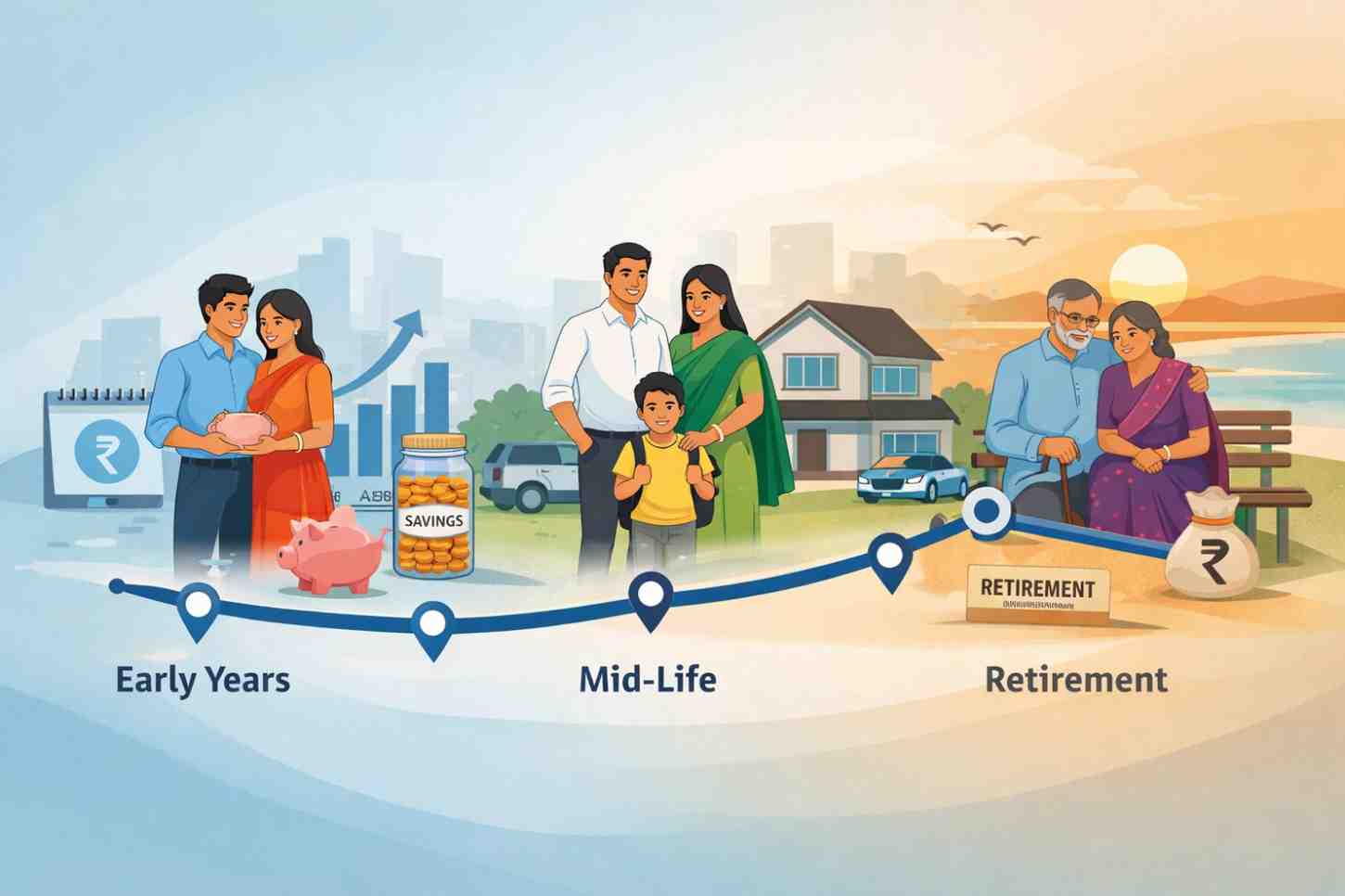
Many long-term financial decisions feel smart today but quietly damage future wealth. Learn 9 costly choices Indians regret later and how to avoid them. long-term financial decisions, financial mistakes Indians make, long-term money mistakes, personal finance planning India
Introduction: Why Long-Term Financial Decisions Often Fail Quietly
Most long-term financial decisions are made with good intentions. People want stability, security, and peace of mind. They want to avoid risk, satisfy family expectations, and feel that they are “doing the right thing” financially. At the time these decisions are made, they rarely feel wrong. In fact, they often feel responsible and mature.
The real problem is that financial damage rarely announces itself early. It builds slowly, over years, through lost flexibility, rising obligations, and shrinking options. By the time the impact becomes visible, reversing course feels difficult or even impossible. This is why so many people feel financially stuck despite earning well and making seemingly sensible choices.
In India, this issue is amplified by social pressure, limited financial education, and a strong preference for short-term comfort. Decisions are often guided by what feels safe today rather than what remains sustainable over decades. As a result, many households unknowingly trade long-term freedom for short-term reassurance.
This article focuses on long-term financial decisions that appear smart at the moment they are taken but quietly weaken financial health over time. These are not reckless mistakes. They are common, socially accepted, and often encouraged. Understanding them early can help you protect flexibility, reduce future stress, and build financial resilience that lasts.
From a financial awareness perspective, institutions like the Reserve Bank of India’s financial education initiatives emphasise the importance of informed decision-making and long-term thinking for household financial stability.
Locking Lifestyle Inflation Into Permanent Commitments
One of the most damaging long-term financial decisions is allowing lifestyle upgrades to become permanent obligations. As income increases, people naturally improve their standard of living. Bigger homes, better cars, premium services, and frequent travel feel like natural rewards for hard work.
The problem begins when these upgrades are financed through long-term EMIs and recurring costs. What starts as a choice slowly turns into a fixed structure that is difficult to unwind. Over time, a large portion of income becomes committed before any saving or investing happens.
This reduces financial flexibility in subtle ways. Career changes become risky, emergency situations feel more stressful, and even temporary income disruptions can create anxiety. Many people in this situation earn well but still feel financially constrained because their lifestyle has consumed their cash flow.
This is why many households feel financially constrained despite earning well, a situation often described as having money in the bank but not being able to use it freely.
Among all long-term financial decisions, unchecked lifestyle inflation is especially dangerous because it is rarely questioned. It looks like progress, but it often converts future freedom into present comfort.
Choosing “Safe” Options Without Accounting for Inflation
Safety is one of the most powerful psychological drivers behind long-term financial decisions. Guaranteed returns, capital protection, and low volatility provide emotional comfort, especially during uncertain economic periods.
However, safety without growth is misleading. Inflation silently reduces purchasing power year after year. An investment that appears stable in numbers may steadily lose real value over time. Expenses rise, but income from “safe” instruments often does not keep pace.
Many people realise this problem only later in life, when their savings no longer support the lifestyle they expected. The money is still there, but what it can buy has changed dramatically. This creates pressure to either save aggressively at a late stage or compromise on quality of life.
Long-term financial decisions should be evaluated based on future purchasing power, not just current stability. Ignoring inflation is one of the most common reasons why safe-looking plans fail in the long run.
Delaying Financial Planning Until Income Feels Comfortable
A common belief is that serious financial planning can wait until income improves. People often tell themselves they will start saving and investing properly once they earn more, settle down, or feel more secure.
The flaw in this thinking is that time matters more than income. Early planning allows small contributions to compound over long periods. Delaying planning compresses timelines and increases pressure later in life.
When planning starts late, people are forced to save aggressively, take higher risks, or compromise on long-term goals. What could have been achieved comfortably over decades now feels stressful and uncertain.
Among long-term financial decisions, postponement is particularly costly because lost time cannot be recovered. Even a high income later cannot fully compensate for years of inaction.
Relying Completely on a Single Income Source
A stable job or business often creates a sense of security. Over time, this security turns into dependence. Many households structure their entire lifestyle around one income stream, assuming it will continue uninterrupted.
This approach increases vulnerability. Job loss, industry disruption, health issues, or regulatory changes can suddenly reduce or stop income. Without buffers or alternative sources, even a short disruption can create financial stress.
In situations where income access is suddenly disrupted due to compliance or banking issues, understanding what to do when a bank account is frozen in India becomes critical for maintaining short-term financial stability.
Strong long-term financial decisions focus not only on earning well but also on reducing dependence. Financial resilience comes from having savings buffers, diversified income sources, and flexibility in expenses.
Treating Insurance as a One-Time Checkbox
Many people buy insurance early in life and assume the job is done. Premiums are paid regularly, documents are stored safely, and the policy is rarely reviewed again.
Over time, life changes. Income grows, responsibilities increase, medical costs rise, and inflation reduces the real value of coverage. A policy that was adequate once may become insufficient years later.
This creates a dangerous gap between expectation and reality. People believe they are protected, but actual coverage may fall short when it is needed most. The damage is often discovered only during a claim.
Many people realise this gap only at the time of claim, which is why it helps to understand the common reasons behind term insurance claim rejection in India before assuming coverage is adequate.
Among long-term financial decisions, failing to review insurance regularly is a silent mistake that creates false security.
Avoiding Growth Assets Due to Short-Term Fear
Fear of volatility plays a major role in long-term financial decisions. Many people avoid growth-oriented investments because they dislike temporary losses or negative headlines.
While caution is sensible, complete avoidance has consequences. Over long periods, inflation and opportunity cost cause more damage than short-term market fluctuations. Wealth growth slows, and financial independence is delayed.
People who avoid growth often find themselves saving harder later in life to compensate for lost time. What felt safe earlier becomes restrictive later.
Long-term financial decisions should balance risk and growth. Eliminating risk entirely often eliminates progress as well.
Assuming Real Estate Automatically Creates Wealth
Property ownership carries emotional and cultural importance in India. Buying a house is often seen as a symbol of success and stability.
However, not all real estate decisions create wealth. High purchase prices, maintenance costs, illiquidity, and concentration risk can limit financial flexibility. Money locked into property cannot be easily accessed during emergencies or opportunities.
When real estate is purchased without long-term planning, it may underperform expectations and restrict future choices. Emotional decisions often ignore financial trade-offs.
Among long-term financial decisions, treating property as a guaranteed wealth creator is a common misconception.
Ignoring Retirement Because It Feels Too Far Away
Retirement planning is frequently postponed because it feels distant and abstract. Many people believe they have plenty of time to think about it later.
The reality is that delayed planning compresses timelines. Contributions must be higher, risks increase, and flexibility reduces. What could have been managed calmly becomes stressful.
Retirement is not just about stopping work; it is about maintaining independence and dignity later in life. Early planning provides options. Late planning forces compromises.
To understand how purchasing power erodes over time and why early retirement planning matters, this explanation on the inflation impact on ₹1 crore over the long term puts the risk into clear perspective.
Measuring Financial Success Only by Income
High income creates comfort, but it does not guarantee financial strength. Without disciplined saving and asset creation, income alone remains fragile.
Expenses tend to rise with earnings. Lifestyle commitments expand, and net worth growth may lag behind. This creates a situation where people earn well but feel insecure.
Strong long-term financial decisions focus on building assets, maintaining flexibility, and growing net worth—not just increasing monthly income.
Real-Life Indian Examples: How These Long-Term Financial Decisions Hurt Over Time
Example 1: Lifestyle Comfort Slowly Turning into Career Restriction
A salaried professional experiences steady income growth and upgrades to a larger home with a long-term EMI, believing this is a sensible long-term financial decision. For several years, everything feels manageable because income continues to rise. Over time, however, the fixed EMI consumes flexibility, making job changes or entrepreneurial opportunities feel risky. When a better role requiring relocation appears, the decision is rejected purely due to financial commitments. What once felt like progress slowly turns into a silent limitation caused by a poorly evaluated long-term financial decision.
Example 2: “Safe” Savings Failing to Protect Real Life Needs
A retired couple relies entirely on fixed-return instruments because they were advised to avoid risk at all costs. Initially, their capital remains intact, reinforcing the belief that they made the right long-term financial decisions. Over the years, rising healthcare and household expenses quietly reduce their standard of living. Despite having savings, purchasing power declines steadily, forcing lifestyle compromises. The decision looked safe, but ignoring inflation caused long-term damage that could not be reversed easily.
Example 3: Late Retirement Planning Creating Pressure Instead of Peace
An individual delays retirement planning until their mid-40s, assuming higher income later will compensate for lost time. Once planning begins, the required monthly savings feel overwhelming, creating stress and lifestyle sacrifice. Despite earning well, financial peace remains elusive because timelines are compressed. This example highlights how delaying long-term financial decisions related to retirement turns what should be a calm journey into a pressured one.
Example 4: Insurance Assumptions Breaking During a Crisis
A family purchases insurance early and never reviews coverage, assuming it will always be sufficient. Years later, during a medical emergency, they discover coverage gaps that require out-of-pocket payments and asset liquidation. The emotional shock is compounded by financial stress. This situation arises because the long-term financial decision to treat insurance as a one-time task was never revisited as life circumstances changed.
Example 5: High Income but Weak Financial Foundation
A professional earns a strong income for over a decade and assumes this alone ensures financial security. Spending rises steadily, while saving and asset creation remain secondary. When income growth slows, the absence of accumulated assets creates anxiety and dependence. This example shows how measuring success only by income leads to fragile long-term financial decisions that fail when conditions change.
Conclusion
Most financial damage does not come from reckless behaviour. It comes from comfortable, socially approved long-term financial decisions that are never questioned. Short-term relief often hides long-term cost. True financial strength comes from perspective, flexibility, and planning with time in mind. Global studies on financial literacy, including insights from the OECD’s work on long-term financial planning, consistently highlight how early awareness reduces future financial stress and regret. Asking whether a decision will still make sense ten years later can prevent years of silent stress and regret.
FAQs
Q1: Why do long-term financial decisions feel correct initially?
They reduce immediate stress and align with social expectations. The long-term cost builds slowly and remains invisible for years, which is why these decisions are rarely questioned early.
Q2: Can poor long-term financial decisions be corrected later?
Yes, but correction becomes harder and more expensive over time. Early awareness reduces damage and preserves more options for recovery.
Q3: How often should financial decisions be reviewed?
At least once a year. Regular reviews help identify silent risks, outdated assumptions, and misaligned priorities before they become permanent problems.
Q4: Is conservative investing always bad?
No. Conservative investing has a role, but avoiding growth entirely weakens long-term outcomes due to inflation and opportunity cost.
Q5: What is the best way to improve long-term financial decisions?
Start with clear long-term goals and evaluate every major decision against them. Consistency matters more than perfection.
Disclaimer
This article is published for general educational and informational purposes only and is not intended as financial, investment, or professional advice.
The examples and explanations provided are illustrative in nature and may not apply to every individual situation or financial profile.
Financial decisions should always be made after considering personal goals, income stability, risk tolerance, and long-term circumstances.
Readers are strongly advised to consult a qualified financial advisor or professional before making any significant financial decision