
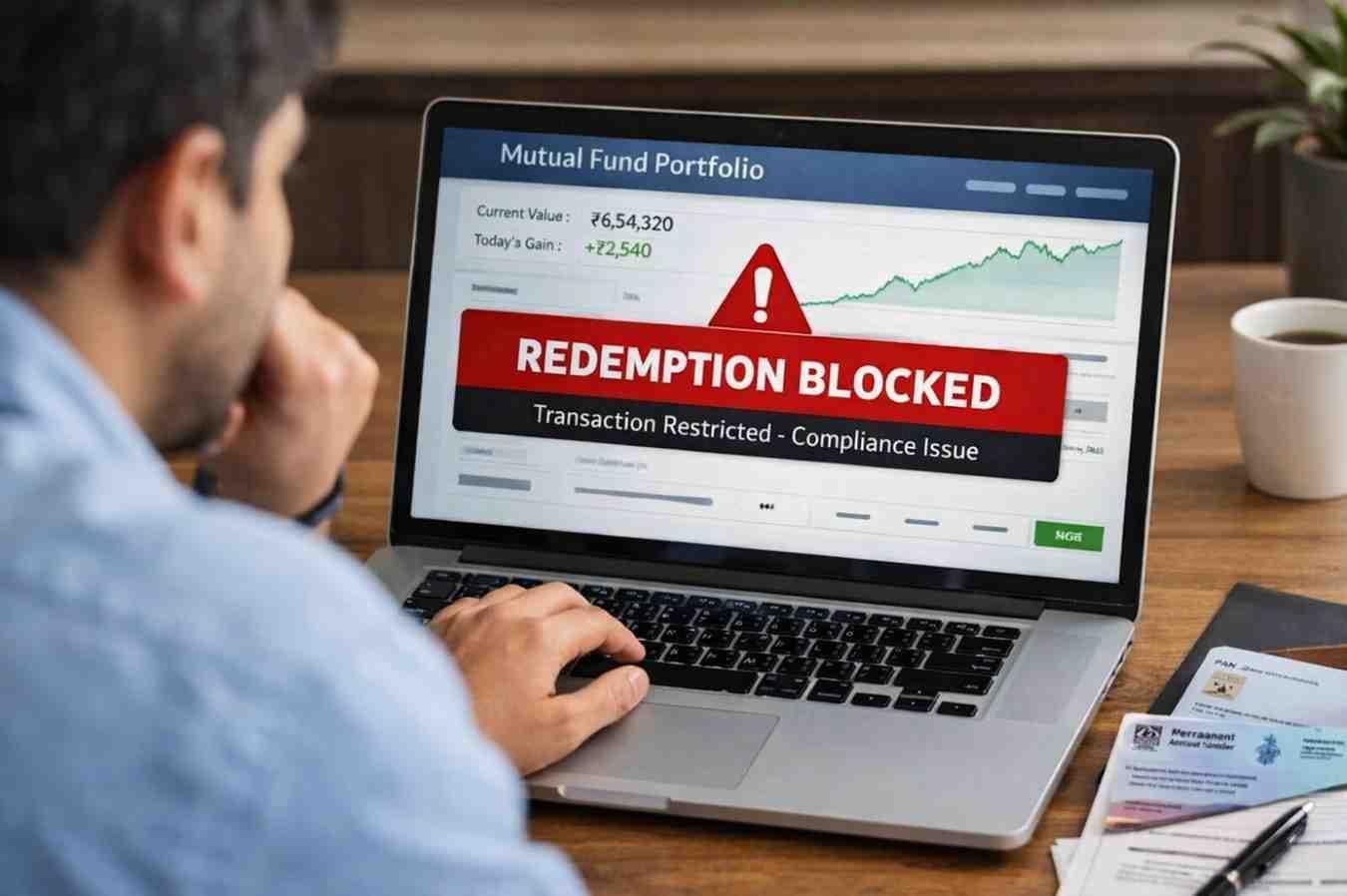
Learn why mutual fund folio freeze in India happens. Discover 7 situations that can block redemption requests and how investors can resolve compliance issues. mutual fund folio freeze in India, mutual fund redemption blocked, KYC non compliant mutual fund, mutual fund transaction restriction India, SEBI mutual fund KYC rules, why mutual fund redemption fails.
Introduction to Mutual Fund Folio Freeze in India
Mutual funds are widely considered one of the most convenient investment options in India because they allow investors to buy and redeem units with relative ease. In most cases, redemption requests are processed within a few working days and the proceeds are credited directly to the investor’s bank account. However, many investors are surprised to discover that certain compliance or documentation issues can temporarily restrict transactions in their investment account.
One such situation is known as a mutual fund folio freeze, where investors may not be able to redeem units, switch schemes, or initiate transactions until specific regulatory requirements are fulfilled. When paperwork isn’t finished, accounts often get held up. Missing forms, unclear ID checks, problems with banks, or rules that need confirming – all of these slow things down. Knowing what causes delays helps people fix them faster. Investors stay in control when they understand the holdups blocking their access.
What Is a Mutual Fund Folio
A single folder holds all your mutual fund records together. Think of it like a collection tied to one investor. Before diving into limits on trades, get clear on what that folder really means. It’s more than just paperwork – it links every move you make. Understanding this setup comes first. Only then does talk about rules start making sense.
A single number tracks your holdings when you put money into funds run by one provider. That tag belongs to you alone, given out by the investment firm managing your assets. When several plans come from the same company, they often link under that shared label. Your choices pile up behind the scenes, tied neatly to that identifier.
The folio contains important information such as:
- Investor name and identification details
- Your PAN number plus whether it’s verified might show up here
- Registered bank account
- Nominee information
- Transaction history
When a folio holds money details or personal data, oversight bodies expect fund managers to follow clear rules. A gap in paperwork or an inconsistency might pause trading activity until everything lines up again.
Why Compliance Is Mandatory in Mutual Fund Investments
Fraud finds less room where rules hold firm in finance. A system called KYC steps in early, shaping how firms check who they work with.
Starting off, KYC forms part of India’s financial rules, making sure investor details are checked first. Verification happens before anyone steps into market activity. According to SEBI investor protection guidelines, financial institutions must ensure that investor records remain compliant with KYC regulations before allowing transactions. This process backs up efforts by banks and firms to block fake identities. Fraud finds less room when names and locations get confirmed early. Stopping dirty money flows becomes more doable through such checks. Identity theft drops when proper scrutiny takes place upfront.
Finding out if papers are real usually comes down to checking things like:
- Permanent Account Number (PAN)
- Address proof
- Identity proof
- Mobile number and email verification
Because rules must be followed by mutual fund firms before processing trades, any lapse in paperwork can trigger limits on activity. When forms expire or miss details, access stays blocked until everything lines up again.
7 Situations When Mutual Fund Redemption Can Get Blocked
When details in an investment record go missing or clash with rules, limits might appear. Such issues often start if personal data is outdated, mismatched, or fails to meet official standards.
Here come a few typical situations you might run into.
1. KYC Status Becomes Non-Compliant
Funds often block trades when KYC details aren’t in order. Since SEBI mandates that every investor verify their identity ahead of buying units, outdated info halts activity. Without current paperwork, access gets frozen till corrections arrive.
Should KYC details grow stale or lack key parts, the account might land in “KYC on hold” status. Locked like that, buying more units won’t go through. Moving money out could stall too. Swapping funds would hit a wall. All activity waits behind updated checks. Nothing shifts until fresh verification clears.
Now comes a push to check identities fully before anyone puts money into mutual funds. Before any transaction happens, proof of identity must be cleared. This step relies on agencies approved to handle KYC checks. These rules aim to keep records accurate. Verification acts as a gatekeeper for financial access. Each detail gets confirmed by authorized groups. The process tightens trust in how accounts are opened. Only when paperwork passes review can investing begin.
2. PAN Details Mismatch
A ten-digit code issued by Indian authorities ties every financial move to one person. When someone puts money into mutual funds, that number helps confirm who they are. It connects each transaction directly to their tax file. Without it, investment steps cannot happen.
A mismatch between PAN details in a mutual fund folio and government records might raise red flags. Often, that happens because of typos, a name updated due to marriage, or wrong information entered when opening the account.
If mismatched details pop up, fixing them means sending updated paperwork to the registrar so trading isn’t held back. Transactions stay paused until the investor sorts out the correct forms.
3. Missing FATCA Declaration
Folks putting money into mutual funds often don’t realize rules like FATCA and CRS apply just the same. Because of these global reporting systems, banks and investment firms now gather extra forms directly from those investing.
When money moves across borders, officials need clear records to stop tax avoidance. Because of this, people invested in mutual funds must share FATCA-CRS forms along with updated identity details. Staying compliant means handing over these documents regularly. Without them, accounts can face restrictions unexpectedly.
When that form isn’t there, or it’s old, or doesn’t match how the investor files taxes, the fund firm might block trades – until they get what they need.
4. Bank Account Verification Problems
Money from mutual fund withdrawals goes straight into the investor’s listed bank account. Financial access issues are not limited to investments because dormant bank accounts where funds remain inactive for years without the customer noticing can also prevent people from accessing their own money. When the bank information in the record does not match, the pay-out request might not go through.
Verification problems may occur due to several reasons:
Incorrect bank account number
IFSC code mismatch
Closed or inactive bank account
Name mismatch between bank account and folio
When this happens, redemptions might be put on hold by the fund firm until bank details are properly fixed. A temporary pause can happen if the account data needs correcting before payouts go through.
5. Suspicious Transaction Monitoring
Automated monitoring systems are used by financial organizations to identify anomalous financial behaviour. These solutions are intended to stop financial fraud and money laundering. Before resolving redemption issues, investors should also be aware of dangerous demat account frauds that target retail investors in India, which can sometimes lead to account restrictions or suspicious transaction reviews.
When odd signs show up – like massive trades, rapid plan changes, or strange withdrawal activity – the fund house might pause deals until checks are done. Sometimes big numbers trip alarms; other times it’s how fast someone moves between options that causes delays behind the scenes. Unusual actions often lead to brief holds while reviews happen internally.
Few enjoy the extra steps, yet watching these transactions closely supports wider rules meant to block dirty money.
6. Incomplete Contact Information
Fund firms keep investor contacts current to deliver key messages – like changes in plans, official alerts, or proof of withdrawals – notified through reliable channels. Reaching account holders fast depends on having correct phone numbers and addresses ready when needed.
When contact info like address, phone, or email goes out of date, staying in touch gets harder for the fund house. Outdated data breaks compliance rules meant to keep records correct. Missing or wrong details can block trades unless fixed promptly.
7. Investor Death and Transmission Process
If an investor dies, trading in their mutual fund account stops for a time. This pause lasts until it becomes clear who legally owns the investment now.
One way this works is through passing on mutual fund shares. While that happens, access to the account might get paused briefly so no one takes money out by mistake. Inheritance disputes can also complicate investment access because nominee vs legal heir rules in India can determine who actually controls financial assets when documentation is incomplete. Usually, whoever inherits needs to send paperwork – like a death certificate, ID, and filled-out request forms – for ownership to shift properly.
How Investors Can Check Mutual Fund Folio Status
Folios within mutual funds let investors check their standing through various ways.
Logging in through the AMC’s investor website usually works first. There, a warning might pop up on the transaction screen when access gets limited or rules need refreshing. Messages can arrive by email too, asking for new paperwork.
A different way to go about it? Look up the folio using services from registrars like CAMS or KFintech – these keep track of transactions across several mutual fund providers. With these tools, investors can confirm their account details while also seeing what rules apply.
Finding out why access got limited often means checking alerts or reaching out to support staff.
How to Remove a Freeze from Mutual Fund Folio
A locked account often just needs overdue paperwork finished. Once those steps are cleared, access tends to return without delay.
When paperwork is absent or old, limits often appear. Updating KYC data might be required if things have changed. Fixing PAN records can clear one hurdle. A FATCA form submission sometimes unlocks access. Bank details must match current accounts to avoid delays.
Most of the time, you can finish it online using the AMC or KYC office. When they confirm your new details, your account comes back to life – trading rights return right after.
How Investors Can Prevent Mutual Fund Transaction Restrictions
Folio limits might seem abrupt; yet behind them often lies paperwork trouble – trouble simple steps could stop. What looks like surprise usually stems from avoidable errors in filing.
From time to time, check your money accounts – keep contact info current. That small step helps avoid hiccups when moving funds. Details matter more than most think. Industry body AMFI also explains that updated KYC and FATCA declarations for mutual fund investors are essential for uninterrupted mutual fund transactions.
Important preventive steps include:
Keeping KYC documentation updated
Registering nominee details for investments
Ensuring bank account information is correct
Responding promptly to compliance emails from AMCs
Periodically reviewing investment account status
One wrong move might lead to trouble, so going step by step helps avoid surprise issues when redeeming.
Conclusion
Investments in mutual funds provide flexibility and convenience, but they also function within stringent regulatory frameworks intended to safeguard investors and uphold financial transparency. Transactions in a mutual fund folio may be temporarily restricted by circumstances including insufficient KYC verification, inaccurate bank information, missing FATCA disclosures, or gaps in nominee documentation.
Maintaining accurate and up-to-date financial records is the best approach for investors to prevent redemption issues. Investors can avoid unforeseen transaction limits and preserve continuous access to their investments by routinely examining their investment accounts, swiftly reacting to compliance notices, and keeping accurate paperwork.
FAQs
Q1: What does it mean when a mutual fund folio is frozen?
Transactions including redemption, switching, and new investments are temporarily prohibited during a mutual fund folio freeze. Compliance problems including insufficient KYC verification, missing declarations, or inaccurate bank information are typically the cause of this. Usually, the restriction is lifted once the necessary documentation is updated.
Q2: Can investors still receive dividends if their mutual fund folio is restricted?
Funds might land in your account, though trading stays locked. If rules need fixing, withdrawals won’t go through – same for moving money elsewhere. Even so, payouts often arrive without delay.
Q3: How long does it take to remove a mutual fund folio restriction?
How long it takes hinges on why the account was restricted. When problems involve KYC checks or updating papers, fixing the folio often happens in just several days post-verification. Tricky cases – like transferring ownership due to an investor passing – tend to stretch out much further.
Q4: Is KYC mandatory for mutual fund investments in India?
Yes. Investing in mutual funds requires KYC since it confirms investors’ identities and addresses. It aids financial organizations in stopping illicit financial activity such as money laundering and fraud.
Q5: Can investors redeem mutual funds without completing KYC?
Transactions like redemptions or new investments? Not possible without up-to-date KYC. Once checks lapse, activity halts – simple as that. Only after clearing verification can movement resume. Rules apply equally to everyone involved. That number five at the end stays where it is
Q6: What documents are typically required to update KYC for mutual funds?
Identity proof, address proof, PAN information, and occasionally Aadhaar-based verification are typically needed for KYC updates. Depending on regulatory requirements, investors may also need to file FATCA disclosures and verify contact information.
Disclaimer
This article aims to inform and educate, yet it does not serve as guidance on finances or investing. Market forces influence mutual funds, alongside shifting regulations that shape outcomes. Speaking with a qualified advisor or checking official sources helps clarify choices ahead of any move into funds.