

Learn savings account minimum balance rules, hidden bank charges, penalties, and practical ways to avoid unnecessary deductions and protect your money. savings account minimum balance rules, minimum balance charges India, bank penalty low balance, hidden bank charges, avoid minimum balance penalty, zero balance account rules, savings account charges India.
Introduction
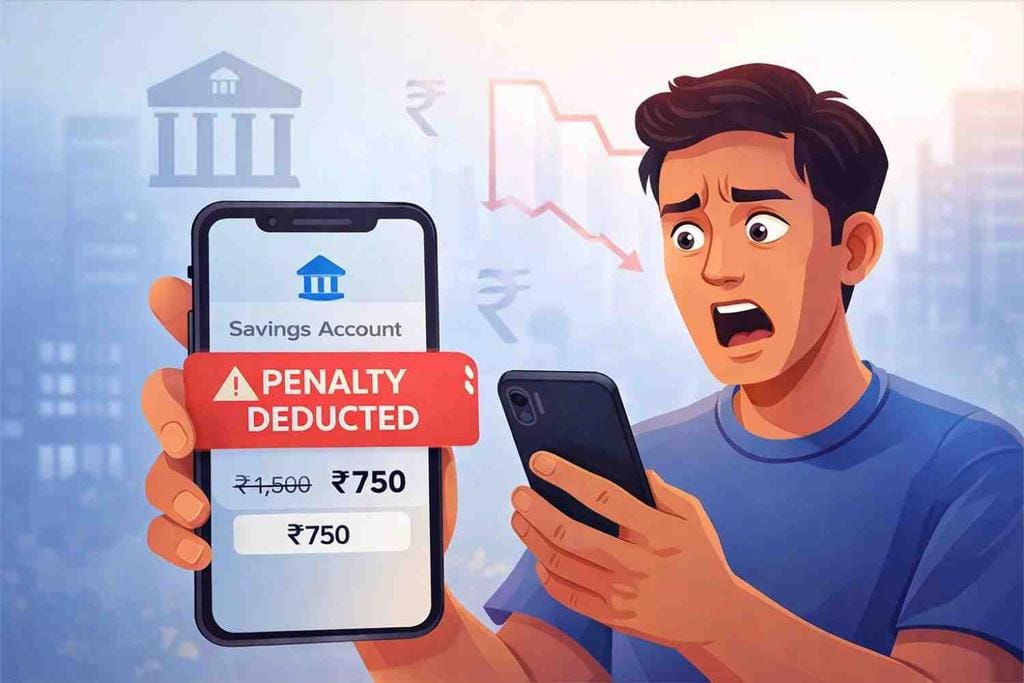
Some folks think keeping cash in a savings account means it stays safe, yet quiet rules chip away without notice. Though banks across India lay out clear expectations about holding funds, missing them brings fees that add up slowly. It is true the terms exist somewhere – just lost inside pages nobody opens. These small cuts happen again and again, not because secrets hide there, simply because attention fades.
Beyond dodging a single fee, knowing your savings account’s minimum balance rule stops repeated charges slipping through each month unnoticed. Many users don’t realize how these small deductions add up over time, especially due to hidden bank charges in India. Often those hit hardest are people on fixed incomes – workers paid monthly, college learners, newcomers managing money alone for the first time – who think using the bank costs little or nothing at all.
Picture walking through bank rules step by step. Each rule shapes what happens when fees kick in. Penalties grow based on clear formulas, not guesswork. Real ways exist to sidestep extra costs – no magic tricks needed. Simple moves make a difference over time. Knowing the system changes how you move through it. Understanding savings account rules is important because banks follow guidelines issued by the Reserve Bank of India which define how banking services and charges should be structured.
1. Minimum Balance Depends on Account Location Category
One of the most misunderstood aspects of savings account minimum balance rules is that the required balance is not fixed across all customers. Where a bank branch sits – city centre, town, outskirts, or countryside – shapes how it groups its accounts. That setup? It decides the least amount you must keep in your account.
A typical savings account at a big city branch might expect you to keep an average of ₹10,000 each month. In smaller urban locations, that number could drop to between ₹2,000 and ₹5,000 under the same bank’s rules. Out in rural areas, the amount often goes down further still. Location shapes how much effort and money the bank puts into running those branches.
Wrong moves happen when someone shifts cities or signs up at another location, unaware things work differently there. Some keep their account thin, thinking limits haven’t changed – then get charged. Watch out by confirming what your local office expects in funds before anything goes wrong.
2. Penalties Are Charged Monthly, Not One-Time
People often think dipping under the minimum balance brings just a single fee. Actually, many banks apply charges every month until things are back on track. So if your balance stays too low for three months, fees pile up each month – taxes included. That adds more cost than expected by most.
Falling below the required balance might cost more than a fixed fee. The shortfall size shapes what you pay. On top of that, the penalty gets taxed with GST, lifting the final hit to your funds. Small repeated costs like these nibble away at savings, particularly when nobody keeps an eye on the account.
Because of this, staying on top of your money means more than just hitting a target number. Watch what leaves your account now and then through statements or that little phone tool you already have. Spotting withdrawals early keeps surprises small.
3. Banks Use Monthly Average Balance (MAB), Not Daily Balance
Here’s something often missed about savings accounts: it’s not just one day’s number that matters. Most folks forget the bank looks at how much sits in their account across weeks, not moments. That total gets added up then split into a kind of middle point – called Monthly Average Balance. Think of it like a steady hum rather than a spike. Your money doesn’t need to jump high all at once. It just needs to stay reasonably full most days. The final figure? A smoothed-out version of your monthly flow. That’s why maintaining the right balance is important, and understanding your ideal savings account balance can help you avoid such penalties.
Take ₹10,000 kept steady through the month. Then comes a big withdrawal near the final days. That move pulls down the overall average. Suddenly, it slips under the needed mark. Days of staying above mean nothing once that average dips. Penalties show up anyway.
Surprisingly, many overlook this rule until it affects them directly. Instead of occasional stability, banks expect steady control across every part of the month. Without that ongoing effort, fees start adding up fast.
4. Penalty Slabs Are Based on Shortfall Percentage
Falling below the required balance might not trigger a flat fee at every bank. What you pay could hinge on just how far under the mark your account sits, thanks to tiered rules many banks follow.
A customer keeping ₹7,500 against a needed ₹10,000 might face less penalty than one holding just ₹2,000. Though banks list this sliding scale in their fee documents, clear explanations hardly ever reach account holders.
When you get how this works, cutting losses becomes easier. Though staying perfectly balanced might not happen, getting near the target lessens what you owe. A smaller gap means a lighter hit.
5. Salary Accounts Can Convert Without Notice
Banks love calling these accounts “zero balance,” so folks assume they’re free of upkeep rules. Yet that perk tends to vanish if paychecks stop landing on schedule.
Should work income halt because of shifting jobs or similar causes, the bank could switch your account to standard savings mode. When that shift occurs, keeping a set amount becomes required. Falling short might bring fees, even if nobody tells you directly.
Most people who work run into this problem at some point. After switching jobs, it helps to look at your account now and then so money isn’t taken out when you don’t expect it.
6. Zero Balance Accounts Still Have Conditions
Zero balance accounts are often misunderstood as completely free accounts. Even without needing a set amount kept in the account, rules can still apply. Using extra ATMs beyond a limit might cost you, just like ordering new cheques. Some extras – say, special tools or upgrades – come with fees too.
Sometimes, having a zero balance hinges on meeting certain rules – like being part of a state program or linking to a paycheck. When those requirements lapse, so does the zero-balance feature. Not staying within the lines means the account changes its nature.
So here’s the thing: checking out the fine print on zero balance accounts helps spot which bits cost money and which actually don’t. What seems free might hide fees – reading closely clears that up.
7. Penalties Can Create a Deduction Cycle
A drop in your account happens when a fee kicks in. Because of that lower amount, another charge might follow next month. Each time the total stays too low, fees keep adding up. Only once the number climbs past the set point does the pattern finally stop.
When someone doesn’t check their account often, small withdrawals add up before they notice. A steady drip of charges chips away at the total, leaving less than expected – no big purchase needed. Funds must go in soon – or switch the account to something that fits better instead.
8. Private Banks Generally Have Higher Charges
Fees shift from one bank to another without a fixed pattern. Where public lenders ask for less money kept in accounts, they also tend to charge smaller fines when rules are missed – private ones often demand more cash on hand, plus clamp down harder if targets aren’t met.
Just because banks differ doesn’t make one superior. What matters is how well it fits your money routine. Should keeping large amounts on hand be tough, then picking a bank that asks less makes sense. That move keeps extra fees out of reach.
9. Lack of Clear Notification Before Deduction
Banks often take fees straight from accounts, leaving people surprised. Usually there is no heads up at all. When messages do show up, they arrive only once the money is already gone. Some details might appear later on a monthly statement.
Without instant updates, checking your account regularly becomes key. When people wait only for messages from their bank, they might overlook warning signs or face sudden withdrawals.
10. Dormant Accounts May Still Incur Charges
After sitting unused for months, accounts might shift into dormancy. If this happens, you should know how to reactivate an inactive bank account to avoid further complications. Though a few costs could vanish, others – like maintenance or revival fees – might linger based on how the bank handles such cases.
Those quiet accounts? They stick around like old notes nobody reads, slowly chipping away with tiny charges while forgotten. Keeping them alive means checking in now and then – otherwise shutting them down works just as well.
11. Practical Ways to Avoid Minimum Balance Penalties
Staying clear of fees doesn’t need to be hard – just stick to some steady habits. A bit more than the minimum balance means short-term dips won’t trigger charges. Checking your account now and then using the phone app keeps surprises away, showing every change as it happens.
Most folks find it easier when their account matches how money comes in. When big balances feel out of reach, go for one that doesn’t require anything upfront – like a barebones option. Staying clear of penalties often means just keeping an eye on numbers each month. A quick alert now and then keeps things running without surprises.
Real-Life Examples
A worker paid a regular salary kept about ₹8,000 in an account meant to hold ₹10,000. Because the amount stayed low across three months, fees built up every month – each one including GST. Altogether, more than ₹1,000 was taken out without immediate notice. Only when reviewing the record did the person see what had happened.
A different situation involved a student who set up an account with no initial funds yet began making regular trips to ATMs. Because of these repeated withdrawals, fees slowly built up. Little by little, money disappeared from the balance even though there were no large purchases or transfers. The total amount shrank just from small ongoing costs.
Finding a new job brought trouble when the salary account changed without warning. Though not told, it shifted to standard savings overnight. With little notice, small balances stayed – then fees followed each month. Penalties piled up before realizing what had happened. Banks often set low bars for keeping accounts active – knowing those limits stops surprises. Spotting them early means fewer fees piling up by mistake.
Conclusion
Savings account minimum balance rules are simple in structure but often misunderstood in practice. Banks often apply fees without warning, slowly eating into your funds when rules go unnoticed. Since balance rules differ by institution, knowing exactly how they compute thresholds helps limit surprises. Though some think it’s harmless, frequent dips below minimums pile up costs fast. Instead of waiting, watch activity weekly – spotting trends early cuts risk later. A steady extra amount kept aside handles most routine drops before trouble starts. Only those who check terms and track movements stay fully in charge.
FAQs
Q1: What occurs if the minimum balance is not maintained?
Banks may impose monthly fines if you don’t keep the necessary balance. Until your balance is replenished to the necessary amount, these charges may persist.
Q2: Do all banks have the same minimum balance?
No, different banks have different minimum balance requirements, which also depend on whether a branch is located in an urban or rural area.
Q3: Can I avoid penalties entirely?
Yes, you can successfully avoid fines by keeping a buffer balance, selecting the appropriate account type, and routinely checking your account.
Q4: Are there no fees associated with zero balance accounts?
Although there is no minimum balance requirement for zero balance accounts, certain services may still incur fees based on usage.
Q5: How is average balance calculated?
By aggregating daily balances and dividing by the number of days in the month, banks get the average balance for each month.
6. If my account is not active, what should I do?
To prevent needless issues or fees, you should either deactivate the account or reactivate it through a transaction.
Disclaimer
This article aims to inform, nothing more. Rules at banks shift – fees update, terms adjust. What holds today might not tomorrow. Details on their site give the real picture. Check there first, every time. Decisions need up-to-date facts, not guesses.