
Discover why SIP fails in sideways market conditions, the real reasons behind flat returns, and what smart investors actually do differently. why SIP fails in sideways market, SIP not working, sideways market investing strategy, mutual fund SIP returns low, SIP performance flat market.
Introduction
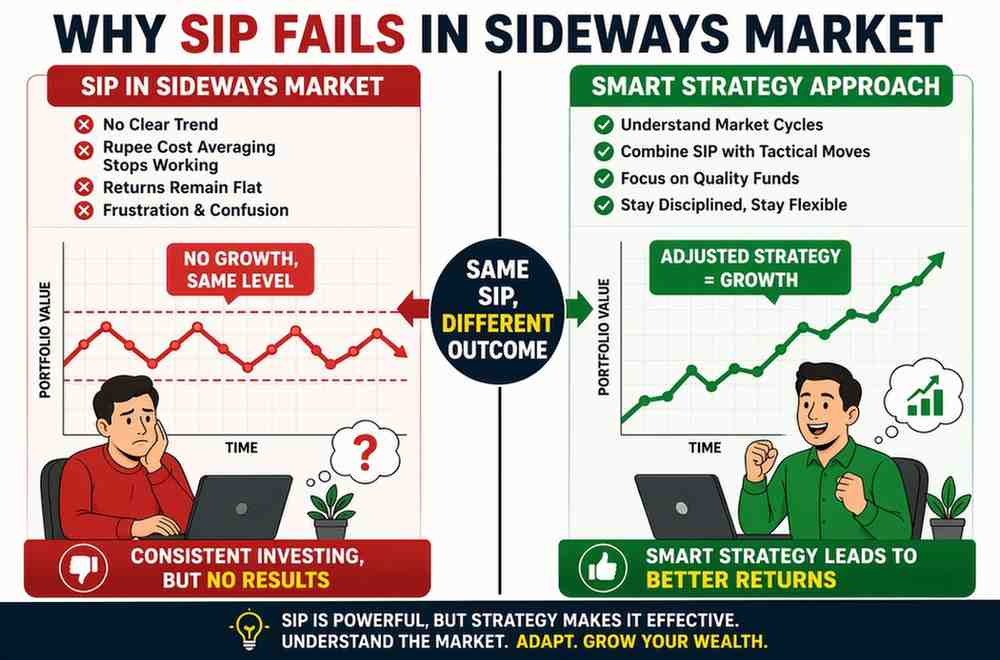
Starting a Systematic Investment Plan feels safe for many people aiming to grow money slowly. Yet things get unclear when accounts stay flat even after months of regular deposits. This is also influenced by broader economic factors tracked by institutions like the Reserve Bank of India. Progress seems automatic until it just stops without warning. Most think patience alone fixes everything, though timing plays a bigger role than admitted. Results lag not due to effort missing but because entry points matter more than routine. Markets rise and fall in ways plans cannot control. A method praised widely still bends under unseen pressures. What looks solid cracks when tested by cycles beyond human reach. Upward swings let SIP glide along just fine. Downward turns bring gains through lower average costs over time. Sideways motion? That’s where things stall out – neither growth nor savings shine. Money keeps flowing in regardless. Yet results barely shift, leaving investors wondering if it’s worth the effort. Understanding why SIP fails in sideways market conditions is essential because it helps investors shift from blind consistency to strategic thinking. Making smarter decisions and avoiding years of stagnation are made possible by this awareness.
Why Your SIP Feels “Stuck” (And Nobody Explains This Clearly)
Stuck. That is how some investors describe their SIP after months of putting money in without seeing any real gain. Slowly, quietly, hope fades when each deposit meets flat numbers instead of rising ones. Consistency tricks people into thinking progress is guaranteed – yet markets do not owe anyone an upward path. Returns need motion; sideways prices mean effort goes nowhere. Waiting becomes a habit, but waiting without change just stretches silence. Growth needs more than patience. It needs movement. Without it, years pass like minutes. Here’s how it unfolds: people keep putting money in, not stopping to check if what they’re doing actually works anymore. Slowly, irritation grows, since results do not match the energy spent. Some begin questioning mutual funds – or even the idea of regular investing – without seeing the deeper cause. What trips them up isn’t the method itself, rather the poor fit between approach and current market conditions. Spotting that gap sooner helps shift decisions from panic to thought.
What Is a Sideways Market (And Why It’s Dangerous for SIP)
Sideways markets trap prices in tight bands, blocking any real climb or drop – tough terrain for structured investment plans. Even though buying keeps happening at steady intervals, the usual ups and downs barely shift the overall unit cost. No consistent rise shows up over weeks or months, so gains stay frozen like traffic in gridlock. Fluctuations happen daily, still, they lack direction long enough to build meaningful momentum. Portfolios sit idle not due to poor timing, but simply because nothing pushes value forward. Regular investments go on, however rewards fail to follow through during these flat stretches. This mix leads to ongoing work without progress, leaving some who invest feeling stuck. Long stretches of little change catch folks off guard, often lasting multiple years before shifting. Even staying calm through it won’t help much when nothing pushes prices up or down. Seeing what’s really happening matters, since doing the same thing forever just doesn’t cut it. Adjusting how you approach decisions keeps things working, depending on what the market actually does.
The Biggest Myth: “SIP Always Wins in the Long Run”
It’s common to think SIPs deliver results over time, yet that idea misses something key – how markets move in cycles. When prices trend steadily, these plans gain strength through gradual growth, though flat periods tend to dull their impact. Many people follow basic illustrations showing constant gains, even though actual markets do not behave so neatly. That gap between theory and reality sets up disappointment, making shifts in strategy harder when trends shift. Most folks miss how market conditions shape returns – data from the Association of Mutual Funds in India highlights that. During sideways swings, holding steady doesn’t pay off like it does in clear up or down trends. That gap matters – it moves choices away from habit and closer to thinking. If investors ignore context, they stick with routines past their usefulness. Spotting this false idea isn’t dramatic; it quietly opens better paths.
9 Brutal Truths Why SIP Fails in Sideways Market
1. Rupee Cost Averaging Stops Adding Value
Most folks like rupee cost averaging through SIPs, though it doesn’t help much when markets move sideways. Prices stay stuck in a range, so regular buying fails to lower the average cost over time. That dull stretch chips away at what makes SIPs useful in the first place. Steady deposits keep happening, still there’s little gain from timing or pricing shifts. Returns just crawl along instead of building up. People often think steady investment fixes everything, yet results rely heavily on how much prices swing around. Without real movement, the method barely changes outcomes. Most days, growth just hides behind motion – activity without advance. Folks keep working the plan, yet stalls come anyway when markets shift sideways. That gap between effort and outcome? It twists confidence into doubt fast. Spotting the trap early means changing direction before more time vanishes.
2. Lack of Trend Kills Momentum
Most gains come when markets move up steadily; otherwise progress stalls despite steady effort. When prices go nowhere overall, little real value builds even with consistent input. Movement happens back and forth, yet ends where it began after months pass. Over years, small buys depend on rising patterns to grow worth – without such motion, more shares just sit idle. Direction matters most because totals stay still if peaks meet dips. Most times, movement doesn’t mean momentum – effort spins in place when there’s no clear path. Results stay out of reach even with steady activity, which slowly chips away at confidence. Questions creep in, not from failure itself but from not seeing why things aren’t clicking. Clarity often comes only after noticing how markets actually behave, not how we wish them to.
3. Time Alone Cannot Fix Flat Markets
Years go by, yet movement stays flat when markets refuse to climb. Held up as a hero, time needs help from rising trends to matter at all. Stick around long enough, some say, gains will follow – but only if the road slopes upward. Sideways stretches break that promise, trapping value in place no matter how long you wait. Money flows in through regular investments, still the number on screen barely shifts. Patience wears thin when waiting changes nothing over months, even years. The idea that simply holding on always pays? Tested hard when nothing moves ahead. Only if returns are present does time strengthen compounding; otherwise, the effect fades fast. Without actual growth, even consistent effort brings little forward motion. Stuck in place, portfolios fail to build value – no matter how regular the contributions. Some keep hoping, yet never shift tactics, missing what matters most. Clarity comes by seeing this flaw clearly: better methods beat longer waits every time.
4. Opportunity Cost Becomes Invisible Loss
Most people miss opportunity cost when putting money into investments, particularly during flat market phases with tiny gains. Instead of watching only SIP results, some forget what else they might have gained elsewhere. That gap in thinking leads to quiet losses – hidden at first yet powerful over time. Sticking tightly to routine choices can feel safe, though it sometimes means passing up stronger options without noticing. Most times, small chances ignored pile up, leaving returns far behind. Seeing what you lose by waiting moves eyes from total gains to how well money works compared to options. That mindset pushes questions about whether cash sits idle or earns its keep. With that view, choices shift slowly toward where value grows, shaping results years later.
5. Emotional Frustration Leads to Poor Decisions
When returns stay flat, feelings tighten like a slow squeeze. Over time, that tension grows – especially if someone expects steady gains from regular investing. A quiet pause in results can start to feel wrong, even when it is normal. That discomfort nudges people toward quick moves: halting instalments, jumping between funds, or walking away completely. Many investors fall into this trap while chasing high-performing funds without understanding the risks Emotion steers those choices, not strategy built for years ahead. Without knowing how markets move in waves, many see stillness as broken. And misreading calm periods opens the door to costly errors. When things go wrong, they act without thinking, causing unpredictable choices. Because feelings take over, people tend to purchase when costs are steep yet dump assets when values drop, shrinking gains. Staying calm matters just as much as tracking cash flow while building wealth. Seeing how markets really move keeps decisions steady and cuts out careless errors.
6. Over-Diversification Dilutes Returns
Spreading risk matters, yet going too far might weaken returns when markets move sideways. Strong gains often vanish under the weight of lacklustre holdings when capital splits across countless options. A flood of funds means winners get buried – performance stays stuck despite bright spots. This is exactly why too many investment options can hurt wealth creation in India instead of improving it. Tracking everything becomes messy once portfolios grow overloaded with choices. Clarity fades where oversight grows tangled, slowing down smart adjustments. Some people think owning lots of funds cuts down risk, yet after a while, it just slows things up. What happens instead is oversight gets harder, gains blur. Picking fewer options means clearer tracking, sharper outcomes when picks work out. Getting how wide versus tight works changes what comes back. Results improve once clutter fades into purpose.
7. Costs Continue Even When Growth Stops
Even when markets go nowhere, fees like expense ratios still come out of your pocket. Returns dip lower once those charges take a bite, dragging down results that were barely moving anyway. Little by little, tiny cuts build up, chipping away at what you actually keep. Most people hardly notice while stocks climb fast, yet when growth slows, every dollar lost to cost shows clearly. What feels minor in good times turns heavy when progress stalls. Start smart by keeping expenses low so more money stays working for you. Pick investments carefully – ones where fees won’t eat into results over time. See how charges add up, then adjust choices to keep outcomes stronger. When less cash leaks out in costs, what’s left grows further. Money saved today shapes tomorrow’s balance.
8. Weak Funds Get Exposed
When prices move sideways, weak spots in investment choices come into view. Without an upward push lifting everything along, shaky strategies start showing cracks. Good management stands out when gains do not come easily. Funds that rely on hype often fall short during flat stretches. Performance matters more when luck runs thin. Those chasing names instead of numbers tend to face surprises. This shows why picking the right funds matters, along with checking them often. Even in tough times, solid performers tend to hold up better than those that struggle. Seeing what sets them apart gives investors clearer insight into where their money is going. Focusing on strong choices rather than just more options shapes smarter portfolios.
9. Blind Strategy Without Understanding
Many investors often use SIP without fully comprehending how it operates, which results in strategy less, mechanical investment. Just like beginners misunderstand how compounding actually behaves in real markets, they also misjudge SIP performance. Most follow generic tips, trusting routine will fix everything – ignoring what the market is actually doing. Much like new investors get wrong how growth stacks up in live trading, they also read SIPs incorrectly. Without clear insight, changes go unnoticed even when signals shift. Money keeps flowing in regardless, chasing outcomes today’s environment won’t support. Eventually, things start to go wrong when people feel stuck. Knowing the basics of how money grows matters more than chasing quick wins. When someone sees the bigger picture, choices get clearer. Instead of waiting around, they begin steering their own path. Lasting results often come from that change in mindset.
What Smart Investors Do Instead (This Changes Everything)
1. They Track Market Phase
Most thoughtful investors adjust their moves based on what the market actually does. When prices climb, drop, or shuffle sideways, they watch closely first. Only after seeing the pattern do they decide next steps. Sticking rigidly to automatic investing makes less sense when conditions shift. Their choices follow evidence, not habits. What matters most is matching actions to how things unfold. When prices move sideways, spotting it fast helps reset what they expect, so disappointment stays low. Staying calm comes easier because their actions follow a plan instead of feelings. With practice, watching these shifts sharpens choices while boosting results slowly. Quiet periods won’t push them into sudden moves if they see the bigger picture clearly.
2. They Combine SIP with Tactical Investing
Most thoughtful investors know depending solely on SIP can fall short, particularly when markets move sideways and gains stall. Still keeping up regular contributions for structure, they add extra moves to capture openings as they arise. When prices drop, say, they might put in more money, shifting weight toward assets that are doing well. Mixing steady habits with smart shifts tends to lift results across the board. Most find gains come easier when mixing steady growth with quick moves. Relying only on scheduled plans can freeze progress too soon. Staying active keeps decisions sharp instead of waiting on autopilot. Flexibility often wins where strict rules fall short.
3. They Focus on Fund Quality
Most choose many funds blindly. Yet sharp minds care more about what a fund does than how many they hold. A solid track record matters, so does who runs it, plus whether results stay steady over time. Without these checks, shaky picks often drag down outcomes when markets go nowhere. Strong choices tend to stand firm, even when pressure builds around them. Checking how funds are doing happens often as one piece of their method. If a fund lags, out it goes – no second chances given lightly. Staying ahead means keeping investments pointed at what they aim to reach. Quality gets sharper with repetition, turning into quiet strength down the road.
4. They Avoid Over-Diversification
Most gains vanish when portfolios swell with extra funds. A sharp lineup keeps every pick strong. Cutting out the clutter trims down effort without losing edge. Watching results becomes simpler. Choices come clearer when fewer moving parts blur the view. Most gains come from just a few key holdings when focus is applied. When attention stays narrow, weak spots show up faster. Rather than scatter funds across many options, effort goes where it counts. Mixing focused bets with wider coverage shapes smarter decisions. What matters grows clearer through selective commitment.
5. They Adjust Strategy When Needed
Most strong point for sharp investors? It’s staying nimble – watching shifts closely, then tweaking plans fast. Instead of locking into SIP like a law, they handle it loosely, ready to shift if things change. If prices drift without clear direction, contributions might shrink, money could move elsewhere, even different moves get tested. That ability keeps them close to what markets actually do. Most people panic when markets shift, yet these investors stay calm by relying on facts instead of feelings. With each passing year, careful thinking leads to fewer losses along with steadier gains. Their methods shift quietly as situations change, keeping pace without force. What truly sets them apart shows up most during uncertain times.
Why Most Investors Still Don’t Realize This
Out there, plenty of folks follow basic tips about staying steady, yet rarely hear why shifting markets actually matter. That gap? It breeds comfort where caution might be wiser. Picture someone thinking monthly investments always win – no matter what the market’s doing – and you see where hopes start stretching beyond reality. Though SEBI pushes for smarter choices, most people still lack real know-how. Their plans often miss what’s happening now in markets. That space – between knowing and doing – keeps errors alive, returns flat. They invest on repeat, without checking if it makes sense today. Spotting that mismatch? That begins better results down the road.
The Real Problem Isn’t SIP—It’s Strategy
What trips people up isn’t SIP – it’s treating it like a one-size-fits-all fix instead of one piece of the puzzle. Even though it encourages steady habits, leaning on it alone can backfire when markets shift unexpectedly. Outcomes suffer not because the tool fails, but because timing and context get ignored. Relying only on regular deposits misses the bigger picture of changing valuations. The habit stays useful, provided it’s balanced with awareness of where things stand. Just like investors compare how many mutual funds to hold for better portfolio performance to avoid dilution, they must also understand when SIP works best. Strategy determines results, not just the method used. Even the best tools can fail in the absence of a defined approach. Acknowledging this causes the emphasis to change from blaming SIP to enhancing decision-making. Long-term success requires this shift in perspective.
So, Should You Stop Your SIP?
Markets bounce back eventually, so halting your SIP could mean skipping gains later on. When returns dip, pause before acting – look at how things are set up instead. What’s happening in the economy matters more than pulling out completely. Take a closer look at which funds you’re in, what fees add up, and whether your split across assets still fits. Good moves come from checking details, not quick exits. Most people stick with a plan when they tweak it instead of tossing it out. When choices come from clear thinking, not feelings, results tend to improve. Staying steady while staying open works well across years. Continuing to put money in makes sense – just with more sense each time.
The Hidden Gap Most Investors Ignore
Most people know how to invest yet still struggle because knowing isn’t doing. Sideways markets highlight that flaw – when prices drift, smart moves count more than steady ones. Advice gets copied like homework, rarely shaped to fit who’s using it. Mistakes pile up when habits stay unexamined. One step at a time, progress grows when people keep learning while actually doing. Shifting old methods happens by challenging habits, then changing what needs change. Little by little, better outcomes appear as the space between fades away. That quiet shift? It’s where sharp decisions outpace routine choices.
What You Should Do Next
Investors should concentrate on evaluating their portfolio and comprehending market conditions rather than impulsively responding to stagnating results. This entails examining the allocation strategy, cost structure, and fund performance. This includes reviewing fund performance, cost structure, and allocation strategy. Learning from concepts like how to balance liquidity and returns in investing helps in making better decisions. Investors should also explore whether their current approach aligns with their goals. Little moves, when guided by knowledge, add up in surprising ways. Instead of chasing quick wins, thinking ahead shapes stronger outcomes. Over months, this method weaves tougher financial footing. Staying open to change plus picking up new insights keeps progress steady.
Final Thought (Important)
When handled well, SIP can work strongly – yet it won’t fit every kind of market. Drifting sideways shows what happens if routine lacks planning behind it. Those who see that gap tend to adjust more smoothly, reaching clearer results. Facing difficulty isn’t the point – reacting with thought makes the real shift. When markets shift, thinking ahead helps. Staying alert matters just as much. Flexibility opens paths others miss. Choices improve when vision stays clear. Success grows quietly over time.
Conclusion
Understanding why SIP fails in sideways market conditions helps investors move from confusion to clarity and from passive investing to strategic thinking. Most people stick to one plan. Yet when conditions shift, those who adjust tend to do better. Flexibility matters more than strict plans – so does paying attention to what assets are truly worth. Thinking changes results, even if the amount invested stays the same. Outcomes grow stronger not by guessing right every time but by learning fast. Progress comes through small shifts, repeated. Long-term growth often follows quiet discipline instead of bold moves. Mistakes fade when reactions replace routines.
FAQs
Q1: Why SIP fails in sideways market?
Because there is no discernible trend to support cost averaging and compounding, SIP fails in sideways markets. Even with steady investment, gains are still restricted in the absence of significant price fluctuation.
Q2: Stop SIP in sideways market?
Markets eventually rebound, so stopping SIP is not necessary, but strategy modification is crucial. Rather from giving up entirely, investors should optimize their strategy.
Q3: What is the maximum duration of sideways markets?
Depending on the state of the economy, sideways markets may persist for months or even years. Long stretches of low returns should be anticipated by investors.
Q4: In flat markets, what enhances SIP performance?
Performance can be enhanced by better fund selection, expense control, and the integration of SIP with tactical investment. Consistency alone is not as important as strategy.
Q5: Is SIP still a smart long-term investment strategy?
Yes, SIP is still useful for long-term investing, but only if it is applied with knowledge and flexibility. Its efficacy is diminished by blind investing.
Disclaimer
This article aims to inform, nothing more, never meant as guidance on money matters. Each person must shape choices around their own targets, how much uncertainty they accept. When markets shift, outcomes might differ without warning. History of gains or losses tells very little about what comes next. Talking to someone trained in finances helps clarify options beforehand.