
SIM swap fraud in India can hijack your mobile number and drain your bank account within minutes. Learn how it works, real cases, and how to protect yourself. sim swap fraud in India, SIM swap scam, SIM card hacking India, OTP fraud India, mobile number hijacking, bank account hacked SIM swap, banking fraud using SIM swap, identity theft India banking, mobile SIM cloning scam, how to prevent SIM swap fraud.
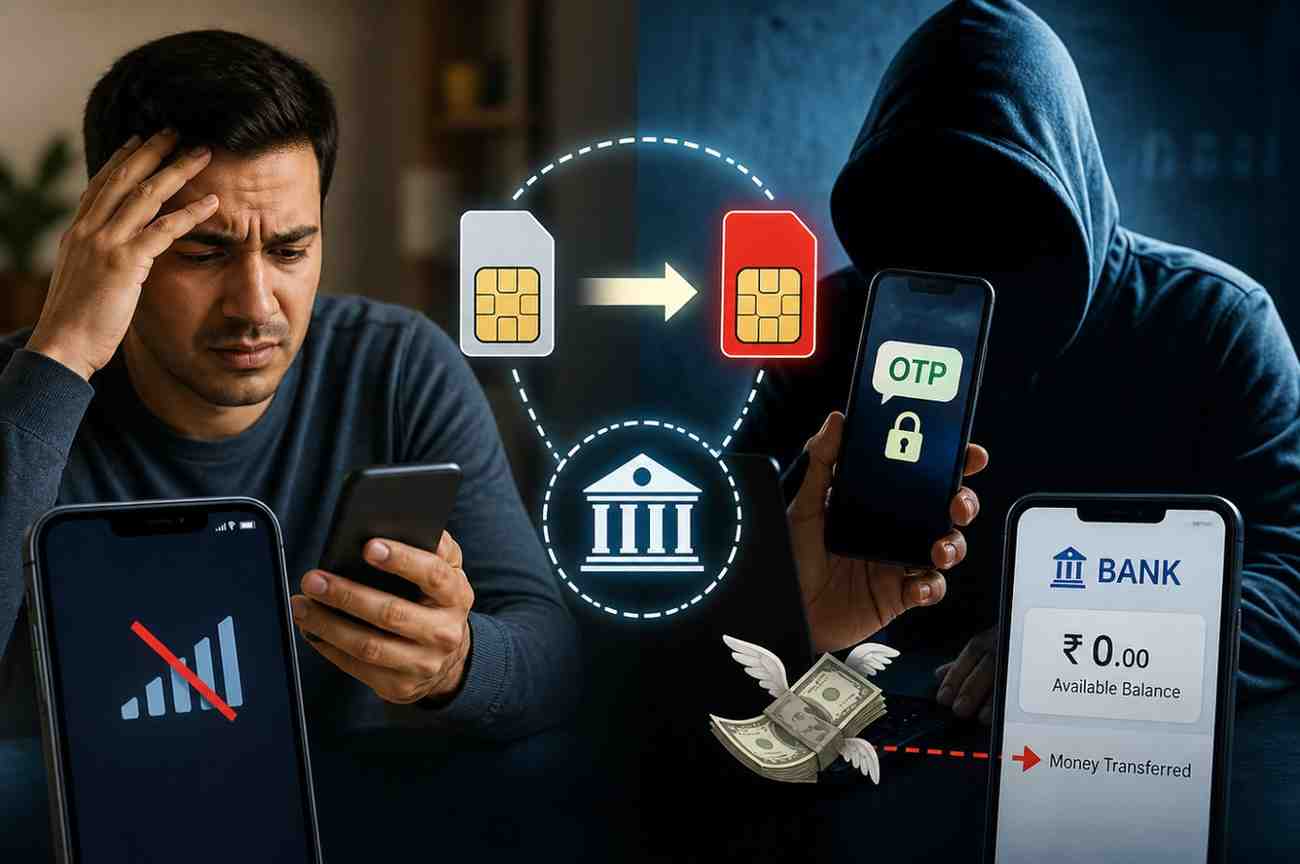
Introduction: A Silent Attack That Doesn’t Need Your Phone
Most folks think their money stays secure if the phone remains nearby. Yet this comfort zone becomes the weak spot attackers target. Control shifts when someone hijacks your actual phone number – this happens in sim swap fraud India cases. Your digits act like keys now, unlocking one-time passwords, transaction notices, even login verifications. The thief operates remotely. No physical handset needed anymore. This risk has been highlighted in multiple advisories issued by Reserve Bank of India warning users about OTP-based fraud.
Surprisingly quiet, this attack sneaks through without a trace. Not a single virus shows up, nor any odd application, sometimes nothing at all feels off. All seems fine – until the connection cuts out unexpectedly. At that point, harm might already have taken place. Growing fast, this scam focuses on people instead of software flaws.
What Is SIM Swap Fraud (In Simple Terms)
Someone steals your phone number by moving it to a different SIM card they hold. That leaves you unable to access your line. It often starts after they collect pieces of your info – like your birthday or ID numbers – from stolen records, fake websites, or trickery. Once they have what they need, they call your phone company, act like they are you, then ask for a new SIM to take over the account.
Right after the telecom provider turns on the replacement SIM, the old one goes dead – calls and texts start flowing straight to the scammer instead. Banking codes meant for secure logins get caught in that switch too. With phone-based checks being standard for money apps, intruders exploit the gap fast: password resets happen, doors open, funds move out, all before dawn breaks. Most people notice nothing beyond spotty signal bars – a blip dismissed as poor reception. Silence stretches until something feels off, but by then trails have gone cold.
The 5-Minute Attack Timeline (How Money Disappears)
Minute 0: SIM Suddenly Loses Network
- Your phone shows “No Service” or “Emergency Calls Only”
- Some folks think it’s just a glitch that’ll pass
- This exact second marks when your SIM stops working
- Fraudster starts SIM swap
- Once you switch, the old SIM no longer picks up texts or phone calls
- You lose control of OTP-based verification instantly
- Here begins the earliest clue, yet folks overlook it every time
Minute 1: Duplicate SIM Gets Activated
- Telecom provider activates new SIM under fraudster’s control
- Last thing – your phone number has moved over completely
- All incoming calls and SMS are redirected to attacker
- Your connection to that number? Gone. Nothing links you now. It sits there without you. You exist apart from it entirely. No thread ties you together anymore
- Fraudster now controls every way one-time passwords are sent
- This step completes identity takeover
- A signal doesn’t reach you when this change happens
Minute 2: Banking Access Begins
- Fraudster attempts login to your banking apps
- Forgot Password Reset Option
- OTP Sent to Compromised SIM
- Broke through login walls without much trouble
- A fresh start for email access can come through that number too
- Linked apps (UPI, wallets) become vulnerable
- Here’s when getting in stops being controlled at all
Minute 3: Account Control Established
- Someone else picks fresh codes without permission
- Bank accounts and UPI apps now fully available
- Fraudster may add new beneficiaries
- Changes can happen to how security is set up
- Maybe notifications are turned off. Or perhaps they’re sent somewhere else instead
- Victim is still unaware of what’s happening
- Power now rests entirely in the hands of whoever launched the assault
Minute 4: Money Transfer Initiated
- Money is moved to several accounts.
- To evade discovery, transactions are frequently divided via wallet transfers, IMPS, or UPI.
- Layered systems are used to route money.
- These transactions frequently mimic money mule accounts, which are used to transfer pilfered money between several bank networks.
- Everything happens rapidly, so speed is crucial.
- The fraudster makes sure that traceability is challenging.
Minute 5: Money Disappears Completely
- Most of the amount vanishes. All funds gone without trace
- Funds are moved across multiple accounts
- Hard to bounce back once things go wrong
- Maybe the person still believes it’s just poor signal strength
- Once the bank gets a call, harm already happened
- Fraud cycle completes within minutes
- This is why response time is everything
5 Shocking SIM Swap Tricks Used by Scammers
1. Fake KYC Update Requests
Someone pretending to help contacts you first – text or call – saying your phone or banking info needs quick confirmation. Fear creeps in fast when they warn your service stops working unless you respond right away. You’re guided to share private things like ID number, birthday, or financial data – all normal steps elsewhere, so it feels okay. After a bit, once comfort grows, they ask for the one-time password sent to your device. That code? It slips into someone else’s hands and swaps out your SIM without permission. Someone hands over their phone number without realizing what they’re doing. Right words, right moment – everything feels like how things usually go with phone companies. It seems normal enough that most do not stop to think twice. Before doubt kicks in, the switch is already done. Rushed thinking pushes people to act before checking if it’s safe. Timing tricks the mind into moving fast when caution matters most.
2. Social Engineering Through Customer Care
One way scammers operate involves pretending to be support staff from phone companies or banks, reaching out with believable stories. A sudden alert about strange transactions might come up, or perhaps a supposed need to upgrade an account feature. Slowly, they shape the talk to feel safe, tossing in small, innocent-sounding queries early on to collect bits of personal detail. Later down the line, after rapport feels natural, comes the ask – private details are wanted now, framed like it’s just part of keeping things secure. Most times, victims go along since the voice on the phone feels credible, speaking like someone they might know. After gathering key bits of info, a fake ID slips through to swap the victim’s SIM at the carrier. What makes it work isn’t code or software – it hinges on conversation, tone, small cues. Trust kicks in when voices sound official; few stop to question what’s asked. A steady pace, clear steps – this rhythm masks red flags that should spark hesitation.
3. Data Leak and Identity Theft Combination
Most times, SIM swapping isn’t random – it ties into broader schemes to misuse personal details. Leaked databases spill names, addresses, even birthdates; hacked apps hand over more pieces. Public documents fill in what’s missing, bit by bit. Put together, these fragments form a full picture of someone’s life. Scammers use that image – clear and detailed – to sound exactly like the person they’re pretending to be on calls with phone companies. Because systems check data against stored info, crooks slip through by copying real details exactly. No need to talk to the target means nobody notices right away. Every fake fact fits clean with government files, thanks to careful planning. After getting the new SIM card, thieves move fast to steal money. The worst part? Everything happens in silence – no alerts, no noise, just loss.
4. OTP Interception and Banking Takeover
Once the thief has your phone number, they start grabbing one-time codes meant for banks or emails. A reset request here, a login attempt there – each step moves them deeper into your accounts. Because those security texts arrive on their device now, every lock you thought was secure opens wide. With access in hand, moving money feels like turning a key in an unlocked door. Your name stays on the account, yet someone else walks through it freely. Minutes can pass before real harm shows up on the screen. Money moves through channels picked carefully, avoiding obvious paths by jumping between different names. At times, fresh gadgets get tied into the system, or access rules shift without notice. People do not see problems until they try logging in, or a warning arrives late at night. This technique often overlaps with dangerous UPI scams that trick users into approving transactions unknowingly.
5. Silent SIM Replacement Without Interaction
Sometimes, nobody reaches out to the victim. With enough private details in hand, the hacker asks the phone company for a new SIM card straightaway. That way, everything happens without a sound – no alerts, no texts, nothing odd at first glance. Only when service suddenly drops does the person realize something is wrong. Most times, when someone finally looks into it, the SIM switch happened hours before. Right after, the thief jumps straight into bank apps and moves money around without waiting. What makes this scary isn’t just speed – it cuts out phone calls or warnings that might flag something wrong. People tend to think their signal dropped, so they wait instead of reacting fast. That pause? It’s all a scammer needs to finish what they came to do. Many such incidents resemble patterns observed in UPI fraud cases where money gets debited instantly without clear warning signs.
Why Even Smart People Fall for SIM Swap Fraud
Most think only new internet users get tricked, yet SIM swapping proves otherwise. What pulls people in fast? A rush to respond before checking facts. Fake legitimacy creeps in when messages pretend to be from known companies – banks, phone services. When alerts look like regular notifications, doubt fades quietly. Hidden tech details stack up, clouding clear judgment. Few see how each piece fits until too late. Surprise hits hard when warnings about losing access cloud clear judgment. Still, people who manage money well might stumble if several pressures strike at once. Many attacks begin subtly through channels similar to common WhatsApp scam messages that appear completely normal at first glance.
How to Detect SIM Swap Early (Critical Signs)
Out of nowhere, your phone might lose signal – stays gone even after moving around. That blank screen saying “No Service”? Could mean someone else has taken control. Messages vanish too – those bank alerts, one-time codes, things you’d usually see right away. When they just… stop arriving, something’s off. Spotting these hiccups fast helps limit harm before it spreads. Strange things could pop up – like logins you did not make showing up by email rather than text. Friends or family might mention odd texts or calls sent from your phone number without your doing. Your service might start lagging, dropping calls suddenly or cutting out entirely. Each clue alone feels small. Put them together, though, and it points toward a hijacked SIM card. Spotting the pattern fast gives you a chance to stop worse trouble later.
Advanced Protection Strategies (Not Basic Tips)
1. Use a Secondary Banking Number
One single phone line just for bank matters cuts risk way down. Not posting it online keeps it safe from eyes that shouldn’t see it. When few people have access, leaks become far less likely. Your money stays guarded even if another number gets exposed. Away from routine tasks sits this method, keeping delicate operations at a distance. Harder becomes the path for intruders aiming to link who you are with where your money moves. Adopted widely among those who know systems well, simply because risks shrink when done this way. Success comes not from chasing dangers after they appear, but from shaping entry routes ahead of time.
2. Set Transaction Limits Strategically
Tightening how much you can send each day through your bank or UPI tools lowers what could be lost. Rather than permitting big withdrawals, pick a limit close to what you usually spend. That way, if someone breaks in, they cannot take much. Most people never touch the preset amounts offered by banks. Even so, changing those numbers takes just moments. Protection like this may seem small – yet it holds real weight. Later on, spotting odd behaviour becomes possible before big transfers happen. Rather than block entry completely, the aim here is to reduce damage when it does occur.
3. Enable Multi-Layer Alerts and Monitoring
When something triggers a warning, getting it through more than just one way means messages still come through. Watch what happens on your accounts often so odd behavior shows up fast. Some people stick with texts alone, but that fails when someone steals their phone number. Emails step in when texts stop working. Spotting issues right away cuts down losses before they grow. When things go sideways, staying in the loop matters most. One piece drops out, yet you still see what’s happening because clarity never takes a break.
4. Respond Immediately to Signal Loss
Out of nowhere, the phone loses service – wait longer than a couple minutes, that’s trouble. Could mean someone swapped your SIM without permission. Get in touch with your carrier right then, stops sneaky switches fast. They move quick, those scammers, so waiting cuts your chances. Every minute past makes money theft more real. When signal drops happen, seeing them as possible threats instead of broken tech shifts everything. Often, small warnings get ignored – then things spiral fast.
Cyber fraud techniques are evolving rapidly and becoming more sophisticated, with recent alerts from Indian Computer Emergency Response Team highlighting SIM-based attacks as a growing threat.
What To Do If Your SIM Is Hijacked
Right away, get in touch with your phone company if you think someone took your SIM. Stop the switch by having them lock your number – speed matters since scammers move fast. Once that’s set, call your bank before anything else slips through. Have them pause activity on your account to cut off unwanted payments. Time runs tight, so each move counts. Immediate reporting through National Cyber Crime Reporting Portal can significantly improve the chances of stopping unauthorized transfers. Start by updating login details across connected services – banking platforms, messaging systems, digital payment tools. When fraud happens, notify cybersecurity units right away since speed helps trace where money went. Look back at past logs to spot actions you did not approve. Move step by step without delay; it slows losses and lifts recovery odds.
Real-Life Examples
Example 1: A signal dropped mid-journey, leaving the Delhi entrepreneur puzzled but passive. Minutes crept by before fake identification sparked a cloned SIM card elsewhere. Personal data spilled online gave strangers entry without force. Bank alerts blinked – each one confirming silent withdrawals. Money slipped out in chunks just small enough to stay under radar sweeps. Authentication codes meant to guard access instead unlocked doors wide open. Later that day, when he finally looked at his account, the money was gone – shuffled across several different places. Because he waited too long after losing the signal, getting anything back became unlikely. Money moves fast when it slips out of reach.
Example 2: A message came through one afternoon. It seemed official at first – someone saying they needed to check her SIM details. Their voice carried confidence, like someone who knew what rules applied. Missing this step, they insisted, meant losing service completely. When she agreed, the request appeared small: just a code sent by text. Moments after reading those numbers aloud, everything went quiet. Her device could no longer connect. Then money started disappearing, pulled without permission from her UPI balance. Out of nowhere, someone took her phone number to change bank details and move money. In fewer than ten minutes, every bit of the scam unfolded – no red flags at all.
Example 3: A glitch hit the system midday, catching an IT worker off guard. Instead of waiting it out, he called his internet service straight away. Turns out someone tried swapping his SIM card pretending to be him. The company shut down the attempt just in time. Digging deeper uncovered the leak came from an unrelated mobile application. Stopping the problem fast saved money that could have been lost. Because he paid attention right away, things did not get worse. What happened shows paying close watch matters just as much as acting without delay.
Example 4: Out of nowhere, a pensioner in Mumbai found himself cut off from phone service – no warning at all. Details about him? Already pulled from old data breaches by someone waiting quietly. That person then asked for a new SIM card as if it were routine. The moment that swap took effect, money began moving out of his bank balance fast. With no regular check-ins on transactions, the theft stayed hidden through most of the day. Just moments before he spoke up, funds were vanishing into a chain of hidden steps. Because nothing moved sooner, pulling it back became nearly impossible.
Final Warning (Read This Carefully)
Hidden, SIM swap scams begin without warning, bypassing the need to touch your device. Your phone number? That’s what gets hijacked next – banks trust it completely. When someone else owns that number now, every code sent by text fails you. Things move fast, too fast sometimes to stop anything at all. Often, people notice once money disappears, never sooner. When signals like dropped connections get overlooked, expenses pile up fast. Fast responses plus clear understanding stand between safety and risk from these scams.
Conclusion
Out of nowhere, someone else might gain control over your phone number. This isn’t random – it targets your bank accounts and private info straight away. Fast moves happen behind the scenes, often without warning signs. Spotting the pattern changes everything for you. Watching for sudden signal drops helps, just as much as keeping personal details out of public view matters more than most think. When more people pay online, dangers rise too. Watch closely, stay updated – this helps avoid losing money.
FAQs
Q1: What is SIM swap fraud in India?
Scammers can obtain OTPs and banking services by transferring your mobile number to another SIM card, a technique known as SIM swap fraud. This enables them to manage your bank accounts without having access to your actual phone.
Q2: How can I find out if someone has switched my SIM card?
Key indicators include unexpected financial activity, a rapid loss of network signal, and the inability to accept calls or texts. Verifying right away with your telecom provider is crucial.
Q3: Can I get my money back after falling victim to SIM swap fraud?
Chances go up when reports happen fast – speed matters more than anything else. Banks react quicker now, especially after someone flags a problem right away. Cybercrime units move only as fast as the alert they get. It takes seconds to report, yet that split can change everything.
Q4: Is there a rise in SIM switch fraud in India?
Indeed, SIM switch fraud cases are rising quickly due to the growth of digital payments and mobile-based verification. The greatest defence is still awareness.
Q5: Is it safe to provide telecom companies your OTP?
No, OTPs should never be disclosed to anyone, not even bank or telecom employees. OTPs are not requested over the phone or via SMS by reputable companies.
Q6: What should I do if my phone abruptly loses signal?
Consider it a possible security problem and get in touch with your telecom operator right away. You can stop unwanted access to your accounts by acting quickly.
Disclaimer
This article shares facts about SIM swapping risks, nothing more. Awareness grows when details spread clearly. Depending on your carrier or bank, safety steps might look different. Check with real companies – your phone provider, your financial institution – for answers that fit you. Official channels hold the correct info; turn there first.