Learn the complete minor to major bank account conversion process, required documents, bank rules, and costly mistakes to avoid after turning 18 in India. Minor to Major Bank Account Conversion, minor account to major account, bank account conversion after 18, minor account conversion process, convert minor account to major account, documents required for minor account conversion, savings account after turning 18, bank account KYC update, adult bank account conversion, bank account rules India.
Introduction
Eighteen hits, and suddenly you’re seen as an adult by Indian law. Though college forms, voter ID cards, or learning to drive grab attention, few think about what happens to their money in the bank. Once age comes into play, accounts set up during childhood might stall unless changed by hand. Growing older doesn’t always flip that switch alone. A visit, some papers, a quiet update – often missed until something blocks later plans.
Most banks require account holders to complete a minor to major bank account conversion by submitting fresh KYC documents and updating account records. Later problems might start if this step gets skipped – banks could limit what you do online. Jumping into how it works right away keeps things moving when you need cash fast. Access stays open when confusion is avoided.
Turning 18? Your Bank Account May Need an Important Upgrade
Turning eighteen doesn’t flip a switch at your bank. Most institutions expect you to take steps before unlocking full access. Accounts set up while underage follow special guidelines. These often include permission from a guardian or come with restrictions on what you can do.
Later in life, financial institutions ask for new paperwork when someone turns adult – responsibility shifts entirely to that person now. Updating ID proofs happens alongside fresh signature samples or recent photos, along with current phone numbers or addresses too. With everything processed properly, using bank tools like online transfers becomes possible plus request a checkbook also opens up later. Moving forward without delays keeps things running smoothly while meeting legal standards quietly behind the scenes.
What Is Minor to Major Bank Account Conversion?
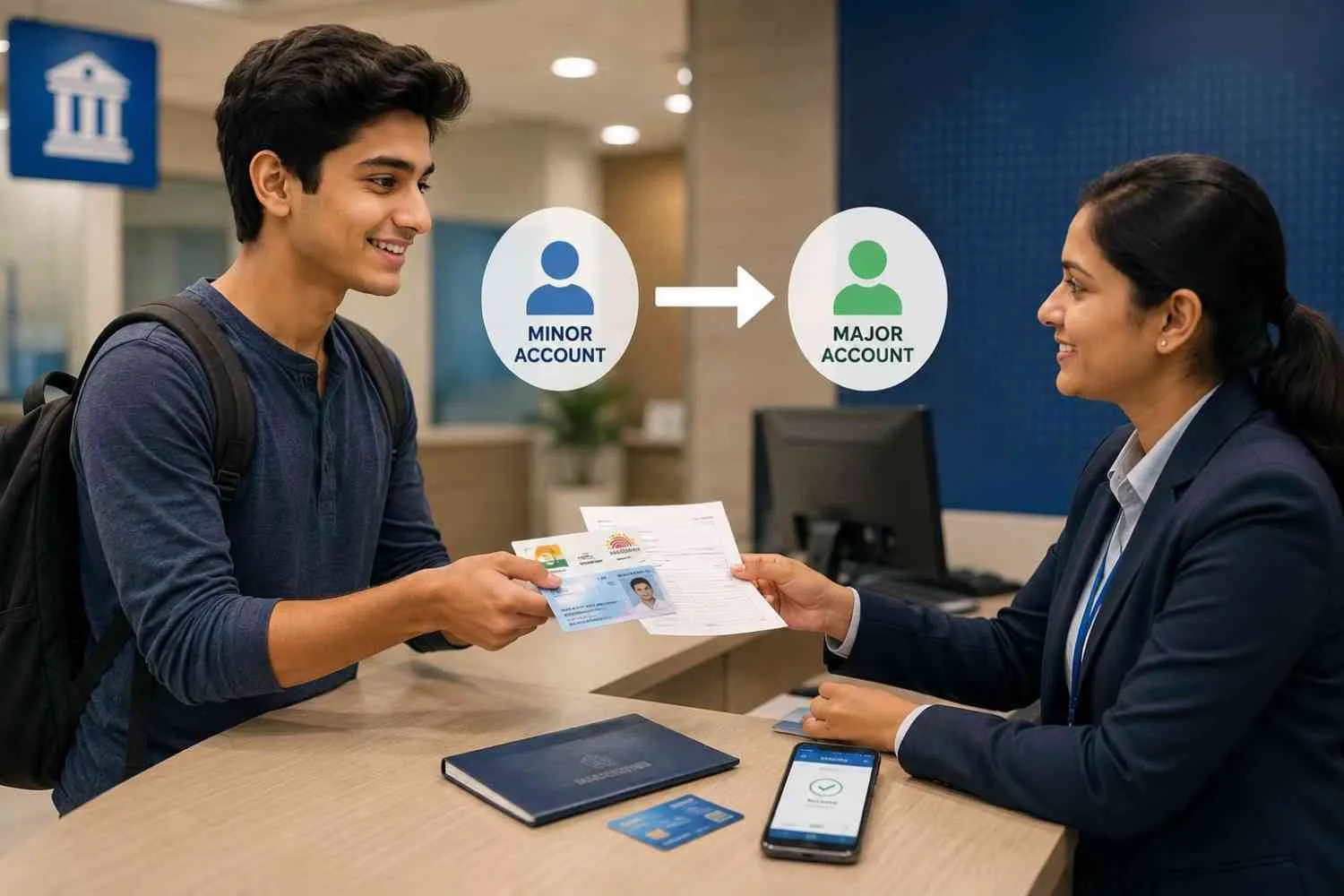
Once someone hits 18, their old kid’s bank setup shifts into a full adult version. That change means they can manage money on their own. Instead of needing a parent around, decisions move straight to them. Growing up triggers access – no more shared control follows. Independence kicks in when the system upgrades what was once limited.
After approval, the account shifts from minor to major status automatically. Fresh proofs of ID and residence kick things off, followed by a signature update. Instead of staying limited, full banking services open up right away. Completing KYC steps wraps up the change smoothly. Banks follow KYC and customer identification requirements issued by the Reserve Bank of India (RBI). This change is crucial because it guarantees adherence to bank and RBI regulations while establishing legal ownership and accountability.
Why Is This Conversion Important?
Once a child turns eighteen, banks must update their account type. This shift marks the change from underage to adult standing. Because rules demand correct client details, skipping the step brings complications later on. Records stay aligned with current laws when changes happen promptly.
Starting fresh with current info sidesteps KYC hurdles, unlocks better bank features, also eases later money tasks. If credit cards are on your mind, maybe mutual fund investing, or even setting up a Demat account – clean bank details tend to speed things along. Maintaining proper account status is just as important as understanding the latest rules related to a savings account minimum balance.
How to Convert a Minor Account Into a Major Account
- Step 1: Get in touch with your bank- Checking the particular needs of your bank is the first step. While some banks need a branch visit, others permit partial online processing. You can better understand the precise paperwork and processes required by getting in touch with the bank beforehand.
- Step 2: Send in New KYC Records- Since the account holder is now an adult, banks typically request updated KYC documentation. Address proof, PAN, and Aadhaar are frequently asked for. These records aid in identity verification and guarantee adherence to regulations.
- Step 3: Complete the Conversion Form- For the conversion of minor to major accounts, the majority of banks offer a specific form. The form records the most recent personal information, contact details, and bank-mandated declarations.
- Step 4: Update the photo and signature- For next transactions, the account holder’s signature is recorded by the bank. In order to keep correct customer information, a recent photo may also be gathered.
- Step 5: Finish the Verification- The information and papers submitted are confirmed by bank representatives. If there are inconsistencies in the records, further examinations might occasionally be carried out.
- Step 6: Get Up-to-Date Banking Services- The account is transformed into a standard savings account after verification is finished. The bank might supply new account passwords, activate extra features, or issue a new debit card.
Documents Required for Minor to Major Bank Account Conversion
| Document | Purpose |
|---|---|
| Aadhaar Card | Identity and address verification |
| PAN Card | Financial and tax-related verification |
| Passport-size Photograph | Updated customer records |
| Account Passbook | Account identification |
| Conversion Form | Official conversion request |
| Address Proof (if different) | Verification of current residence |
| Updated Signature | Banking operations and authentication |
Banks may have additional requirements depending on their internal policies.
8 Costly Mistakes to Avoid During Minor to Major Bank Account Conversion
1. Delaying the Conversion Process
It often happens when people think they’ve got forever to switch things over. Turning eighteen and still sticking with the old setup – this goes on more than you’d guess. Normal operation might last a while, sure. Trouble shows up later, though, when rules start mattering more than convenience.
Every now and then, banks take another look at client details – sometimes asking for fresh KYC papers. When those changes aren’t handed in on time, access to some features might get paused. Waiting too long can bring snags later, especially when chasing loans or cards needing solid bank proof. Jumping on it fast helps dodge headaches down the road while keeping your file clean and current.
2. Not Carrying PAN Card During Conversion
Some people opening accounts for the first time think Aadhaar is enough. Still, PAN now plays a key role in handling money matters across India. Showing up at the branch without it might slow things down. Extra trips could follow if paperwork isn’t complete.
Starting fresh each time makes tracking easier down the line. When setting up accounts later or checking where money might grow, keeping details current matters most. Ending here means less hassle ahead. This becomes especially important if you later want to understand how to check credit score in India for free.
3. Ignoring Mobile Number and Email Updates
In contemporary banking, your email address and mobile number are essential. They are utilized for digital banking access, transaction alerts, account security notifications, and OTP verification. During conversion, many account holders neglect to update these details.
Missed alerts or trouble using online banking services can arise from using an out-of-date phone number. Updating contact information during conversion guarantees continuous access to digital banking services and contributes to account security.
4. Failing to Review Nomination Details
Years gone by can leave old nomination choices out of step with how you feel now. When accounts shift, folks often forget to check those picks – then trouble shows up if someone needs access later. Ownership questions pop up, claims get messy, all because updates slipped through the cracks.
Starting off, looking at who’s named in documents saves families stress later on. It matters because a person listed isn’t always the one entitled by law. The concept becomes clearer when learning about nominee vs legal heir situations.
5. Forgetting to Update Signature Records
Most kids’ bank profiles include a mom or dad, particularly if set up early in life. Once you hit eighteen, your handwritten name takes charge when doing money tasks at the bank. Too often, people finish upgrading their account yet skip refreshing how they sign their name.
When your signature looks old, banks might question it while handling cheques or changing account details. A tiny difference sometimes means forms get turned down – extra checks could follow. During conversion, refreshing your signature helps avoid hiccups ahead. Things move faster later if you update it now, especially when seeking loans or confirming identity. Later steps feel easier when today’s mark matches what’s on file.
6. Not Checking Debit Card and Internet Banking Status
When a young person turns eighteen, their bank might change how things work. A new debit card could appear in the mail, or access to online tools might need restarting. Not checking what shifts after the switch risks unwanted surprises down the road. Once converted, see if the debit card works. Check that login details for online banking actually get you in. Make sure the phone app lets you through too.
This verification is especially important if you regularly use UPI and other digital payment systems supported by the National Payments Corporation of India (NPCI). If you do a lot of digital transactions, this verification becomes very crucial. Some account holders only discover access issues when they urgently need funds, creating situations similar to cases where people have money in the bank but can’t use it.
7. Ignoring Address Changes
Most teens head off to new cities at 18, chasing college or work. Yet updating where they live often slips through the cracks. Old addresses left behind tend to snowball into problems later down the line.
Where you live matters to banks – they need it for identity checks, sending cards, mailing updates, plus confirming who you are. When the place you’re at now isn’t what’s on file, fixing that detail while switching accounts avoids hiccups later. Right info means letters about your money won’t get lost or delayed.
8. Assuming the Process Is Complete Without Verification
Documents get submitted by some users who then expect instant processing. Yet approvals often stall – maybe paperwork needs fixing, checks take longer, timing slips, or mismatches pop up during review. Got your account changes? Double-check they’re live. Look into whether ID checks cleared, who’s named on file, if the card works now, also online services are running. Skipping this bit might cause headaches later.
It is particularly useful because account restrictions can sometimes arise unexpectedly, much like situations involving a debit freeze vs credit freeze in bank accounts.
Can the Conversion Be Done Online?
Not every bank offers online switching – it hinges on their rules plus how modern their systems are. A few have rolled out digital tools so users can start the switch using a phone app or website banking instead. The broader push toward digital financial services is also supported through initiatives under Digital India. Video KYC facilities are also accessible in some situations.
Yet some banks insist on in-person visits just to confirm signatures or hand over paperwork. When digital paths are available, showing up anyway might be unavoidable due to legal rules. So reaching out straight to your bank ahead of time makes sense. Getting clear details avoids wasted trips and delays.
What Happens If You Do Not Convert the Account?
One wrong step in shifting from a basic to full bank account might spark problems down the line. Though things seem normal at first, operations could stumble without warning. Updated records matter more now than before, behind the scenes. Banks quietly insist on current details, little by little. Functionality fades when gaps stay too long. Rules tighten even if no one announces it. What works today may stall tomorrow, silently.
One day, your access might get blocked unless you hand in fresh paperwork. Without new ID, some bank features just won’t work anymore. Getting a loan later? Could turn into a hassle – banks check where your money moves before saying yes. Credit cards, savings plans, even insurance depend on clean records too.
In some cases, prolonged non-compliance can contribute to account-related restrictions, similar to situations that require customers to learn how to reactivate an inactive bank account.
Real-Life Examples
Example 1: College Student Faces Banking Delays- One day Rohit became an adult at eighteen, then left for a new city to study engineering. Even though his savings account still worked fine, he thought everything was okay without doing anything. Later, when trying to get a student credit card, he found out his account details were outdated. The bank asked for new identity proofs and a verified signature before going further. Had he upgraded the account right after his birthday, none of that would’ve slowed him down.
Example 2: Outdated Mobile Number Creates Problems- One afternoon at fourteen, Priya started a small savings account. Once she hit eighteen, her phone number shifted – though the bank record stayed frozen in time. Trying to turn on mobile banking down the line brought snags: messages popped up only on a forgotten device. Branch visits followed, then forms, questions, checks. Only after all that did control return to her hands.
Example 3: Nomination Details Were Never Reviewed- Only after going through old paperwork did Aman notice the error. He had finished changing the account, yet left out a key step – naming beneficiaries. Years passed before the oversight came to light. Had he filled in those forms at the time, things might have been clearer now. The system kept old data by default, simply because nothing new was added. Family could face extra steps down the line, all due to what once seemed minor. Mistakes like this often hide until it matters most.
Conclusion
Completing a Minor to Major Bank Account Conversion after turning 18 is an important step toward financial independence. Staying on top of things keeps your account in good standing, working well, while keeping access to every service the bank offers. When you refresh your KYC info, update your signature, adjust contact data, or sort out nominations, problems down the road tend to fade away. Because it normally takes little effort and only a few papers, getting it done early – once you’re legally an adult – makes sense. With everything current, handling money becomes something you can trust yourself to do right.
FAQs
Q1: Is minor to major bank account conversion mandatory?
After reaching 18, most banks demand that account holders alter their status. This guarantees adherence to KYC rules that apply to adult account users and aids in the maintenance of correct records.
Q2: What is the duration of the conversion process?
Each bank has a different timeframe. After a document is successfully submitted and verified, the procedure can often be finished in a few working days.
Q3: Is it possible to convert my account without going to the branch?
Partial online conversion services are provided by certain banks. For document verification, signature changes, or KYC fulfilment, many institutions still demand a branch visit.
Q4: Will I receive a new debit card after conversion?
The bank’s policies will determine this. After conversion, some banks issue a new debit card, while others maintain current services without requiring a replacement.
Q5: What documents are usually required?
Aadhaar cards, PAN cards, updated signatures, photos, and the required conversion form are typically requested by banks. Depending on the specifics of each case, further documents can be needed.
Q6: After I turn 18, can a guardian still manage the account?
You are obliged to manage the account after you reach majority. Banks typically demand that the account holder take independent responsibility and finish the conversion procedure.
Disclaimer
This article serves education and awareness goals alone. Because banks differ, rules around paperwork can shift without notice. To stay updated, check straight with your bank prior to switching accounts. What you see here does not replace expert input on money or law matters. For answers that fit your case, talk one-on-one with your banker or an accredited advisor.