
Understand the latest Cash Deposit Rules in India, including PAN limits, income tax reporting, savings account restrictions, penalties, and smart ways to deposit large cash safely without attracting unnecessary scrutiny. Cash Deposit Rules in India, cash deposit limit in savings account, PAN rules for cash deposit, income tax cash deposit rules, bank cash deposit rules India, cash deposit reporting rules, large cash deposit rules India, savings account cash deposit limit, unexplained cash deposits, RBI cash deposit guidelines, bank reporting rules India, cash transaction limits India.
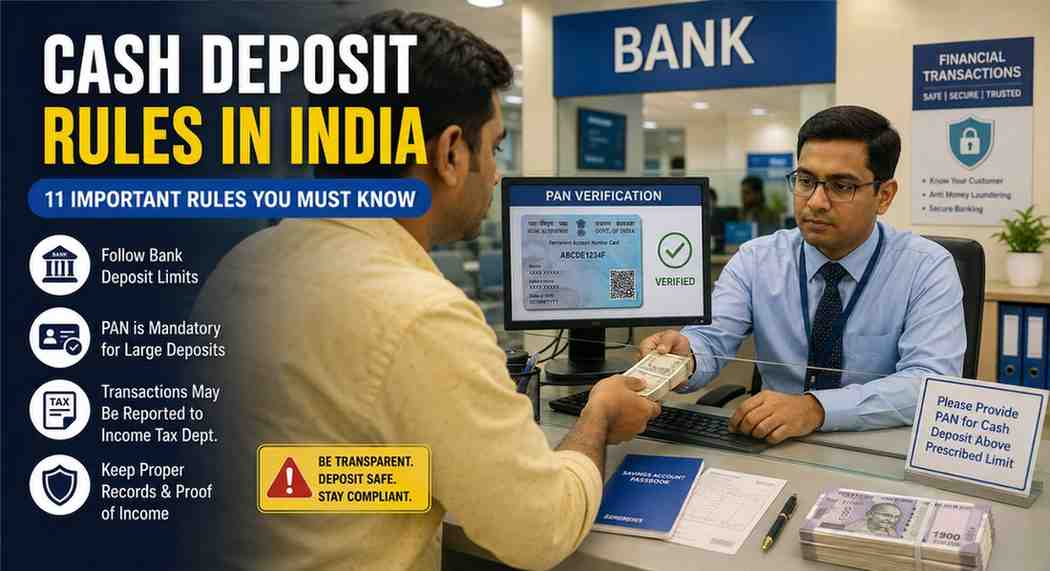
Update Note (May 2026): This article has been fully updated for the 2026 financial environment. The latest banking compliance practices, PAN and Aadhaar requirements, suspicious transaction monitoring systems, income tax reporting mechanisms, and practical deposit safety measures applicable in India have been revised for better accuracy and clarity.
Introduction
Even though UPI, online banking, and mobile wallets have pushed cash use down, paper money hasn’t disappeared from India’s economy. Plenty still walk into banks to put cash in their accounts – farmers, shop owners, families tucking away savings, buyers paying for homes, relatives giving gifts, folks building rainy-day piles. Yet awareness lags behind practice when it comes to knowing what rules actually govern those deposits. Tracking of such moves has grown sharper over time, yet many remain unaware just how much scrutiny now follows each transaction.
Most people think putting cash into their own bank is always safe. Truth is, machines at financial firms watch for odd behavior – like big sums showing up suddenly, tiny transfers happening often, moves that don’t match what you earn. Real payments might still get flagged when papers aren’t ready. Some routines just raise questions without proof.
Most times, there’s no issue putting cash into an account. In recent years, banks in India started linking closely with income tracking units. When big withdrawals happen suddenly, flags sometimes go up. Money moves without clear background details tend to catch attention. Quiet accounts waking up after months can prompt questions too. It’s not about how much gets deposited. What matters most is being able to show where it came from. Authorities look closer if explanations feel incomplete or missing.
Most folks keeping track of their money tend to avoid big problems down the line. Yet trouble often shows up when receipts vanish, work funds blend with household spending, or stacks of unrecorded bills pile up without reason. Understanding the latest Cash Deposit Rules in India can help you avoid panic, reduce compliance risks, and handle large deposits more safely and confidently.
Why Cash Deposits Are Closely Monitored in India
These days, India’s financial world runs more on data than before. Because of strict rules, banks must keep an eye on specific transfers – they also need to flag anything odd. Stopping hidden incomes comes first, along with curbing dirty money, fake-name deals, unreported cash moves, plus fraud in general. Software used by banks today spots strange behaviors: think frequent large sums showing up, wild surges in movement, split-up deposits meant to dodge limits, or payments that make no sense compared to what someone claims to earn.
The Income Tax Department, Financial Intelligence Unit (FIU-IND), RBI guidelines, and other compliance systems work together to identify suspicious financial behaviour. You can also review the latest compliance framework directly through the Reserve Bank of India (RBI) guidelines for better understanding of banking monitoring systems. When money moves in ways that seem off, different agencies start paying attention. Not just the tax office but also financial watchdogs and bank rules play a part. A payment might be perfectly legal, yet questions come up if it doesn’t match how someone usually handles funds. Say someone gets a fixed monthly paycheck but suddenly begins adding big stacks of cash often. That kind of pattern can look more like shop earnings than wages. So records get flagged simply due to mismatched habits.
Even quiet bank accounts get attention when they wake up after months without a trace. Sudden jumps in money flow often raise flags just as much as outside funds piling into unrelated accounts. Spotting odd behavior early helps stop problems before they spread too far. Instead of chasing crimes later, checks happen while things unfold. With better tech, tax records now line up faster alongside spending trails and loan forms. Matching transactions to declared earnings happens quicker today than it ever did years ago.
Banks now face tougher checks because fake money schemes keep popping up around India. This is also why financial frauds involving bank accounts have increased scrutiny across India. People unaware of these risks sometimes become victims of activities similar to rent a bank account fraud explained practices where accounts are misused for illegal money movement.
1. Large Cash Deposits Can Be Reported to Authorities
One of the most important Cash Deposit Rules in India is that banks may report certain high-value cash transactions to authorities under regulatory requirements. The official CBDT reporting framework also explains how financial reporting systems support tax compliance and transaction monitoring in India. Most folks think big money moves catch attention – yet it is the pattern of activity that banks really watch, not just one sum by itself. Each kind of account – personal savings, everyday banking, company funds – gets reviewed in its own way, shaped by how they’re usually used.
Unusual spikes in cash deposits – especially when they’re way above what someone says they earn or usually handles – can catch a bank’s attention. That kind of move might get flagged just for closer look, not guilt. If the system sees patterns like frequent drops of money, visits to different branches, or breaking large sums into bits, alarms could go off. Machines log totals over time, so scattered actions still add up on their radar. Breaking up money into small pieces over days does not always escape notice. Software today spots repeating moves like that quite easily. When payments look too carefully arranged, alarms go off faster than with regular ones. Clever timing might seem smart, yet it draws attention instead of avoiding it.
Most times, it’s fine if the money you put in is yours and you can show where it came from. Trouble tends to start when someone can’t clearly say how they got a large sum. When big amounts move through an account, being open about steps taken matters more than most realize. Clear paper trails help keep things smooth without drawing attention.
2. PAN Is Extremely Important for High-Value Cash Transactions
Pretty much every bank in India now treats PAN like a must-have piece of paperwork. When someone moves big sums around – like putting money into fixed deposits or buying real estate – the request for their PAN usually pops up fast. Linking that number to tax files helps officials spot odd patterns in how cash flows through accounts. Tracking money gets easier when each transaction carries an ID trail. PAN isn’t just tied to taxes anymore – banks watch it closely too. When big money moves into an account missing PAN info, forms like 60 might pop up if rules allow. Watch out though, doing several heavy transfers without linking your PAN could draw extra attention down the line.
One wrong digit in your PAN could slow things down later. When the name on file does not match across Aadhaar, taxes might take longer to process. Problems often appear only when someone applies for a loan. Records out of sync tend to draw extra attention during audits. Updating details early helps avoid surprises down the road. Most people who pay taxes without fuss tend to have bank activity that lines up with what they report. That’s why some advisors suggest sending in returns every year, regardless of how little you earn. People correcting past tax mismatches often find how to file ITR-U online useful for improving financial compliance records.
3. Savings Accounts and Current Accounts Follow Different Expectations
Besides holding money, how banks manage accounts depends on what they’re used for. When it comes to saving pay checks or covering home costs, savings types fit better – handling only small personal transfers now and then. Running a company? That’s where current versions step in, built for regular payments, trade work, and constant cash shifts day after day. When people drop big chunks of business money into regular savings spots, hiccups can pop up. Say someone keeps funneling piles of company earnings into their personal bank nest – that kind of move often looks out of place. Bank systems notice mismatches like these. Questions might follow. Closer checks could kick in without warning.
Most times, these accounts see bigger sums moving in and out. That happens since companies manage regular income and expenses as they run their work. Store owners, bulk sellers, those who trade goods, plus folks offering services – all need space for many transactions every day. Because of that rhythm, banks watch for activity shaped by business habits. Still, every company needs clear money tracking. Money moving in and out ought to line up with tax reports, bills sent, and earnings shown. When bank activity doesn’t fit what’s on file with taxes, trouble can show up down the road.
4. The Income Tax Department Can Track Banking Activity
Most folks get worried when they learn the tax office watches bank activity. Yet trouble rarely hits unless money moves seem odd or lack proof. When paperwork backs up a deposit, problems seldom show up. Watched closely are transfers that feel out of place or sketchy without clear paper trails. Fine wires tie money machines together now. One slips, others wobble. Individuals handling high-value banking transactions should regularly check updates available on the official Income Tax Department portal to stay compliant with reporting and tax requirements. Automated data analysis techniques can be used to compare banking transactions, PAN records, tax filings, real estate acquisitions, and investment activity. Authorities may ask for explanation regarding the source of funds if an individual consistently deposits huge sums of money despite declaring extremely low income.
This becomes particularly important for people who continue to engage in significant banking activity but fail to file tax returns. Regular filing lowers future compliance issues and contributes to the development of a clear financial profile. Because filing returns enhances financial credibility, it can occasionally benefit even those with lower taxable income levels. Deposits may also be compared by tax authorities to loan applications, investment activity, and business turnover. Compared to steady and accurately recorded transactions, sudden, inexplicable cash increases frequently garner greater attention. This is why understanding why file ITR if income less than exemption can become financially important in the long run.
5. Unexplained Cash Deposits Can Create Serious Financial Problems
Money sitting in a bank isn’t the problem. What trips most people up? Not knowing how to show where it came from. When deposits look out of step with what someone earns, questions follow. Paper trails matter more than spoken words. Officials tend to want records, not stories. A quiet slip here or there might go unnoticed – until it doesn’t. Money showing up without clear backing could fall under scrutiny when taxes come into question. Paperwork like pay stubs, farm earnings reports, house selling contracts, bank loans, company bills, signed gift transfers, family wealth records, or old pay out trails might work as valid backup. When nothing makes sense, authorities might see it as hidden earnings by law.
Unexpected deposits might complicate loan requests later, especially when banks review income sources. When odd transactions happen too often, regulators tend to watch more closely over time. Hidden risks grow if someone uses a bank account without the owner realizing it’s part of shady money flows. Many innocent individuals later discover involvement in activities linked to money mule accounts in India after allowing others to route transactions through their bank accounts.
6. Frequent Small Deposits Can Also Raise Suspicion
Most people think big money alone catches bank alerts. Yet tiny transfers, when they stack up oddly, might light up warning screens too. Software today watches how often moves happen, their growing total, habits tied to accounts, even clock moments of activity – never just one payment size. It’s not the amount by itself, it’s how everything lines up across time. A pattern of putting in ₹40,000 every few days might raise questions when it doesn’t match how that person usually handles money. When several relatives add funds to a single account, especially using separate bank locations, alarms could go off. Despite seeming normal, these actions sometimes draw closer looks.
Out of nowhere, banks take a closer look when funds show up and vanish fast, no obvious reason given. This kind of quick shuffle? It often feels like the middle phase of dirty money tricks. Just because someone isn’t hiding anything doesn’t mean questions won’t follow – explanations might still be expected. So much depends on keeping good records, while dodging sketchy cash moves helps too. When paperwork makes sense, even routine payments feel simpler to talk about later.
7. Business Owners Must Maintain Proper Cash Records
Most business leaders now deal with stricter rules, thanks to bigger money flows in commerce. Cash remains common among smaller companies – think street vendors, supply dealers, truck operators, neighbourhood repair crews, and old-style market traders. Most people mix up their own money with company cash – this causes problems later on. Say you put store earnings straight into your private savings; checking records becomes messy when someone audits the books. Better to keep two different bank setups – one just for work stuff, another for personal spending. Clear separation helps avoid headaches down the line.
Keeping track of money matters more than it seems. When sales receipts, tax documents, supplier bills, yet bank deposits line up cleanly, things look consistent. A shop declaring small income but putting big sums into its account often raises questions. Most problems fade when companies keep real money dealings neatly tracked. Clear paper trails? That is what builds trust over time. What matters shows up in steady habits, not grand claims.
8. Special Monitoring Periods Increase Scrutiny Levels
Financial authorities in India have occasionally kept a closer eye on cash flow because of unusual economic or regulatory circumstances. Banks may examine transactions more closely during these times, particularly if there are unexpected increases in cash deposits throughout the system. Stricter source verification, PAN tracking, inactive account review, and unusual transaction monitoring are all common components of enhanced scrutiny periods. During these periods, customers who make unexpected significant cash deposits may be asked more inquiries about the source of their funds.
Because illegal cash holders occasionally try to transfer money between several accounts during times of intense surveillance, authorities become extremely wary. Because of this, even legitimate account holders might have to go through interim verification processes. Stress under such circumstances can be considerably decreased by keeping transaction records orderly, submitting returns on time, and maintaining up-to-date KYC information. Individuals that have a clear financial background typically encounter significantly fewer issues.
9. Dormant Accounts Can Become High-Risk Accounts
When big cash deposits arise out of nowhere after years of inaction, dormant or inactive bank accounts frequently come under closer examination. Because fraudsters occasionally exploit old or forgotten accounts for questionable transactions, banks keep a close eye on these accounts. For instance, the banking system might automatically flag an account if it has been idle for years and then receives several large cash deposits. Withdrawals made right away after deposits may raise suspicions even more.
Many consumers try to use old accounts for significant transactions without properly reactivating them after ignoring them for years. Delays, short-term limitations, or verification processes could result from this. It is safest to finish the account reactivation procedure correctly before handling big deposits. People facing such situations often find how to reactivate an inactive bank account financially useful before restarting major banking activity.
10. Cash Deposits Can Influence Loan and Financial Assessments
One way banks look at steady money flow is when they check house loans, cash advances, company funding, or spending limits. Out of nowhere sums that are big tend to muddy things up since those giving the loan need clarity on where the person really stands with funds. When bank statements reveal sudden jumps in money that don’t match known income sources, questions often follow. Salaried workers might face extra scrutiny if their personal accounts start looking like business transactions out of nowhere.
Lurking behind every loan check lies how steady your payments look, where cash comes from, whether you can afford repayments, also if habits show control. Odd deposits without clear roots might dent trust fast – truth of ownership aside. Borrowing big means showing steady money habits well ahead of time. Clear bank statements build trust just as much as they satisfy rules. What lenders see in your account often speaks louder than words on an application.
11. Proper Documentation Is Your Strongest Protection
Keeping accurate records for each significant transaction is the safest method to manage big financial deposits. Account holders may clearly explain deposits when verification is required thanks to documentation, which also establishes financial confidence. Salary slips, business invoices, documentation of agricultural income, property sale agreements, loan documents, bank withdrawal slips, gift deeds, inheritance papers, and tax filings are examples of useful records. Even handwritten documents could be useful if they are backed up by other proof.
Until they get inquiries from banks or authorities, people frequently undervalue the significance of paperwork. By then, it becomes challenging to retrieve old records. Keeping files well-organized from the start reduces a great deal of stress afterward. Long-term tax compliance, loan eligibility, and general money management are all enhanced by sound financial practices. In the majority of real cases, issues are promptly and easily resolved with appropriate documentation.
Smart Ways to Deposit Large Cash Safely
- Maintain Proper Records: Most big cash moves need a paper trail. When funds are legit, skipping paperwork might still cause headaches down the line. Receipts, pay stubs, deed files, or bank withdrawals – these show things clearly when doubts pop up. Proof matters even when nothing’s wrong.
- Avoid Artificially Splitting Deposits: Many people think it’s easier to avoid attention if you deposit lesser amounts over several days. In actuality, because banks now monitor general transaction trends, structured deposits could seem more dubious. In general, deposits that are honest and well-documented are safer than those that are repeatedly broken apart.
- Prefer Banking Channels Where Possible: Clear financial trails are produced by bank-to-bank transactions, checks, and digital transfers. Verification of cash transactions is more difficult. Financial transparency is increased and future compliance issues are decreased when formal banking channels are used.
- File Income Tax Returns Regularly: A steady financial identity is produced by regular tax reporting. Because it helps future banking activity, visa applications, loan eligibility, and financial verification, submitting returns can occasionally benefit even those who are below taxable limitations.
- Keep KYC Information Updated: Unnecessary banking limits may result from outdated PAN, Aadhaar, address, or mobile information. Current KYC data minimizes compliance delays during verification processes and facilitates seamless transaction processing for banks.
- Separate Business and Personal Transactions: Confusion during examination results from combining personal and corporate interactions. Financial records are clearer, accounting accuracy is increased, and tax assessments and audits are less complicated when separate accounts are used.
- Avoid Frequent Third-Party Deposits: Unrelated people making frequent deposits could raise questions about how the account is being used. Generally speaking, banks want account activity to match the true financial profile of the account user.
Common Myths About Cash Deposit Rules in India
- Myth 1: Depositing Your Own Money Never Creates Problems- If the transaction pattern seems out of the ordinary, even real money might need to be explained. Ownership alone is typically not the problem; rather, documentation and financial consistency are.
- Myth 2: Small Deposits Always Stay Safe- These days, banks keep an eye on trends rather than merely transaction volume. If regular minor deposits don’t fit the account holder’s income profile or resemble structured activity, they might nevertheless be reviewed.
- Myth 3: Splitting Deposits Avoids Reporting- Contemporary banking systems examine deposit patterns and total transactions. When deposits are artificially divided, mistrust may rise rather than fall.
- Myth 4: PAN Is Only Needed for Tax Filing- PAN is becoming a crucial need for banking compliance. PAN linking is frequently necessary for high-value transactions in order to provide appropriate financial monitoring and regulatory reporting.
- Myth 5: Only Business Owners Face Scrutiny- Verification requests may also be sent to salaried workers, pensioners, students, and stay-at-home moms if their banking behaviour doesn’t match their claimed income or account history.
Conclusion
In today’s closely watched banking climate, it is vital to comprehend the most recent Cash Deposit Rules in India. Unusual cash behavior is now closely monitored by banks and tax authorities, particularly when transactions seem at odds with claimed income. If appropriate records and documentation are kept, genuine deposits typically don’t cause issues. The safest course of action is to avoid mysterious cash transactions, file tax returns on a regular basis, and maintain PAN and KYC up to date. Keeping personal and commercial financial activities apart might help lessen needless attention. Although cash is not unlawful in and of itself, inadequate paperwork may subsequently lead to unforeseen issues. The easiest approach to deposit money securely and with confidence is to maintain financial transparency and organization.
FAQs
Q1: What is the maximum amount of money I can deposit without drawing notice?
There isn’t a set quantity that is “safe” for everyone. The most important things are whether the deposits fit your income profile and whether the right paperwork is available to demonstrate where the money came from.
Q2: Are cash deposits taxable by default?
Cash deposits are not taxable in and of themselves. Issues primarily occur when authorities feel that the source of funds cannot be adequately justified or substantiated by documentation.
Q3: Can banks notify authorities about cash deposits?
Indeed, banks are required by law to disclose high-value or questionable transactions. Unusual trends and complex deposits are also monitored by contemporary banking systems.
Q4: Can I deposit cash into a family member’s account?
Yes, but if appropriate records aren’t accessible, repetitive or inexplicable third-party deposits could create concerns. Later on, documentation helps prevent needless confusion.
Q5: What happens if I am unable to explain the cash that was deposited?
Unexplained deposits may be treated by authorities as undeclared income, which could lead to tax demands, fines, interest, or heightened financial surveillance.
Disclaimer
The sole aims of this article are informational and general education. RBI, CBDT, or government notifications may cause changes in banking regulations, tax laws, reporting requirements, and compliance procedures over time. Before making significant financial decisions involving large cash deposits, readers should speak with banking officials, chartered accountants, or knowledgeable tax professionals. This article’s examples are meant to serve as illustrations and should not be interpreted as financial or legal advice. Decisions made based solely on this content are not the author’s or publisher’s responsibility.