
Discover 9 shocking hidden charges in UPI apps that silently drain your money. Learn the real costs behind Google Pay, PhonePe, Paytm, wallet fees, AutoPay deductions, and failed UPI transactions in India. hidden charges in UPI apps, UPI transaction charges, Google Pay hidden fees, PhonePe charges, Paytm hidden fees, UPI AutoPay charges, wallet loading fees, failed UPI transaction money debited, hidden banking charges India, digital payment costs, cashback spending traps, UPI convenience fees, SMS banking charges, UPI fraud awareness, merchant payment fees.
Introduction
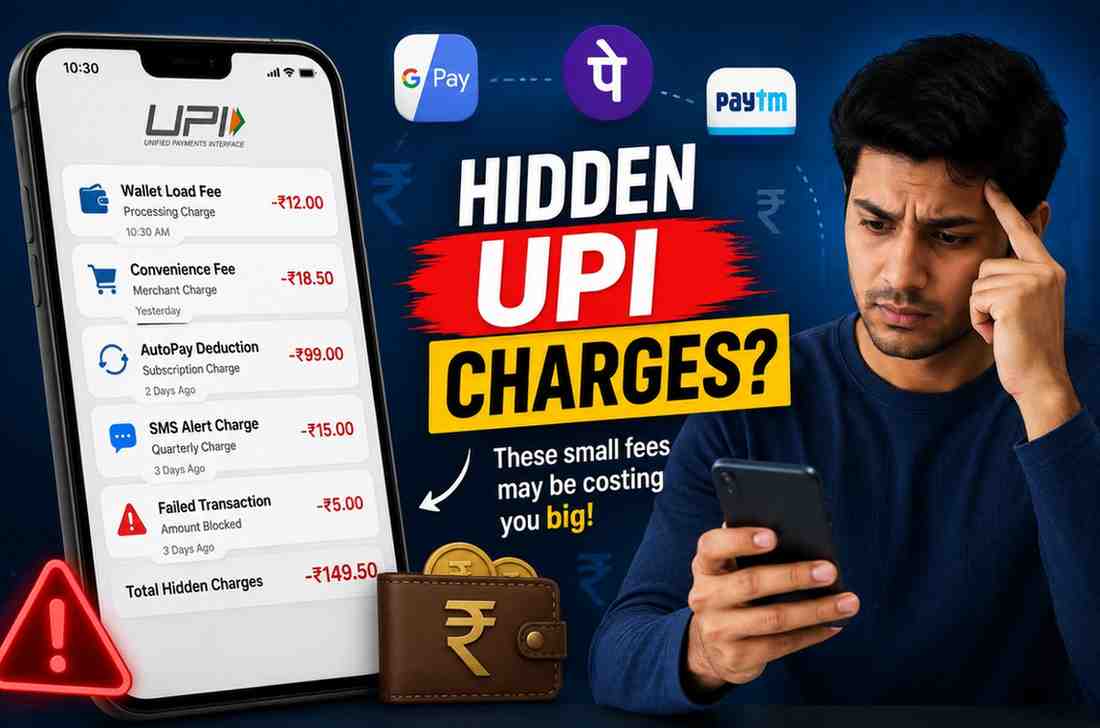
Most folks now tap phones instead of cash when handling money across India. From splitting dinner tabs to settling electricity invoices, digital tools such as PhonePe or Paytm fit snug into routines. Yet what feels like zero-cost transactions hides another story underneath. Tiny cuts appear via wallet top-up tolls, message alerts billed by banks, membership dips from subscriptions, added service markers on quick transfers – each minor alone. When stitched together though? That quiet drip wears down balances more than expected. Not magic, just math adding up where eyes don’t linger.
Many people who focus on reducing unnecessary banking expenses also monitor issues such as hidden bank charges in India because small unnoticed deductions can quietly damage long-term savings. Understanding these hidden UPI expenses is critical if you intend to implement digital payments wisely in 2026. Users can also review official UPI framework details on NPCI’s UPI product overview to better understand how the system works.
1. Credit Card UPI Charges Are Not Always Free
Most people think using a credit card on UPI doesn’t cost anything – yet some charges sneak in behind the scenes. Linking RuPay credit cards to UPI platforms can lead stores to shoulder extra fees when processing payments. To cover those, shops might raise prices slightly or tack on small surcharges at purchase time. Even if you’re paying via digital wallets tied to your card, there could be hidden tolls taken per transfer. While chasing reward points and cashbacks feels rewarding, few stop to add up what those moves actually cost them. Little charges might seem harmless at first glance. Yet each extra swipe adds up when it happens again and again. Watching digital transactions isn’t thrilling, but skipping that check means small amounts slip through. Over time, those forgotten bits grow into a chunk of change gone missing. Users interested in smarter payment strategies also explore methods like credit card tricks to make money while avoiding unnecessary transaction costs. Understanding these hidden fees can help users avoid overspending in the pursuit of incentives.
2. Wallet Loading Fees Quietly Drain Money
Some UPI apps let people keep funds inside for easier payments. Yet when topping up with a credit card, extra charges might apply. These costs often go unseen since they’re tiny compared to the total. Over time, repeated loading for games or online stores adds hidden cost. What looks minor per try builds into bigger spending later. Heavy users of digital payments might notice small fees adding up when moving money from wallets to banks. Not every platform shouts about these costs upfront, so surprises happen later. Most think using a wallet means zero expense – until they dig into the details. Just like certain bank deals that claim to be free but aren’t quite, the fine print tells another story. Users who pay attention to topics like is a zero balance account truly free usually understand how indirect fees quietly affect finances. Monitoring wallet transactions on a regular basis can assist to avoid excessive losses.
3. Failed UPI Transactions Can Still Create Financial Problems
A few hours’ wait makes plenty overlook failed UPI transfers, assuming funds return automatically. Yet these errors sometimes leave money stuck without warning. That temporary hold tightens available balance when it’s needed most. Delays in reversal creep up silently, catching users off guard. Trying again multiple times adds confusion instead of fixing things. Bills slip past their deadlines even though the user tried early. Each glitch piles on small stresses that weren’t expected at first. Most banks still take a fee for text alerts, even when payments fail. When transfers go wrong often, people might lose out on cashback or wait longer for shop confirmation. Sometimes stress makes someone send the same amount twice by mistake. Lately, digital payments have become harder to follow, simply because so many in India now rely on UPI apps daily. People facing transaction reversal problems often search for solutions related to UPI transaction failed but money debited after their funds get stuck temporarily. Understanding RBI requirements can help users recover money more quickly. The latest customer protection and digital payment guidelines are also available on Reserve Bank of India for users facing transaction-related concerns.
4. UPI AutoPay Creates Silent Subscription Losses
Surprisingly, UPI AutoPay sees heavy use when paying for streaming services, monthly fund plans, electricity charges, policy dues, or digital access passes. Though handy, it sometimes leads to unnoticed money outflows. Often, folks overlook ongoing permissions granted during trial signups or limited-time deals. Payments quietly repeat every month since checking transaction records isn’t common. Most never catch these until much later. What feels cheap at first might drain your wallet over time. When several payments run together, even small ones add up fast. Though meant to make life easier, automatic billing tends to blur how much you spend. Some people keep funding apps they stopped using long ago. Without noticing, these tiny outflows eat into what could be saved each month. Similar spending traps also appear in topics related to auto debit traps in India where recurring deductions quietly affect users. Regularly reviewing active mandates can help to minimize excessive budget leakage.
5. Merchant Convenience Fees Increase Final Payment Cost
Pricing tricks hide in plain sight when buying tickets, booking trips, paying school bills, settling utilities, or grabbing game credits. Some sellers slip extra costs into the total using names like service boosts or quick-pay tags. People tend to point fingers at UPI tools for the added amount, missing that the store’s system tacks it on. Each charge might seem tiny at first glance – yet doing it again and again piles up quietly over weeks. What feels minor per click adds weight when totaled by month’s end. Hidden fees often pop up only at checkout, slipping past quick checks. As companies look to cover rising costs, extra charges appear more frequently on payment screens. Since tapping through feels smooth, plenty of people accept the added cost without a second thought. Spotting how stores bill customers gives an edge when choosing where to spend. Small amounts taken each time grow quietly, so noticing every cut matters for keeping control.
6. SMS Alert Charges Still Affect UPI Users
Even though sending money through UPI usually costs nothing, plenty of banks still slap on fees for text alerts about your account. Each time an OTP shows up, a withdrawal hits, you get a balance update, or a payment fails – those little messages pile up. Regular users might see dozens every day, quietly adding to their overall bank bills. These amounts slip under the radar since they’re pulled straight from accounts after weeks go by. A few folks even pay extra for upgraded alert plans, not knowing it’s costing them more. What feels like a free digital transaction might hide extra costs behind the scenes. Not every part of online money handling skips fees – some come with quiet charges tucked away. People trying to reduce unnecessary deductions often review financial habits connected with savings account mistakes because poor account management quietly increases costs. Regularly reviewing bank statements can help identify such deductions early.
7. Cashback Offers Often Encourage Overspending
Money saved through rebates sparks a thrill at checkout time. Still, refund programs can push buyers toward extra purchases. Some shoppers add items to carts just to hit bonus thresholds. Tiny returns on each sale nudge behavior – spending climbs even when budgets shrink. Gains seem real until bills arrive. Most digital wallets flash rewards through pop ups, mini games, or bright ads to keep people tapping more often. Yet chasing cash back might quietly erode careful saving patterns over time. Buying things on repeat just for small perks adds up fast. Some hand out thousands only to gain hundreds in return. Spending feels like gaining – until the numbers say otherwise. Spending behaviour influenced by digital marketing patterns also connects strongly with how social media causes FOMO spending because emotional triggers often lead to poor financial decisions. Smart users concentrate on genuine savings rather than emotional cashback pleasure.
8. International UPI Transactions May Include Hidden Forex Costs
Travelers, NRIs, and students studying abroad now use UPI-linked payments more than ever when sending money overseas. Yet behind each transaction, small costs can hide – conversion fees, markups, even shifts in exchange value. Often, these aren’t spelled out at checkout. Instead of listing extras plainly, certain apps blend them into the rate itself. That twist makes true expenses hard to pin down mid-payment. Sometimes fees pop up when paying merchants abroad – it depends on which payment system handles the transfer. Not everyone thinks beyond how fast or easy a transaction feels. Hidden currency conversion fees, even tiny ones, add up noticeably with big amounts. Anyone sending money overseas often needs to check both service costs and actual exchange values ahead of time. Spotting quiet cuts in exchange value might lower what gets spent without reason across borders.
9. Data Privacy Risks Can Become an Indirect Financial Cost
Hidden fees do not always show up on a bank summary. Digital money apps gather plenty of personal details – what people buy, when they spend, how often transactions happen, what services they prefer. Because of this tracking, ads get tailored closely to individual patterns. These messages come from studying actions over weeks or months. Slowly, repeated exposure pushes users toward unplanned buying decisions. When things go wrong, weak safety habits can leave people open to trick messages, shady websites, or phone scams. Money details now carry big weight in today’s tech-driven world, so guarding personal info matters more than before. A few individuals accidentally add counterfeit money apps or tap dishonest checkout pages, ending up with major cash damage. With digital payments rising fast across India, hackers stay focused on those who pay online. Awareness about dangerous UPI scams in India can help users identify suspicious activity before losing money.
Real-Life Example
Example 1: Rahul, a salaried employee in Delhi, frequently utilized numerous UPI apps for food delivery, OTT subscriptions, shopping, utility bills, and online gaming. He assumed digital payments were entirely free because most apps advertised “zero-fee transactions.” After carefully checking his annual bank statement, he noticed more than ₹12,000 had disappeared due to convenience fees, wallet loading costs, inactive memberships, SMS alert deductions, and impetuous reward transactions. He was also paying for two OTT subscriptions that he had stopped using months ago. Initially, he ignored little charges ranging from ₹20 to ₹200 as they did not appear severe. After meticulously tracking every digital payment, he dramatically decreased wasteful spending and increased his monthly savings.
Example 2: Priya lives in Bengaluru. A university learner, she taps apps on her phone daily just to send cash – ordering meals, swiping through shops online, topping up talk-time, reserving cinema seats too. Speed matters most when paying; that’s why she skips looking at the fine print each time. Little by little, hidden costs piled up across half a year – fees tagged as “handling,” service add-ons here and there, automatic withdrawals sneaking out every month for streaming tunes or shows she hardly ever opened. Her habit of filling digital pockets with credit card funds brought more cost hikes, thanks to backend surcharges tacked on silently. Only after checking every past payment did Priya spot the missing ₹6,500 – drained slowly by unnoticed charges. Once those tiny outflows were found, old subscriptions got shut off, prepaid top-ups ended, caution took root each time she tapped her phone to pay.
How to Avoid Hidden Charges in UPI Apps
- Check Active AutoPay Settings Often: Once a month, go through every subscription still pulling money from your account. When something sits unused, drop it – tiny charges stack into big bills over time.
- Avoid Using Credit Cards to Load Wallets: Banks often handle money moves more safely when you skip the middle steps. Fees drop lower compared to using card top-ups, that much is clear. Less handling means fewer charges adding up behind the scenes.
- Check Payment Details Before Finalizing: Some sites tack on fees right at checkout. Checking totals closely might stop surprise costs.
- Check bank statements every week: Checking statements often makes tiny cuts clearer. Each week you look, surprises stay small because they do not grow over time.
- Skipping extra spending on cashback rewards: Spending just to earn rewards misses the point entirely. When money moves, let real necessity lead, not impulse or mood.
- Stick to Known Payment Apps: Start by grabbing software just from verified platforms instead of clicking random web addresses. Reliable programs guard your money details better while lowering chances of scams.
Are UPI Apps Really Free?
Free transfers between people help UPI apps spread fast in India. Yet hidden expenses pop up beyond those basic moves. Loading money into wallets chips away slowly, just like service tags on certain actions. Text alerts eat tiny bits each month without much noise. Recurring payments sneak through unnoticed unless checked hard. Spending more because rewards dangle ahead warps simple choices over weeks. Foreign exchange steps add quiet surges per swipe abroad. Shops sometimes pass processing loads onto buyers too. These slices stay small enough to escape quick eyes. Many folks watch ease of tap-and-go but miss how frequent cuts pile behind the curtain. Money moves quietly, even when the main service costs nothing. Those who pay attention know each transaction holds small risks. Watching every outflow becomes normal, just part of staying aware. Digital taps drip without noise unless someone listens closely.
Conclusion
Digital money moves quick now, thanks to UPI, reaching countless people across India. Yet speed doesn’t mean smarts come along with it. Costs sneak through the back door – topping up wallets, silent renews on subscriptions, shopkeeper levies, message fees, even rewards that tempt bigger buys. These nibble away savings slow, hardly seen in daily flow. Often, eyes catch them only when scrolling deep into transaction records. One little cut here, one small fee there – soon it adds up more than expected. Watch what slips out each month, even when nothing seems wrong at first glance. Staying sharp means noticing how much goes toward things labelled free yet still cost something. Choices matter most when repeated often without thought.
FAQs
Q1: Are UPI transactions free in India?
Most conventional bank-to-bank UPI transfers are still free, however additional services and merchant fees may raise your overall payment cost.
Q2: Why do some UPI payments have convenience fees?
Many retailers charge handling or platform fees at checkout to offset operational and payment processing costs.
Q3: Can AutoPay subscriptions continue without notice?
Yes, recurrent mandates are active until manually cancelled, which is why constant monitoring is necessary.
Q4: Do banks charge for UPI SMS alerts?
Some banks still charge quarterly SMS alert fees for account notifications and transaction messages.
Q5: Is cashback always beneficial?
Not always. Cashback programs frequently stimulate impulsive spending, which might result in increased unneeded expenses over time.
Disclaimer
This piece serves education and awareness, not as a substitute for money, law, or investing guidance. Fees or rules around UPI might shift based on your bank, app, merchant, or central bank directives. Confirm current details by checking straight with authorized finance or payment providers prior to acting. Scenarios shown here are samples – real situations could differ per person or transfer.