
why choose esg funds, esg funds, esg investing, sustainable investing, esg mutual funds, esg investing benefits, ethical investing, socially responsible investing, sustainable wealth creation, esg investment strategy, esg investing in 2026, long term investing, responsible investing, green investing, esg portfolio diversification.
Update Note (May 2026): Updated for 2026 with fresh ESG investing insights, improved FAQs, sustainable investing trends, stronger internal linking, enhanced SEO optimization, and long-term wealth creation strategies.
Introduction
Nowadays, profit isn’t everything for those putting money into markets. Climate threats loom larger, rules around green practices tighten, while more folks pay attention to doing right by people and planet – shaping new paths to grow savings. Because of this turn, typing “why choose ESG funds” pops up far more often when investors go online looking for answers.
Looking at how companies treat the planet comes first for ESG funds when choosing where to invest. Instead of chasing quick profits, they link returns with ethical choices over time. With more money flowing into green and fair investments worldwide, their role keeps growing across different types of holdings. Starting out or building wealth over time? Knowing what drives ESG fund choices might just shape how you move money in today’s shifting markets.
What Are ESG Funds?
ESG funds are mutual funds or exchange-traded funds (ETFs) that invest in firms with high environmental, social, and governance criteria.
These factors include:
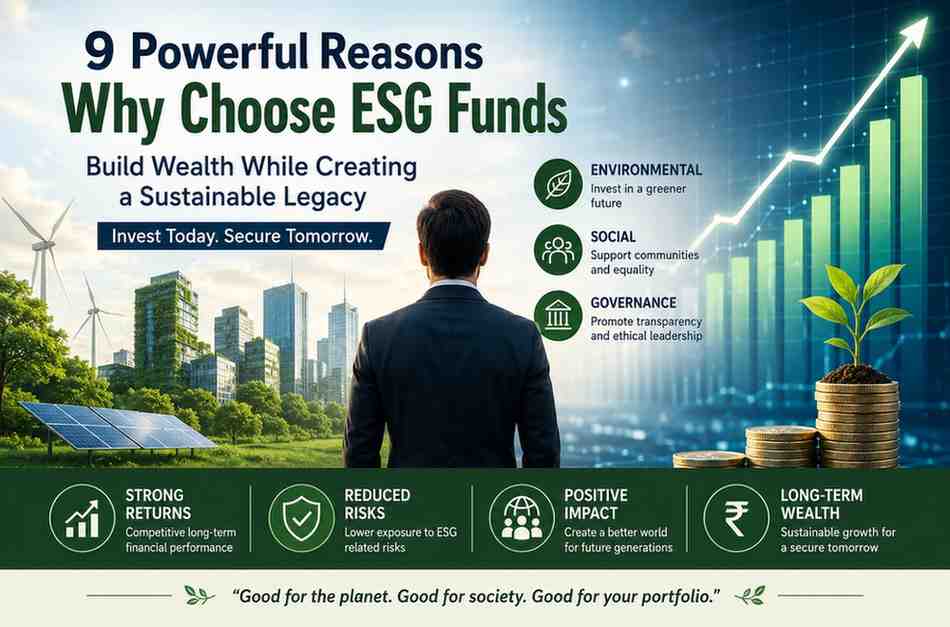
- Environmental: carbon emissions, renewable energy, and sustainable practices
- Social: employee welfare, diversity, and customer protection.
- Governance: It involves ethical leadership, transparency, and board responsibility.
Unlike traditional investing, ESG investing blends financial success with socially responsible corporate practices. In 2026, ESG-focused investing will gain appeal as investors seek both wealth development and long-term sustainability. Many beginners exploring sustainable investing also start learning through this ETF investing guide for beginners before selecting ESG-focused funds.
Reason 1: Align with Your Core Values
Why choose ESG funds? They give you the ability to make investments consistent with your values. Companies that excel in social responsibility, environmental sustainability, and ethical governance are given preference by ESG funds. For instance, they support companies that lower their carbon footprints, encourage fair labour practices, or guarantee open leadership. Knowing that your money helps causes you care about fosters a positive emotional connection.
On the other hand, conventional funds might make investments in sectors such as fossil fuels, which would be against your morals and lead to a sense of alienation. Selecting ESG funds is a very personal decision since it aligns morality and wealth-building. ESG investing skips firms tied to ecological harm, focusing instead on those driving better outcomes for people and the planet. Traditional funds often keep exposure to polluting sectors, yet this approach channels money toward change.
When money choices match what matters most, trust grows in quiet ways during long-term planning. Younger investors now push ethics to centre stage in money choices by 2026 – what once felt fringe now shapes everyday finance. Values aren’t just ideals; they quietly steer portfolios where returns used to rule alone.
Reason 2: Achieve Competitive Long-Term Financial Returns
The established financial success of ESG funds is a major factor in the decision. Despite popular belief, ESG funds frequently perform on par with or better than regular funds. According to Morningstar research, many sustainable funds have shown strong resilience during volatile market conditions.
Businesses that use renewable energy, for example, are able to avoid the volatility of fossil fuels and increase their earnings. Businesses that practise social responsibility draw in devoted clients, which boosts sales. This favourable result produces stable, competitive returns. Businesses that implement sustainable practices may profit from shifting customer attitudes and legislative assistance by 2026.
This favourable result produces stable, competitive returns. Investors building diversified portfolios often combine ESG investing with strategies explained in goal-based investing strategies for better long-term financial discipline. Investors who ignore ESG trends risk missing out on future development prospects in sustainability-focused industries.
Reason 3: Reduce Investment Risks in a Volatile 2026 Economy
Why choose ESG funds for risk management? Their emphasis on governance and sustainability lowers vulnerability to threats to the environment, regulations, and reputation. Businesses that disregard ESG considerations, such as those impacted by labour scandals or climate penalties, are more likely to suffer losses.
ESG funds steer clear of high-risk industries like coal, whose value is dropping as a result of green laws. They give preference to companies with robust governance, which reduces the danger of fraud. Positive portfolio stability is ensured by this proactive approach. The proactive strategy ensures positive portfolio stability. Investors worried about market uncertainty often use strategies for market volatility alongside ESG investing for improved resilience.
Investors face unfavourable volatility from unprepared companies when ESG is not prioritised. They are a clever defence against ambiguity. In a fast changing global economy, this extra layer of risk control makes ESG investing more appealing.
Reason 4: Benefit from Rising Global ESG Investment Demand
Since sustainability is important to Millennials and Gen Z, ESG funds are becoming more and more popular. Why choose ESG funds now? They are a smart choice since their increasing demand improves liquidity and market opportunities. Why pick ESG funds now? Their growing popularity boosts market liquidity and encourages more enterprises to improve their sustainable policies. They are a wise choice because rising demand boosts liquidity and market prospects.
Global sustainable investment trends tracked by the Principles for Responsible Investment (PRI) continue influencing institutional investors worldwide. By 2025, ESG stability will be increased by institutional investors such as pension funds, generating a positive feedback loop between performance and innovation.
As ESG disclosure standards tighten around the world, global institutional investors, pension funds, and wealth management organizations will increase their allocations to sustainable investment by 2026.
If you ignore this tendency, you run the danger of your portfolio underperforming in a market that is driven by sustainability. They put you at the vanguard of a revolution in finance.
Reason 5: Drive Global Positive Impact
Why choose ESG funds for impact? They provide funding to businesses that address issues including inequality, climate change, and moral leadership. Putting money into ESG funds promotes inclusive workplaces, green energy, and open leadership, all of which have a good knock-on effect.
Funding sustainable energy, for instance, lowers carbon emissions, and socially conscious businesses advance equality. Supporting unsustainable industries is the negative option, which exacerbates global issues. Why choose ESG funds? They secure wealth while giving you the ability to create a better world.
As sustainability becomes a key worldwide goal in 2026, investors want their money to have a good impact on society while also producing financial benefits.
Reason 6: Leverage Financial Efficiency and Long-Term Sustainability
ESG investments may be eligible for tax breaks in some areas, which would increase returns. Why pick ESG funds if they offer financial benefits? The efficiency of the portfolio is increased by these advantages. Furthermore, ESG businesses frequently transmit cost savings to investors by implementing ethical or energy-efficient processes. In contrast to typical funds, where inefficiencies reduce returns, this financial advantage has a positive impact.
Why choose ESG funds? They provide both ethical alignment and real financial benefits. Governments around the world are also boosting their support for green sectors through sustainability incentives, renewable energy subsidies, and infrastructure improvements.
Reason 7: Strengthen Your Reputation as an Investor
Your reputation among peers will improve if you invest in ESG funds, which demonstrate social responsibility. For prestige, why choose ESG funds? By connecting you with an expanding group of ethical investors, they help you build strong relationships.
This intangible advantage increases your clout in the workplace. On the other hand, disregarding ESG developments could make you appear out of date, which is a bad impression in a society that values values. Why choose ESG funds? They provide returns while elevating your position. Long-term investors seeking stable wealth creation may also benefit from understanding the power of staying invested during changing market cycles.
Reason 8: Benefit from Regulatory Tailwinds
Governments around the world are enforcing stronger environmental and sustainability laws across all industries. Why pick ESG funds? These funds typically invest in companies that are more prepared for changing regulatory contexts and global environmental standards. Businesses that implement excellent ESG practices may avoid significant penalties, compliance concerns, and operational disruptions associated with environmental requirements.
Why pick ESG funds? They protect your portfolio from possible regulatory changes. Businesses with higher governance frameworks and environmental standards may experience fewer regulatory interruptions than those that ignore ESG concerns.
Reason 9: Gain from Stronger ESG Regulations in 2026
Starting off broad, ESG funds spread investments through tech, then move into health care. One step further brings renewable power into the mix. Infrastructure that lasts also finds a place here. Not limited to one area, these funds reach across fields without stacking them like blocks. Start with less risk. These funds spread investments wide, cutting ties to volatile sectors slowly. Resilience grows over time because choices shift toward steadier ground. Picking them means leaning into what lasts, not chasing quick wins.
Out of nowhere, old-school investment mixes can lean too heavily on industries exposed to climate pressures or shifting government rules. Picture your money growing steadily while doing good. These funds mix assets smartly, aiming to last through market shifts. Understanding how many mutual funds to hold can also help investors avoid excessive portfolio overlap while adding ESG exposure.
ESG Funds vs Traditional Funds
Profit comes first for regular investment funds. Yet ESG options look beyond numbers, weighing how companies act when no one’s watching. Sometimes looking ahead means sidestepping trouble before it shows up – like fines tied to pollution or leadership missteps. Old-school investments might bring returns just fine, yet adding ESG into the mix brings a different kind of shield, one built on lasting values.
When sustainability shapes global investment trends by 2026, plenty of people put ESG factors into their portfolios – mixing them carefully through varied approaches that aim at steady growth over time. Yet still, balance matters most.
Real-Life Examples of ESG Investing
1. Renewable Energy Companies Benefiting from Global Green Transition
Many ESG funds invest in renewable energy companies that develop solar, wind, and clean energy infrastructure. As governments throughout the world expand their support for green energy projects in 2026, these businesses will benefit from increased policy backing and long-term growth potential. Companies focused on renewable energy are drawing institutional investment as climate awareness grows. This transition has boosted investor trust in sustainable industries. ESG investors gain from investing in sectors that are projected to increase in the future decades. The increased need for sustainable energy is making renewable-focused ESG investments more appealing.
2. Technology Companies with Strong Governance Standards
Several ESG funds invest in technology companies that demonstrate transparent leadership, ethical governance, and responsible innovation processes. Businesses with robust governance systems are more likely to manage financial risks successfully and sustain investor trust during periods of economic volatility. Investors have paid more attention in recent years to companies that prioritize cybersecurity, employee wellbeing, and ethical AI strategies. ESG investment aids in the identification of companies that prioritize long-term operational sustainability over short-term earnings. This governance-focused strategy may boost portfolio resilience during market volatility. Investors are increasingly drawn to organizations with stable leadership and transparent business processes.
3. Consumer Brands Focused on Sustainability and Ethical Practices
Large consumer brands that use sustainable packaging, ethical sourcing, and environmentally responsible production are increasingly incorporated in ESG portfolios. Modern customers in 2026 are more likely to support brands that prioritize environmental and social responsibility. Companies that increase supply chain transparency and reduce carbon emissions frequently boost consumer loyalty and brand perception. ESG funds profit from investing in businesses that respond to changing customer tastes. This pattern demonstrates how sustainability can boost long-term revenue growth and investor trust. Ethical business practices are becoming increasingly crucial in the global competitive landscape.
4. Banks and Financial Institutions Supporting Sustainable Finance
Many financial institutions are increasing their stakes in green bonds, sustainable infrastructure finance, and ESG-focused lending initiatives. Banks that promote ecologically responsible initiatives may increase long-term stability while minimizing exposure to industries experiencing climate-related concerns. ESG funds that invest in these financial institutions have access to emerging sustainable financing prospects. In 2026, several global banks will include ESG requirements into lending and investment choices. This change is assisting financial markets in adopting more responsible capital allocation practices. Investors increasingly see sustainable financing as a key component of future economic growth.
Conclusion
One reason investors lean toward ESG funds now? It’s less about ideals, more about staying power. Reshaping finance by 2026 isn’t just a trend – it’s baked into how money moves. Tougher risks loom large, so forward-thinking portfolios adapt early. Value lasts when built on transparency, not slogans. What sticks matters more than what sounds good. Looking ahead, returns might go hand in hand with responsibility through ESG funds – these blend profit goals with real world outcomes. With climate and oversight rules shifting across continents, putting money here could shape how portfolios grow in years to come.
FAQs
Q1: Are ESG funds suitable for long-term investments?
ESG funds are regarded as appropriate for long-term investing since they concentrate on financially solid companies with sustainable business practices and lower governance concerns.
Q2: Why choose ESG funds over standard mutual funds?
Many investors prefer ESG funds because they combine wealth development with ethical investing and sustainable risk management.
Q3: Are ESG funds dangerous by 2026?
ESG funds, like any market-linked investments, are not without risk. However, many ESG-focused organizations may be more resilient to regulatory and environmental constraints.
Q4: Can beginners invest in ESG funds?
Yes, beginners can invest in ESG mutual funds or ESG ETFs after determining their risk tolerance, investment horizon, and diversification requirements.
Q5: Do ESG funds generate good returns?
Several ESG funds have produced competitive long-term returns, particularly in industries such as renewable energy, technology, and sustainable innovation.
Disclaimer
This post is intended for educational and informational purposes only, and should not be considered financial advice. Before making investing selections, investors should consider their financial goals and risk tolerance, as well as seek advice from a certified financial advisor.